Thriving in the Age of AI
Explore AI's transformative impact on security, business, and daily life. Gain insights on mitigating risks, ethical implications, and future trends in AI-driven threat intelligence from an industry expert.
Fast Deep Learning with Categories
Explore GPU-accelerated deep learning using Haskell, ConCat, and Accelerate for high-performance industrial applications.
Haskell for Choice-Based Learning in Machine Learning Programming
Explore language design for machine learning, focusing on choice-based learning. Combine algebraic effects, handlers, and selection monad to create powerful frameworks for decision-making models and optimization techniques.
Formal Probabilistic Methods for Combinatorial Structures using the Lovász Local Lemma
Explore formal probabilistic methods for combinatorial structures, focusing on the Lovász Local Lemma and its application to hypergraph coloring in Isabelle/HOL.
Learning to Boost Disjunctive Static Bug-Finders
Explore a novel learning-based strategy for disjunctive static bug-finders, addressing challenges in state-selection heuristics and improving efficiency in real-world program analysis.
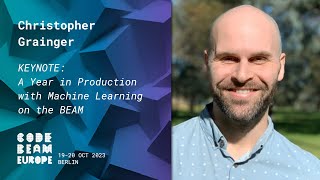
A Year in Production with Machine Learning on the BEAM
Explore insights on transitioning machine learning pipelines to Elixir, leveraging the Nx ecosystem for streamlined development and swift experimentation in production environments.
Comparing Elixir and Python for Simple Neural Networks
Compare Elixir's Nx library with Python's machine learning ecosystem for training neural networks. Explore development experiences and performance differences using MNIST and CIFAR-10 datasets.
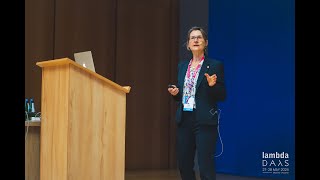
Modeling Communicating Systems in a Functional Style: 30+ Years of Evolution
Explore the evolution of modeling communicating systems using functional programming over 30+ years, from telecoms protocols to probabilistic models and Bigraphs, with insights on future challenges.
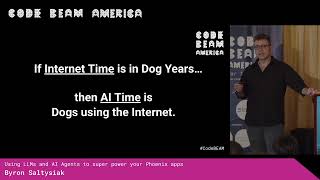
Using LLMs and AI Agents to Superpower Your Phoenix Apps - Code BEAM America 2024
Explore hands-on integration of AI and LLMs in Elixir/Phoenix applications, leveraging recent advancements to enhance software capabilities.
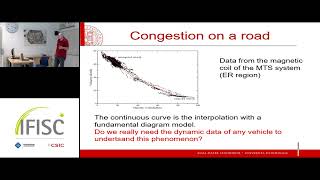
A City Digital Twin for Sustainable Mobility: Big Data Analytics and Predictive Models
Explore big data analytics and predictive models for sustainable urban mobility using digital twin technology.
Build ML-Enhanced Event Streaming Apps with Python Microservices - Conf42 Python 2023
Develop ML-enhanced event streaming applications using Python microservices, exploring real-time data processing and machine learning integration.
Anomaly Detection with Apache Pinot and ThirdEye
Explore anomaly detection techniques using Apache Pinot and ThirdEye for efficient cloud-native data analysis and monitoring.
Unlocking Reasoning in Large Language Models - Conf42 ML 2023
Explore advanced techniques for enhancing reasoning capabilities in large language models, from chain-of-thought prompting to tool usage and iterative approaches.
A Gentle Introduction to Vector Databases
Explore vector databases, semantic search, and machine learning models for unstructured data processing. Learn about Weaviate and see a practical demo of vector search in action.
Quantum-Inspired Annealing: The State of Play
Explore quantum-inspired annealing's current state, comparing quantum and classical approaches, and examining benchmarks for various optimization problems.
Understanding and Using AI and Machine Learning 101
Explore AI and ML applications in business, focusing on Oracle's tools for database management, analytics, and generative AI. Learn about algorithms, AutoML, and the future of AI in various industries.

Player Piano - The World of ADW and ATP - DevOps 2024
Explore the world of ADW and ATP, autonomous databases, and their impact on DevOps. Gain insights into machine learning integration and future trends in database management.
Empowering AWS DevOps with Python and Machine Learning
Optimize AWS DevOps using Python and machine learning techniques for efficient cloud infrastructure scaling and performance improvement.
Use of Python for Cutting-Edge Language Model Research
Explore Python's role in cutting-edge language model research, focusing on mechanistic interpretability, causal interventions, and practical examples using interpretability libraries.
Practical AI with Machine Learning for Observability in Netdata
Explore AI-driven observability in Netdata, comparing traditional monitoring with innovative approaches. Learn about distributed monitoring, anomaly detection, and future ML developments for enhanced system insights.
Build and Orchestrate Serverless Generative AI Applications
Learn to build and orchestrate serverless generative AI applications using AWS services like Amazon Bedrock and Step Functions. Explore integration techniques, error handling, and human feedback loops in AI workflows.