Plone 5 and How to Use Machine Learning With It
Explore integrating machine learning with Plone 5 CMS using sklearn for content classification and clustering, featuring real-world use cases and enhanced frontend development.

Machine Learning for Dummies with Python
Beginner-friendly introduction to machine learning using Python and open-source libraries. Learn to implement basic ML concepts without advanced math skills.

Is That Spam in My Ham?
Learn to build a basic spam classifier using Python and Naive Bayes. Explore key machine learning concepts, implement a model to detect spam emails, and understand how to measure and improve classification performance.
Minds, Machines and Python
Explore AI through logic and language using simple Python programs, focusing on loops, self-reference, and tangled hierarchies as key concepts in understanding intelligence and learning.
Query Embeddings - Web Scale Search Powered by Deep Learning and Python
Explore query embeddings in web-scale search using deep learning and Python. Learn about unsupervised techniques, vector representations, and efficient retrieval systems for improved search engine performance.
Planning for the Worst
Explore strategies for handling production issues, from common errors to obscure failures. Learn practical tips, best practices, and code solutions to enhance system reliability and resilience.
I Hate You, NLP
Explore sentiment analysis in Python, from basic semantic mapping to advanced machine learning techniques. Learn pitfalls, see hands-on code, and discover tools for accurate emotion detection in text data.
High Performance Python on Intel Many-Core Architecture
Explore high-performance Python acceleration on Intel processors for scientific computing, data analytics, and machine learning, focusing on the latest Intel architectures and software tools.
Un Vector por Tu Palabra
Exploración de representación distribuida de palabras y su aplicación en clasificación de textos de redes sociales, utilizando el ecosistema científico de Python para experimentos replicables.
Deep Learning with Python & TensorFlow
Explore deep learning with TensorFlow: compare Python ML libraries, create data flow graphs, and learn deployment strategies for production systems.
How Can Machine Learning Help to Predict Changes in Size of Atlantic Herring
Explore machine learning techniques to predict Atlantic herring size changes using environmental and fishing data, with implications for conservation and sustainable fisheries management.
Machine Learning - Power of Ensembles
Explore ensemble methods in machine learning, combining diverse models for improved accuracy. Learn bagging, boosting, and stacking techniques with real-world examples and practical insights.
Scientist Meets Web Dev - How Python Became the Language of Data
Explore Python's evolution as a data science powerhouse, blending scientific computing with web development. Learn how this versatile language empowers researchers and analysts to tackle complex data challenges.
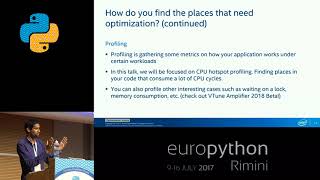
Python Profiling with Intel VTune Amplifier
Explore Python performance analysis using Intel® VTune™ Amplifier, a GUI tool for identifying bottlenecks, analyzing call stacks, and optimizing code efficiency in high-performance computing and machine learning applications.
A Gentle Introduction to Data Science
Explore data science fundamentals, from AI's influence to practical machine learning in Python. Covers key concepts, problem-solving applications, and essential Python tools for aspiring data scientists.
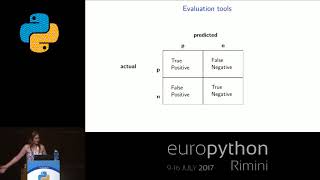
Baby Steps in Short-Text Classification with Python
Explore short-text classification using Python, from problem approach to model deployment. Learn about Naive Bayesian models, alternative algorithms, and practical implementation in production environments.
How Booking.com Serves Deep Learning Model Predictions
Discover Booking.com's approach to deploying deep learning models in production, covering training, automated retraining, deployment, and optimization for latency and throughput.
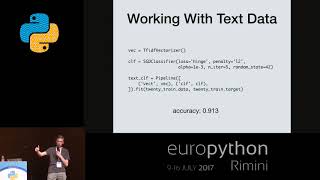
Explaining Behavior of Machine Learning Models with ELI5 Library
Explore techniques for interpreting and debugging ML models using eli5 library. Learn to explain linear models, decision trees, ensembles, and classifiers, improving trust and quality in ML solutions.
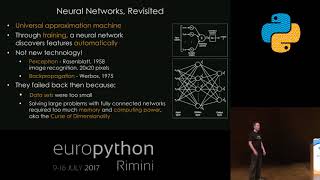
AI on a Pi
Explore Deep Learning with Python and MXNet, including practical demonstrations on a Raspberry Pi for computer vision and natural language processing tasks.
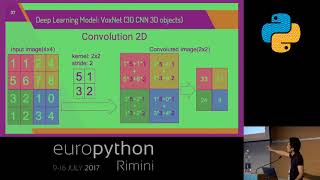
How to Apply Deep Learning for 3D Object Recognition
Practical guide to achieving 80% accuracy in 3D object recognition using deep learning, covering data preparation, model optimization, and implementation strategies.
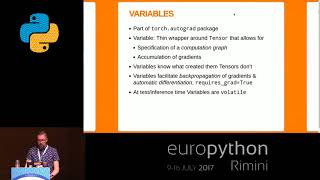
An Introduction to PyTorch & Autograd
Explore PyTorch's dynamic computation graphs and Autograd package for efficient deep learning, with practical examples and insights into GPU processing and algorithmic differentiation.