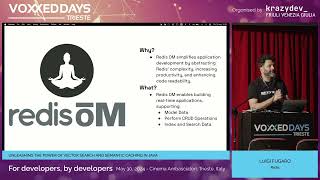
Unleashing the Power of Vector Search and Semantic Caching in Java
Explore vector search and semantic caching in Java using Redis OM, enabling efficient AI-powered applications with seamless integration of OpenAI, Hugging Face, LangChain, and LlamaIndex.
Direct Preference Optimization - Fine-Tuning LLMs Without Reinforcement Learning
Explore Direct Preference Optimization (DPO), an efficient method for training Large Language Models without reinforcement learning. Learn about the Bradley-Terry model, KL divergence, and loss function.

Google I/O Special: Latest AI Developments with Mat Velloso and Logan Kilpatrick
Explore the latest AI developments from Google I/O with industry leaders, discussing AI's impact, Google's new AI tools, and future predictions for the technology landscape.
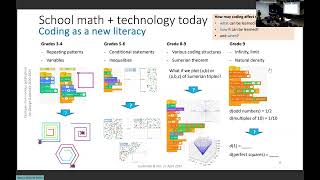
Artificial Intelligence and Mathematics Education: Developing Low-Floor, High-Ceiling Resources
Explore AI's mathematical foundations and their integration into K-12 education. Discover low-floor, high-ceiling resources for teaching AI concepts across grade levels.

Machine Learning for Transaction Monitoring in the Anti-Money Laundering Framework: Challenges and Opportunities
Explore machine learning applications in anti-money laundering, focusing on transaction monitoring challenges and opportunities within complex financial networks.
Designing AI for Network Troubleshooting - A Langchain Proof of Concept
Explore AI-enhanced network troubleshooting using Langchain, interfacing LLMs with devices to extract crucial information. Gain insights and witness a live demonstration.
From OpenAI to Open Source AI: Navigating Between Commercial Ownership and Collaborative Openness
Explore the evolution of generative AI, examining the balance between commercial interests and open collaboration. Analyze openness levels, computing power dynamics, and diverse projects shaping AI's future.
Accelerating the LLM Lifecycle on the Cloud
Explore PyTorch Lightning and Lightning Studios for reproducible AI development on the cloud, enabling seamless accelerated computing and solving challenges of reproducibility and collaboration.
Deploy and Monitor ML Pipelines with Open Source and Free Applications
Learn to deploy and monitor ML pipelines using open-source tools. Automate data refresh, generate forecasts, and set up monitoring dashboards with GitHub Actions, Docker, MLflow, and more.
Building Reproducible ML Processes with an Open Source Stack
Explore open-source tools for reproducible machine learning, covering code, data, and environment management. Includes hands-on demonstration of experiment replication using KubeFlow, Git, Minio, and lakeFS.
AI Software Bill of Materials - From EU AI Act to MLOps
Explore the EU AI Act's transparency requirements and learn how to implement an AI Software Bill of Materials in your MLOps processes for enhanced compliance and transparency.
The Open Source AI Dilemma: Crafting a Clear Definition for Open Source AI
Explore the challenges of defining Open-Source AI, balancing innovation with fundamental freedoms. Discuss unique AI aspects, open frameworks, and community-driven solutions for shaping the future of AI development.

Hugging Face Accelerate: Making Device-Agnostic ML Training and Inference Easy at Scale
Learn to simplify ML model training and inference across devices using Hugging Face Accelerate. Explore its low-level interface, hardware compatibility, and scalable deployment features.
ML Data Version Control and Reproducibility at Scale
Explore data version control techniques for efficient ML model development, addressing reproducibility challenges and enabling scalable cloud-based training using open-source tools like Langchain and TensorFlow.
A Hopeful View of Truly Open Source AI
Exploring the potential societal benefits of transparent, open-source AI systems, emphasizing democratization and improved intelligent systems beyond current expectations.
Meet DBRX - The New Standard for High-Quality LLMs and Custom LLM Deployment
Explore DBRX, a high-quality open-source LLM, and learn to build custom models using MosaicAI. Discover how to overcome challenges in GenAI applications and create efficient, tailored solutions.
Fireside Chat on PyTorch and Machine Learning
Insightful discussion on PyTorch's development, AI trends, and the future of machine learning with industry experts Soumith Chintala and Merve Noyan.
Optimizing Kubernetes Cluster Scaling for Advanced Generative Models
Explore advanced techniques for scaling Kubernetes clusters to support complex generative models, leveraging tools like Flyte, MLflow, and Kubeflow for efficient deployment and management.
Common Corpus - Opening Data for Building Open Source LLMs
Explore the creation of Common Corpus, a groundbreaking open data collection for training LLMs, addressing legal challenges and emphasizing data quality to empower open-source AI development.
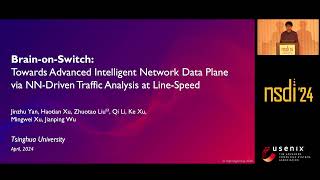
Brain-on-Switch: Advanced Intelligent Network Data Plane via NN-Driven Traffic Analysis
Innovative approach to enable neural network-driven traffic analysis at line-speed in programmable networks, overcoming limitations of tree-based models and enhancing intelligent network data plane capabilities.

Approximate Caching for Efficiently Serving Text-to-Image Diffusion Models
Innovative caching technique for text-to-image generation, reducing GPU compute, latency, and costs while maintaining quality. Explores real-world applications and performance improvements.