TensorFlow 2.0 GPU, Keras, and Python 3.7 Installation Guide for Windows 10 - 2020 Update
Comprehensive guide for setting up TensorFlow 2.0 with GPU support on Windows 10, covering installation of necessary drivers, CUDA, cuDNN, and Anaconda environment configuration.
Generating Faces with a Generative Adversarial Networks - GAN in Keras-Tensorflow 2.0
Learn to implement a Generative Adversarial Network (GAN) from scratch using TensorFlow and Keras to generate realistic human faces, with step-by-step guidance and practical code examples.
Multi-Variate Feature Engineering Presentation for Machine Learning
Learn advanced feature engineering techniques for machine learning, including feature importance, target coding, neural networks, and embedding layers to improve model performance and extrapolation.
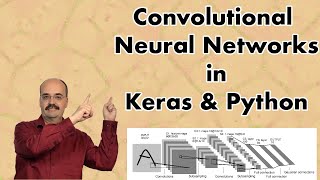
Keras Convolutional Neural Networks for MNIST and Fashion MNIST
Explore convolutional neural networks for image processing, focusing on MNIST and Fashion MNIST datasets. Learn about CNN architecture, training, and evaluation for advanced deep learning applications.
Statistical Learning Theory and Applications - Class 16
Explore statistical learning theory, focusing on complexity, dual norm equality, and calligraphic G. Gain insights into advanced concepts and their applications in machine learning.
Statistical Learning Theory and Applications - Class 6
Explore statistical learning theory with focus on Newton's method, recursive computation, and online methods for efficient problem-solving and data analysis.
Statistical Learning Theory and Applications - Class 7
Explore statistical learning theory, covering least squares, gradient descent, regularization, and induction, with insights into historical context and practical applications.

The Deep Learning Revolution
Explore the evolution of deep learning, from its origins to modern applications, covering key milestones, breakthroughs, and future prospects in AI and neuroscience.
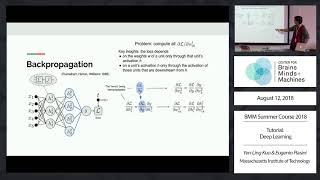
Deep Learning Tutorial
Explore deep learning fundamentals, from supervised learning to convolutional networks, with practical examples and historical context. Gain insights into advanced concepts and applications.
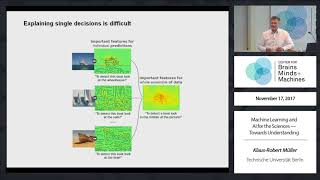
Machine Learning and AI for the Sciences - Towards Understanding
Explore ML and AI applications in sciences, focusing on neuroscience, medicine, and physics. Learn about extracting insights from ML models to enhance understanding in fields like quantum chemistry.
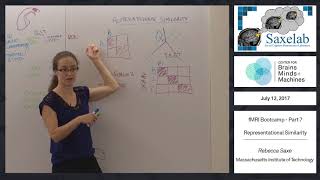
FMRI Bootcamp - Representational Similarity
Explore advanced fMRI analysis techniques, focusing on representational similarity and its applications in neuroimaging research.
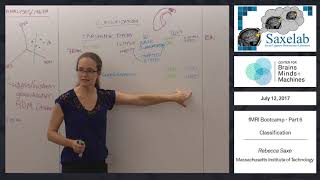
FMRI Bootcamp - Classification
Explore fMRI classification analysis techniques, including training vs testing, generalization, and hierarchical logic, with insights on visual stream processing.
Generalization Error and Stability
Explore statistical learning theory, focusing on generalization error, stability, and empirical risk minimization. Gain insights into universal consistency and the law of large numbers.
Algorithmic Motion Planning Meets Min-Invasive Robotic Surgery
Explores algorithmic motion planning for minimally-invasive surgical robots, focusing on efficient planning methods with provable guarantees to enhance safety and effectiveness in medical procedures.
How Will Quantum Computing Change the Technology Landscape? - Bruce Davie, Systems Approach, LLC
Explore quantum computing's potential impact on technology, from achieving quantum supremacy to revolutionizing cryptography, optimization, and machine learning, while addressing challenges and separating hype from reality.
Searching for Information in the Ocean - Adaptive Sampling of Dynamic Processes in Coastal Areas and Fjords Using Autonomous Underwater Vehicles
Exploring adaptive sampling techniques using autonomous underwater vehicles for studying dynamic coastal ocean processes, focusing on phytoplankton biomass and its impact on biogeochemical processes.
2019 ADSI Summer Workshop- Algorithmic Foundations of Learning and Control
Explore uncertainty in perception for control systems, covering model-free algorithms, pixel-based control, and machine learning applications in robotics and autonomous systems.
2019 ADSI Summer Workshop- Algorithmic Foundations of Learning and Control
Explore advanced techniques in reinforcement learning, focusing on randomized value functions and their applications in exploration strategies for complex decision-making problems.
ADSI Summer Workshop: Algorithmic Foundations of Learning and Control - Emma Brunskill
Explore batch/counterfactual reinforcement learning techniques to optimize decision-making with minimal data, focusing on policy evaluation, generalization bounds, and applications in healthcare simulations.
ADSI Summer Workshop- Algorithmic Foundations of Learning and Control
Explore model-based control for physical systems, covering inverse dynamics, optimization techniques, and automated discovery methods for advanced robotics and control applications.
2019 ADSI Summer Workshop- Algorithmic Foundations of Learning and Control, Vikash Kumar
Explore algorithmic foundations of learning and control in robotics, covering model-based approaches, skill dynamics, and real-world applications with Google Brain researcher Vikash Kumar.