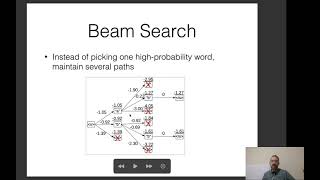
Neural Nets for NLP 2021 - Conditioned Generation
Explore encoder-decoder models, conditional generation, search techniques, ensembling, evaluation methods, and various data types for conditioning in neural network-based natural language processing.
Neural Nets for NLP - Efficiency Tricks for Neural Nets
Explore efficiency techniques for neural networks in NLP, including GPU optimization, parallel training, and softmax approximations for large vocabularies.
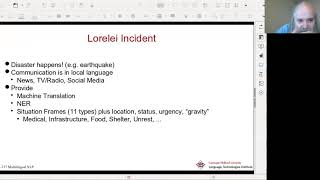
CMU Multilingual NLP - Information Extraction
Explore information extraction for low-resource languages and its application in disaster response through LORELEI project, with insights on methods, results, and practical implications.

CMU Multilingual NLP: Active Learning
Explore active learning in NLP, covering token and sequence-level techniques, uncertainty measures, and human effort considerations for efficient data annotation.
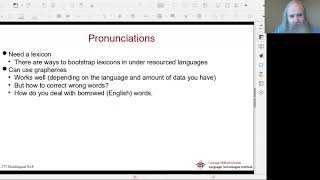
CMU Multilingual NLP 2020 - Text to Speech
Explore text-to-speech systems for low-resource languages, covering analysis, pronunciation, prosody, waveform generation, and cross-lingual models. Learn efficient TTS building and multilingual challenges.
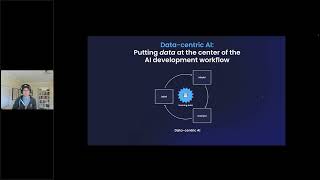
Operationalizing Organizational Knowledge with Data-Centric AI
Explore data-centric AI with Alex Ratner: operationalizing knowledge, managing training data, and leveraging foundational models for real-world applications in machine learning and responsible AI.

Text Extraction From a Corpus Using BERT - Question Answering
Learn to extract text from tweets using BERT for sentiment analysis. Hands-on tutorial covers data preparation, model implementation, and evaluation for Kaggle competition.
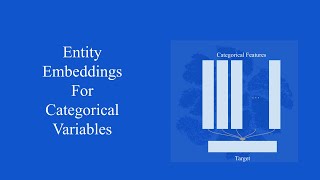
Entity Embeddings for Categorical Variables
Learn to implement entity embeddings for categorical variables using TensorFlow/Keras, with a focus on converting the model to PyTorch. Practical application using Kaggle competition data.

Training Sentiment Model Using BERT and Serving It With Flask API
Learn to build and deploy a high-accuracy sentiment analysis model using BERT and Flask API, covering data preparation, model training, and serving the model for real-world applications.
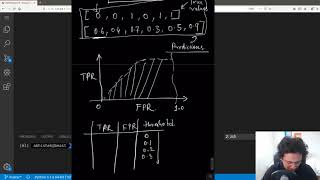
Simple and Basic Binary Classification Metrics
Learn essential binary classification metrics and enhance your machine learning framework with a customizable metrics class for improved model evaluation and performance analysis.
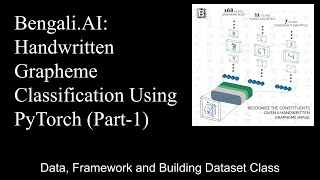
Bengali.AI- Handwritten Grapheme Classification Using PyTorch
Learn to approach Kaggle's Bengali.AI grapheme classification challenge using PyTorch, covering data exploration, framework setup, and dataset creation for multi-label image classification.

Intro and Building a Machine Learning Framework
Learn to build a reusable machine learning framework for tabular datasets, covering setup, training, and inference in a two-part video series.
PAC Learning
Explore PAC learning framework in machine learning, covering supervised classification, learnability criteria, and VC dimension. Understand theoretical foundations and practical implications.
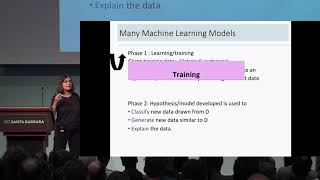
From Idea to Impact, the Crypto Story - What's Next?
Explore the intersection of cryptography and machine learning, examining challenges, impacts, and future directions in digital privacy, adversarial learning, and quantum resilience.
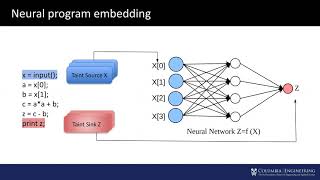
Neutaint- Efficient Dynamic Taint Analysis with Neural Networks
Explore efficient dynamic taint analysis using neural networks, overcoming limitations of traditional methods and improving performance in exploit analysis and fuzzing.

Membership Inference Attacks against Machine Learning Models
Explore membership inference attacks on machine learning models, focusing on techniques to determine if specific data was used in training, with implications for privacy and security in ML applications.
Is "Adversarial Examples" an Adversarial Example?
Explore adversarial examples in deep learning, their implications for security, and strategies for defense in this thought-provoking IEEE keynote by David Evans.
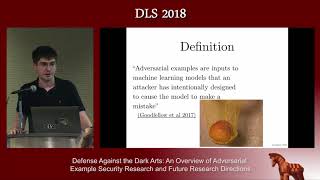
Defense Against the Dark Arts
Overview of adversarial example research in machine learning, exploring attacks, defenses, and future directions for enhancing AI security and robustness against malicious inputs.
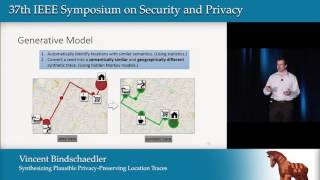
Synthesizing Plausible Privacy-Preserving Location Traces
Explore techniques for generating synthetic location data that preserves privacy while maintaining statistical similarity to real human mobility patterns, enhancing protection against inference attacks.
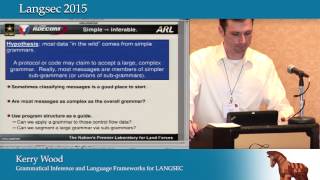
Grammatical Inference and Language Frameworks for LANGSEC
Explore grammatical inference and language frameworks for enhancing security protocols and parsers. Learn about pattern languages, formal systems, and their applications in HTTP session analysis.
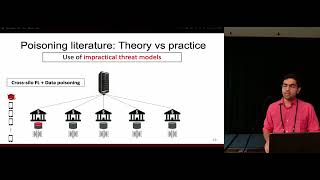
Back to the Drawing Board - A Critical Evaluation of Poisoning Attacks on Federated Learning
Critical evaluation of poisoning attacks on federated learning, examining threat models, attack types, and robustness across different FL settings. Insights for researchers and practitioners in secure machine learning.