Scikit-Learn Pipeline and Cross-Validation - Day 13 of 30 Days of ML
Learn advanced machine learning techniques with Scikit-Learn, focusing on pipelines for organized code and cross-validation for improved model performance evaluation. Part of a 30-day ML challenge.
Kaggle 30 Days of ML - Day 12 - Missing Values and Categorical Variables
Explore missing values and categorical variables in machine learning, learning practical approaches to handle data imperfections and enhance model performance.
Overfitting, Underfitting, and Random Forests in Machine Learning - Day 10
Explore overfitting, underfitting, and random forests in machine learning. Learn to build accurate models and apply these concepts to improve your ML skills.
PyTorch NLP Model Training and Fine-Tuning on Colab TPU Multi-GPU with Accelerate
Learn to train and fine-tune PyTorch NLP models on Colab TPU using Hugging Face's Accelerate library for efficient multi-GPU/TPU implementation with minimal code changes.
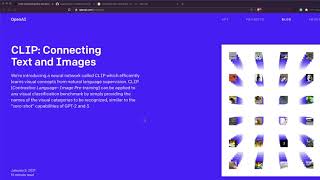
Zero-Shot Image Classification with OpenAI's CLIP Model
Explore OpenAI's CLIP model for zero-shot image classification, demonstrating its ability to predict relevant text for images using natural language instructions without task-specific training.
Sentiment Analysis in R with Sentimentr - Handling Negation and Valence Shifters
Explore sentiment analysis in R using {sentimentr}, handling negation and valence shifters for accurate text data analysis of emotions and profanity.

Unsupervised Learning for Stellar Spectra with Deep Normalizing Flows - Jo Ciuca
Explore unsupervised machine learning techniques for analyzing stellar spectra using deep normalizing flows, with applications in galaxy evolution and big data astronomy.
Everything You Need to Know About GPT-4
Comprehensive overview of GPT-4's capabilities, improvements, and potential applications, exploring its advancements in language understanding and generation compared to previous models.
Latent Dirichlet Allocation Tutorial
Explore Latent Dirichlet Allocation in Python: Learn to implement this powerful topic modeling technique for text analysis and document classification.

Building a Dog Breed Identifier App From Scratch - DogNet
Learn to build a dog breed identifier app from scratch, covering data collection, model training, and deployment to the Google Play Store.
Machine Learning with Python - Python for Data Science and Machine Learning
Comprehensive tutorial on NumPy, Pandas, and data visualization tools for Python-based machine learning, covering array operations, data manipulation, and creating statistical graphics.
Supervised Machine Learning Tutorial - Logistic Regression - Naive Bayes Classifier
Explore logistic regression and Naive Bayes classifiers for supervised machine learning. Learn their advantages, applications, and implementation in classification tasks for data-driven decision making.

Batch Normalization in PyTorch - Adding Normalization to Convolutional Neural Network Layers
Learn to implement batch normalization in convolutional neural networks using PyTorch. Explore the benefits, create and compare networks, and optimize performance through hands-on coding and practical examples.
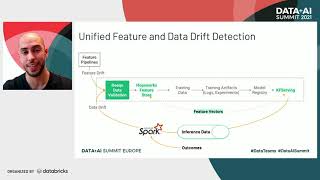
KFServing - Model Monitoring with Apache Spark and Feature Store
Explore an open-source platform for scalable model serving and monitoring using KFServing, Hopsworks Feature Store, and Spark Streaming. Learn continuous data drift detection and see a live demonstration.
Object Detection with Transformers - From Training to Deployment
Explore cutting-edge object detection using transformers, from fundamental concepts to advanced techniques. Learn scalable training with Determined AI and deployment using MLflow.
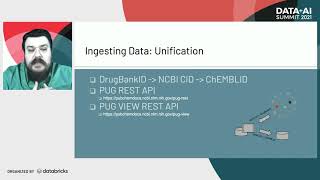
Drug Repurposing Using Deep Learning on Knowledge Graphs
Explore deep learning on knowledge graphs for drug repurposing, covering graph building, latent relationship prediction, and application to existing drugs for new treatments.
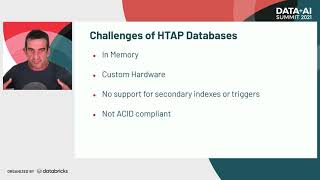
Unified MLOps: Feature Stores and Model Deployment
Explore a new MLOps approach merging databases, feature stores, and ML for scalable model production. Learn about Splice Machine's hybrid database and its applications in feature engineering and model deployment.

PyTorch and COVID-19 Research: Advancements in AI and Data Analysis - Keynotes
Explore PyTorch's advancements in machine learning and learn how AI is helping manage COVID-19 research data, featuring insights on industry adoption and scientific information accessibility.
Simplifying Model Development and Management with MLflow - New Features and Innovations
Explore MLflow's latest features for simplified experiment tracking, improved model portability, schema management, and faster deployment in machine learning lifecycle management.
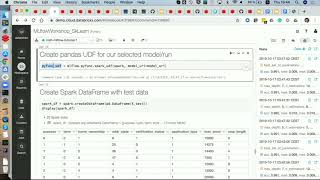
Managing the Complete Machine Learning Lifecycle with MLflow - Part 2
Explore MLflow's capabilities for managing machine learning lifecycles, from data preparation to model deployment, with practical insights on hyperparameter optimization and production workflows.
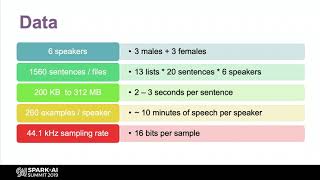
Listening at the Cocktail Party - Deep Neural Networks for Speech Separation
Explore deep neural networks for speech separation, focusing on data preparation, network architectures, and real-time implementation on embedded devices for smart audio applications.