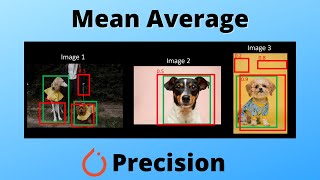
Mean Average Precision Explained and PyTorch Implementation
Learn to calculate and implement Mean Average Precision (mAP) for evaluating object detection models, with a detailed explanation and hands-on PyTorch implementation from scratch.
TensorFlow Tutorial - Model Subclassing with Keras - Part 8
Learn to build flexible TensorFlow models using Keras subclassing, including a ResNet-like model with skip connections. Gain advanced model creation skills beyond Sequential and Functional APIs.

Pytorch Text Generator With Character Level LSTM
Learn to build a character-level LSTM text generator in PyTorch, focusing on generating new baby names. Explore practical implementation of RNNs for creative text generation tasks.
Neural Network from Scratch - Machine Learning Python
Implement a neural network using Python and numpy, focusing on the coding aspects while building upon previously explained mathematical concepts.

K-Nearest Neighbor From Scratch - Machine Learning Python
Implementación desde cero del clasificador K-Nearest Neighbor en Python, incluyendo una versión intuitiva y otra eficiente sin bucles para el aprendizaje automático.
Neural Network from Scratch with Python - Part 4
Implement a neural network using Numpy, learning to build deep learning models from the ground up without relying on high-level frameworks.
AI Learns What to Do Next Using TensorFlow and Python
Learn to predict future events using TensorFlow and Python. Build LSTM models, preprocess data, and generate next best actions for practical applications like sales progression.
Comparing AI Image Caption Models: GIT, BLIP, and ViT+GPT2
Explore a comparison of three cutting-edge AI image captioning models, analyzing their performance across diverse images and understanding their unique approaches to vision-language tasks.

Stable Diffusion 2.0 Fine-Tuning with DreamBooth on Free Colab
Fine-tune Stable Diffusion 2.0 with DreamBooth on free Google Colab. Create custom AI avatars and profile pictures. Learn data collection, processing, model training, inference, and conversion for Automatic1111 compatibility.
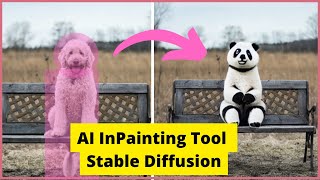
Replace ANYTHING with Stable Diffusion AI InPainting Tool Using Gradio
Learn to create an AI in-painting tool using Hugging Face Gradio and Diffusers, enabling you to replace any element in an image with Stable Diffusion technology.
OPT-175B Language Model Tutorial - GPT-3 Alternative Using Hugging Face
Learn about Meta AI's OPT-175B language model, including a live demo and hands-on coding for text generation using Hugging Face Transformers. Explore this open-source alternative to GPT-3.

ML-Powered Web Apps - React, Javascript Tutorial with Gradio API - Hugging Face
Build ML-powered web apps using Gradio API on Hugging Face Spaces. Learn to integrate machine learning capabilities into vanilla JavaScript or React applications for free.
Real-Time Live Speech-to-Text - Streaming ASR Gradio App with Hugging Face Tutorial
Build a real-time speech-to-text app using Hugging Face Transformers and Gradio. Learn to implement live audio transcription with Facebook's Wav2Vec2 model in this hands-on tutorial.
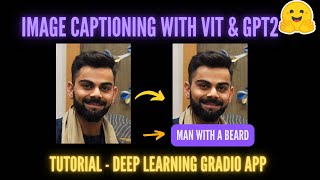
Image Captioning Python App with ViT and GPT2 Using Hugging Face Models - Applied Deep Learning
Learn to create an image captioning app using ViT and GPT2 models from Hugging Face. Build a Gradio interface and deploy it on the Model Hub for easy access and sharing.
Custom NER with spaCy v3 Tutorial - Named Entity Recognition Tutorial
Learn to build custom Named Entity Recognition models using spaCy v3, including data annotation with free tools and training techniques for improved NLP applications.
Topic Modelling with BERTopic - Applied NLP Tutorial
Learn topic modeling with BERTopic, extract insights from Kaggle notebooks, and create interactive visualizations. Master applied NLP techniques using transformers and c-TF-IDF for interpretable, dense topic clusters.
AutoXGB - Automated ML with XGBoost + Optuna + FastAPI - Kaggle Demo
Explore AutoXGB, a Python library for automated machine learning using XGBoost, Optuna, and FastAPI. Learn its parameters and application in a Kaggle competition.
Understanding SHAP Summary Plot - Interpretable Machine Learning - Day 19
Explore SHAP and Shapley values for interpretable machine learning, focusing on summary plots and dependence plots to enhance model explainability and insights.
Partial Dependence Plots in Machine Learning Explainability - Day 17 of Kaggle's 30 Days of ML
Explore Partial Dependence Plots for interpretable machine learning. Learn to visualize, build, and interpret PDPs, including 2D plots, to enhance model explainability and insights.
Feature Importance in Machine Learning - Permutation Importance with ELI5
Explore permutation importance in machine learning, understanding its significance and application through hands-on examples using ELI5 for Random Forest models.
XGBoost and Data Leakage in Machine Learning - Day 14 of 30 Days of ML
Explore XGBoost and data leakage in machine learning. Learn to build optimized models, prevent leakage issues, and enhance your ML skills with practical tutorials and exercises.