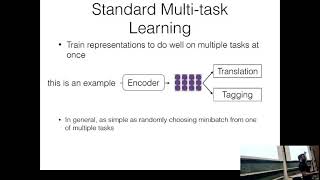
Neural Nets for NLP - Multi-task, Multi-lingual Learning
Explore multi-task and multi-lingual learning in NLP, covering feature extraction, pre-training encoders, parameter adaptation, and structured prediction across languages.
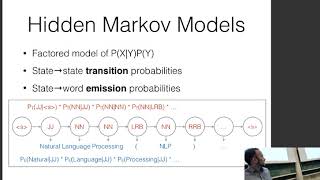
Neural Nets for NLP 2019 - Unsupervised and Semi-supervised Learning of Structure
Explore unsupervised and semi-supervised learning methods for NLP, covering feature and structure learning, design decisions, and practical examples in this advanced lecture.
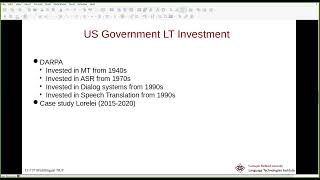
CMU Multilingual NLP - The LORELEI Project
Explore rapid development of low-resource information extraction in new languages, focusing on the LORELEI project's techniques, challenges, and real-world applications in disaster scenarios.
CMU Multilingual NLP - Syntax and Parsing
Explore syntax, dependency parsing, and linguistic discovery with AutoLex. Learn about major word orders, parsing models, and tools for multilingual NLP research and applications.
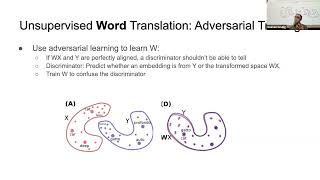
CMU Multilingual NLP 2022 - Unsupervised Machine Translation
Explore unsupervised machine translation techniques, including initialization methods, word translation, and back-translation, for scenarios without parallel data.
CMU Multilingual NLP 2022 - Data-Driven Strategies for NMT
Explore data-driven strategies for neural machine translation, including evaluation methods, data augmentation techniques, and approaches for high and low-resource languages.
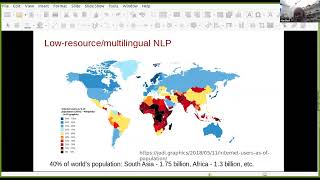
CMU Multilingual NLP 2022 - Typology
Explore language similarities, families, and typology. Learn about databases like WALS and techniques for typology prediction and language transfer in multilingual NLP.
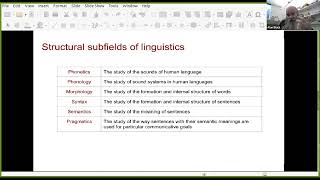
CMU Multilingual NLP 2022 - Words, Parts of Speech, Morphology
Explore words, parts of speech, and morphology in multilingual NLP, covering linguistic concepts, UD Treebank annotations, and morphological analysis techniques.
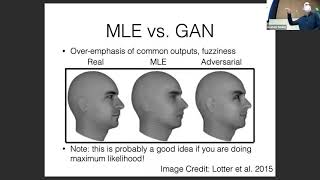
CMU Advanced NLP 2021 - Adversarial Learning
Explore adversarial learning in NLP, covering GANs, discrete outputs, and input adversaries. Gain insights into advanced techniques for robust language models and style transfer.
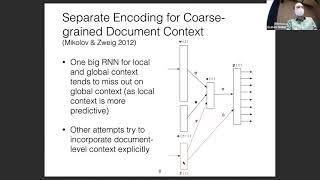
CMU Advanced NLP: Document-Level Modeling
Explore advanced NLP techniques for long documents, including feature extraction, coreference resolution, and discourse parsing. Gain insights into state-of-the-art models and their applications.
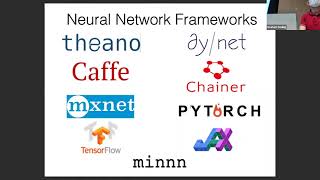
CMU Advanced NLP: Text Classification
Comprehensive introduction to neural networks for NLP, covering core concepts like forward/backward algorithms, parameter updates, and training techniques for text classification tasks.
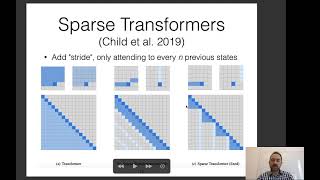
Neural Nets for NLP 2021 - Document-Level Models
Explores advanced NLP techniques for document-level tasks, including long-document modeling, entity coreference, and discourse parsing, with a focus on neural network approaches and their applications.
Creative AI Conversations - Emergence of Intelligence from Resource Constraints
Explore AI's evolution, constraints, and ethics with Google Brain scientist David Ha. Gain insights on intelligence emergence, practical solutions, and the future of creative technology.

GPT-2 and Transformers
Explore text-based AI models, focusing on GPT-2 and Transformers. Learn about their architecture, capabilities, and potential applications in natural language processing.
OpenAI ChatGPT - The Future Is Here
Explore ChatGPT's capabilities in writing, design, problem-solving, and creative tasks. Learn about its potential applications and limitations in this comprehensive overview of the AI language model.
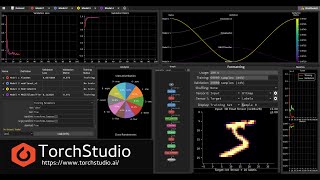
TorchStudio - Deep Learning Toolkit
Hands-on guide to TorchStudio: Access PyTorch datasets, train models, and compare results. Ideal for beginners and experienced users in the PyTorch ecosystem.
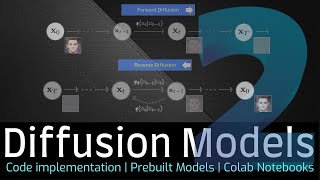
Diffusion Models - Google Colab Experimentation with Code and Prebuilt Models - Part 2
Hands-on exploration of Diffusion Models using Google Colab, covering probabilistic implementations and prebuilt models. Includes code examples and practical demonstrations of the denoising process.
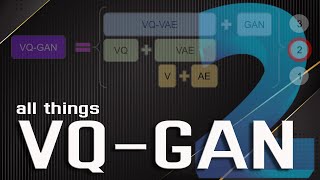
All Things VQGAN - Variational AutoEncoder and VQ-VAE with Codebook Explanations - Part 2
Explore Variational AutoEncoders and Vector Quantized VAE, focusing on codebook explanations. Learn how these advanced techniques improve upon traditional autoencoders for better image generation and representation.
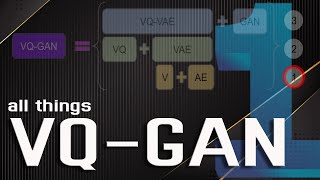
All Things VQGAN - AutoEncoder with Latent Space and Reconstruction Error - Part 1
Explore AutoEncoders, latent space, and reconstruction error in VQGAN. Learn key concepts and their applications in AI, with practical examples and in-depth explanations.
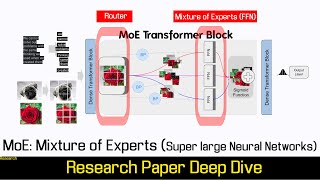
Research Paper Deep Dive - The Sparsely-Gated Mixture of Experts
Explore the Sparsely-Gated Mixture-of-Experts model, its architecture, and data processing for text and images. Learn about conditional computation and resource-efficient large-scale AI training.
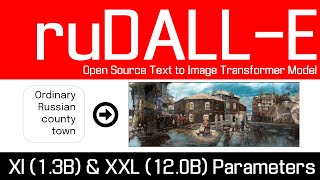
Text to Image Generation Using ruDALL-E Open Source Model
Explore ruDALL-E, an open-source text-to-image model based on DALL-E. Learn about its architecture, models, and try it out in Google Colab for generating images from text descriptions.