From NLP to NLU: Why We Need Varied, Comprehensive, and Stratified Knowledge - Neuro-Symbolic AI
Explore the importance of knowledge in AI systems for improved language understanding, addressing challenges in generative AI, and enhancing neuro-symbolic approaches for safer, more explainable AI.
Socially Responsible Machine Learning: Security, Robustness, and Beyond
Explore socially responsible machine learning, focusing on security and robustness. Discover methods to enhance adversarial robustness and address challenges in the era of foundational models.
Meta-Learning Dynamics Forecasting Using Task Inference
Explore meta-learning dynamics forecasting using task inference to improve generalization across heterogeneous domains in deep learning models for predicting complex systems.

Scaling Unlocks Emergent Abilities in Language Models
Explore emergent abilities in large language models, including chain-of-thought prompting and instruction finetuning, and their potential impact on AI capabilities.
Population-Based Methods for Single- and Multi-Agent Reinforcement Learning - Lecture
Explore population-based methods for reinforcement learning, including MeanQ for single-agent scenarios and XDO for multi-agent adversarial environments. Gain insights into ensemble techniques and game theory applications.

Should We Teach Machine Learning Systems?
Explore feature engineering and instruction in machine learning to improve AI system output quality and reliability. Contrast with current hands-off learning approaches.

Unlocking Hearts by Locking Models: Solving Echocardiogram Problems Using a Self-Supervised Approach
Explore self-supervised learning for echocardiogram analysis, overcoming labeling challenges. Discover how ALAN concept enables feature extraction for segmentation and classification tasks across multiple datasets.

Few-Shot Learning for Health: How Sleep Cycle Separates Multiple People's Snoring
Discover how Sleep Cycle uses few-shot learning to differentiate snoring sounds, enhancing sleep analysis and health insights. Learn about the importance of snoring detection for overall well-being.
Modelling Ecosystems with Deep Reinforcement Learning
Explore ecosystem simulation using deep reinforcement learning, analyzing ecological impacts of human activities for informed decision-making in environmental planning.

GPT-SW3: The First Large Generative Language Model for Nordic Languages
Explore the development and applications of GPT-SW3, the pioneering large generative language model for Swedish, with insights on data challenges and future directions.

Explaining Stable Diffusion for Machine Learning Engineers
Dive deep into stable diffusion concepts, exploring diffusion models, training processes, text conditioning, and latent diffusion for machine learning engineers.
Scalable OpenAI GPT Applications in the Cloud
Explore integrating OpenAI GPT models into applications and leveraging cloud services for scalability. Learn implementation methods and strategies for building AI-powered, scalable apps.
Quantum Machine Learning - Cutting Through the Buzzword BS
Explore the intersection of quantum computing and machine learning, examining QML's viability, progress, and challenges. Learn how ML developers can contribute to open-source QML projects like Qiskit Machine Learning.

The Computational Gauntlet of Human-Like Learning
Explore AI systems that mimic human-like learning in mathematics and driving. Discover characteristics of human behavior that challenge traditional machine learning approaches and offer new paths to expertise acquisition.

Prioritized Training Using Reducible Holdout Loss Selection (RHO-LOSS) - Accelerating Machine Learning
Accelerate machine learning training by prioritizing data points that reduce generalization loss, improving efficiency and accuracy across various architectures and datasets.

Pragmatic Interpretability - A Human-AI Cooperation Approach
Explore pragmatic interpretability in machine learning, focusing on human-AI cooperation, selective explanations, and incorporating human intuition to enhance decision-making and model understanding.
Challenges in Deep Learning - Open Problems and Recent Observations
Explore key open problems in deep learning, focusing on continual learning and implicit biases. Gain insights from a leading researcher on crucial areas for advancing the field.
Expert-Informed, User-Centric Explanations for Image Classification with Deep Learning
Explore expert-informed, user-centric explanations for image classification using deep learning. Gain insights into diagnostic feature labeling and its applications in various fields.

Modular and Composable Transfer Learning
Explore parameter-efficient transfer learning with adapters, enabling modular and composable fine-tuning for improved task performance and cross-lingual generalization in transformer-based models.
Learning Visual Representations with Limited Labels for Semantic Image Understanding
Explore visual representation learning techniques using limited labels, including self-supervised methods, image grouping, model distillation, and adversarial robustness in deep learning.
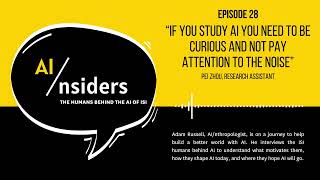
Curiosity and Focus in AI Studies: Navigating the Field
Explore AI's potential to build a better world, focusing on curiosity, communication, and interdisciplinary approaches while addressing challenges in model self-awareness and understanding subtext.