Red Teaming of LLM Applications - From Prototype to Production
Explore techniques to detect vulnerabilities in LLM applications, focusing on automated safety assessments and benchmarking methods for secure GenAI system deployment.
Efficient MLOps: Developing and Deploying ML Models with Databricks
Explore efficient MLOps framework design for ML model development and deployment, covering environment management, CI/CD pipelines, and tools like Unity Catalog and MLflow for model monitoring and progression.
Skyscanner's Journey of Enabling Practical Data and AI Governance
Discover how Skyscanner revolutionized their data infrastructure using lakehouse architecture and Unity Catalog, enabling effective governance and powering critical AI and ML applications.
Methods for Evaluating Your GenAI Application Quality
Explore comprehensive tools for evaluating GenAI applications, including inference tables, Lakehouse Monitoring, and MLflow. Learn best practices for offline and real-time quality assurance in production environments.
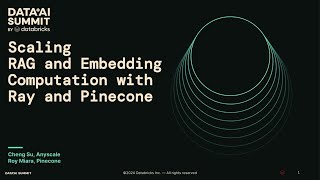
Scaling RAG and Embedding Computations with Ray and Pinecone
Learn to efficiently scale retrieval augmented generation using Ray Data and Pinecone, enabling rapid embedding generation for LLM applications with distributed processing and vector database integration.
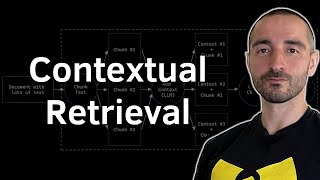
Build Better RAGs with Contextual Retrieval
Enhance RAG systems with contextual retrieval to improve context chunk quality and generate more accurate answers. Learn implementation techniques and practical applications.

What Enterprises Get Wrong About AI Adoption - Crawl, Walk, Run, Fly
Explore common AI adoption mistakes in enterprises and learn a phased approach: crawl, walk, run, fly. Gain insights for successful implementation.
Tuning Gemma for a Spoken Language AI Assistant - Build with Google AI
Explore creating a multilingual AI assistant using Gemma. Learn to tune models for specific tasks and languages, with insights from developers and practical extension tips.
Challenges and Opportunities Building LLM-Powered Applications
Explore end-to-end architecture for LLM-powered applications, covering design patterns, open-source tools, fine-tuning techniques, and guardrails using a knowledge management example.

What We Learned from 570K ChatGPT Interaction Logs In The Wild
Explore insights from 570K ChatGPT conversations, revealing diverse user prompts and potential toxic use-cases. Learn about fine-tuning instruction-following models using this rich dataset.
Violet Teaming AI in the Life Sciences
Explore AI's impact on life sciences, balancing opportunities in health and biosecurity risks. Learn about violet teaming to maximize benefits while minimizing downsides in biological engineering.
Data-Centric Approach to Machine Learning in Health Applications
Explore robust data management practices for machine learning in health applications, addressing common pitfalls and showcasing solutions from neuroscience and cell biology research.

Modular Language Models: Addressing Limitations of Dense Training
Explore modular language models: specialized components for distinct domains, enabling customization, parallelization, and sparse activation. Discover a new approach to collaborative LM development.

Drinking From The Firehose of Science: Developments in Semantic Scholar and Scientific Literature Access
Explore recent developments in Semantic Scholar and learn how to leverage its APIs for scientific literature analysis. Discuss strategies to increase diversity in scientific participation.
AI on the Edge: Hardware-Software Co-Design for Graph Analytics and Neural Networks - Session 3
Explore cutting-edge research on hardware-software co-design for AI, including graph analytics, neural networks, object detection, and federated learning.
AI on the Edge - TinyML and Machine Learning for Edge Devices - Session 1
Explore cutting-edge research on TinyML and edge AI, covering neural navigation, IoT deep learning, distributed transformers, and collaborative edge training.
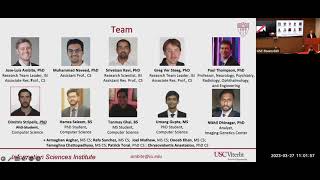
Federated Learning and Integration of Biomedical Data
Explore federated learning for secure biomedical data collaboration, integrating data harmonization and imputation techniques. Discover applications in neuroimaging tasks.
Diffusion, Probability, and the Age of Creative AI
Explore diffusion models in AI art generation, their information-theoretic foundation, and improvements in density estimation, interpretability, and sampling speed.

Getting AI to Do Things I Can't - Automatically Searching and Explaining Patterns in Text
Explore techniques for leveraging AI in complex NLP tasks, including pattern searching and SQL labeling, while enabling effective human oversight and uncovering unexpected insights.
Cognitive Electronic Warfare: Using AI to Solve EW Problems
Explore AI applications in electronic warfare, including real-time learning and evaluation techniques for enhancing battlefield responsiveness and effectiveness against complex emitters.

Designing and Evaluating Language Models for Human Interaction
Explore language model design and evaluation for human interaction, covering text infilling, collaborative writing analysis, and a new framework for assessing human-AI language interaction.