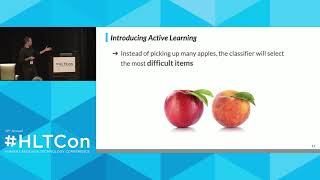
Custom Models in No Time - How Active Learning Is Changing AI
Active learning techniques to reduce annotation time and cost for machine learning models, improving efficiency in creating custom AI solutions for tasks like named entity recognition.
The Power of Graph Learning - Richard M. Karp Distinguished Lecture
Explore graph learning's applications, methods, and theoretical foundations. Discover connections between graph learning and database theory for insights into expressive power potential.
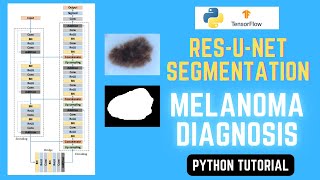
Res-UNet for Melanoma Segmentation - TensorFlow Tutorial
Step-by-step guide to implement and train a Res-UNet model for Melanoma detection using TensorFlow and Keras. Learn to build, train, test, and visualize results for accurate skin lesion segmentation.
Power of AI - A Game-Changer in Sports and Beyond
Discover how AI revolutionizes tennis analytics and its potential to transform various aspects of our world. Gain insights from an industry expert on the future of artificial intelligence.
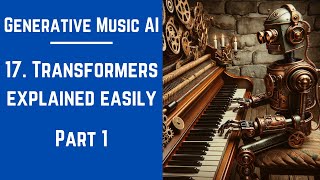
Transformers Explained - Part 1: Generative Music AI
Comprehensive exploration of transformer architectures in AI, covering intuition, theory, and mathematical formalization, with focus on their application in music and audio processing.
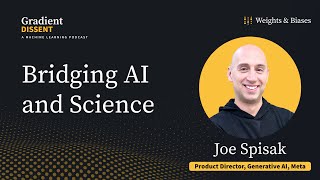
The Impact of Machine Learning on Material Innovation and Scientific Progress
Explore AI's impact on science, business, and technology with Meta's Joe Spisak. Discuss GPT, Llama2, and AI applications in biology and material science. Examine ethical considerations and the future of open-source AI development.
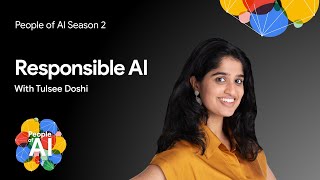
Responsible AI and Human-Centered Technology - Building Ethical and Inclusive Products
Explore responsible AI and inclusive technology with Google's Tulsee Doshi. Learn about ethical product development, AI principles, and tools for building trustworthy, personalized experiences that benefit users.
FATE-LLM - Empowering Large Language Models with Federated Learning
Explore FATE-LLM, integrating federated learning with large language models to address data privacy concerns. Learn about its components, implementation on Kubernetes, and real-world applications.
The Truth About AI: My AI Life - 2023 Christmas Lectures - Lecture 2
Professor Mike Wooldridge explores AI's pervasive role in daily life, revealing its current applications and impact. The lecture offers insights into AI's present capabilities and future potential.
The Truth About AI: How to Build an Intelligent Machine - Lecture 1
Professor Mike Wooldridge explores the nature of artificial intelligence through experiments and demonstrations, investigating how AI learns and what it can do in this Royal Institution Christmas Lecture.
NeurIPS 2023 Poster Session 4 - Highlights in Machine Learning Research
Explore cutting-edge machine learning research in temporal action segmentation, test-time adaptation, recurrent neural networks, dictionary learning, equivariant adaptation, cross-task generalization, and adversarial learning.

Mamba: Linear-Time Sequence Modeling with Selective State Spaces
Explore Mamba, a novel linear-time sequence modeling architecture using selective state spaces. Learn about its advantages over Transformers and its applications in language, audio, and genomics.
Phi-2: Small Language Model Performance Tutorial - Google Colab with Python
Explore Microsoft's Phi-2, a compact yet powerful language model outperforming larger counterparts. Learn its training methods and test capabilities in coding, math, reasoning, and data extraction using Google Colab.
Energy Observability Using Kepler - Revolutionizing Cloud Efficiency
Explore Kepler, an innovative framework for monitoring power consumption in Kubernetes environments, enhancing cloud efficiency through advanced observability techniques and machine learning.
Accelerate Your GenAI Model Inference with Ray and Kubernetes
Explore serving large GenAI models efficiently using KubeRay on Kubernetes with hardware accelerators. Learn to scale workloads, optimize performance, and reduce costs for production-ready AI inference.
Limitless Growth and Opportunities - Data and Innovation in an AI World
Explore Azure's latest database innovations, AI technologies, and real-world applications. Learn to unlock your data's potential for enhanced application development and analytics.
What the AI Revolution Means for Open Source, Open Tech and Open Societies
Explore AI's impact on open-source communities, addressing challenges in access, innovation, discrimination, and environmental concerns while discussing potential solutions and ethical frameworks.
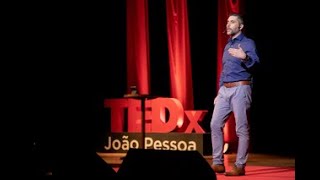
The Games of Intelligence - Human, Artificial and Emotional
Explore os jogos da inteligência humana, artificial e emocional, discutindo os avanços da IA e propondo uma nova abordagem para avaliar a inteligência emocional das máquinas.
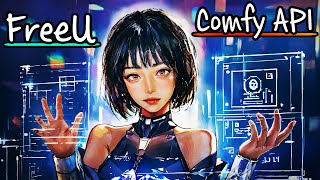
Improving Stable Diffusion Images with FreeU - Optimizing SDXL, LCM, and Turbo Models
Optimize Stable Diffusion images using FreeU hyperparameters. Learn to leverage ComfyUI API for grid searching ideal parameters in SDXL, LCM, and Turbo models. Practical demonstrations and comparisons included.
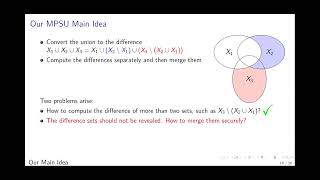
MPC for Specific Functionalities - AC 2023 Session
Explore advanced techniques in Multi-Party Computation (MPC) for specialized applications, focusing on cutting-edge research and practical implementations in cryptography.
Learn Docker Quickly - Machine Learning Project for Beginners
Hands-on Docker tutorial for beginners, covering containers, images, and Dockerfiles. Build a simple ML project using Huggingface Transformers and deploy to DockerHub.