Pre-Training BERT from Scratch - Building, Fine-Tuning, and Running Inference with KERAS NLP
Master BERT model pre-training, fine-tuning, and inference using TF2 and KERAS NLP through hands-on implementation of transformers for domain-specific tasks.

Sparrow - Google's Second Generation Conversational AI After BARD
Explore Google's Sparrow AI system, its architecture, and comparison with ChatGPT, featuring demonstrations and insights into next-generation conversational search technology and language models.

Pre-Training BERT from Scratch for Domain-Specific Knowledge Using PyTorch - Part 51
Master BERT model pre-training from scratch using PyTorch, focusing on domain-specific data. Build custom tokenizers, design architecture, and implement masked language modeling for specialized neural information retrieval systems.

Learning Vision Transformer (ViT) Technology: Research Methods and Resources - 2023
Discover effective strategies for learning and implementing Vision Transformer technology through top academic resources, code repositories, and research platforms like HuggingFace and Papers with Code.

SetFit and SBERT: Zero-Shot Classification with Synthetic Data Sets - Part 47
Discover how to leverage SetFit and SBERT for zero-shot classification by creating and utilizing synthetic data, enhancing performance in both zero-shot and few-shot scenarios.
Text Vectorization Made Easy - A Tutorial on Keras Preprocessing Layers for AI
Master text vectorization techniques in Keras preprocessing layers for transforming natural language inputs into numerical sequences and building efficient AI input processing pipelines.
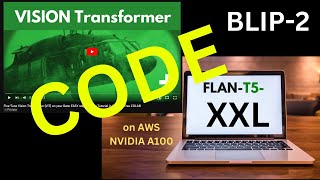
Building a BLIP-2 Application: Vision Transformer and Language Model Integration
Master building a multimodal AI system that combines Vision Transformers and language models to analyze images and generate contextual responses through practical implementation of BLIP-2 architecture.

Performance Analysis of 12 AI Language Models for Clinical Decision Making in Healthcare
Explore the comparative analysis of 12 AI language models in clinical settings, examining their effectiveness in processing health records and performance against specialized medical systems.
PyTorch Vision Transformer - Guide to Fine-Tuning for Object Identification
Master fine-tuning Vision Transformers (ViT) in PyTorch through hands-on coding, focusing on object identification implementation with practical examples and real-time coding demonstrations in Google Colab.

PyTorch Vision Transformer: Applying Pre-trained and Fine-tuned ViT Models for Image Classification
Master Vision Transformer implementation in PyTorch using pre-trained and fine-tuned ViT models for image classification, with hands-on practice in Google Colab and Huggingface integration.
Vision Transformer-Based Transfer Learning for Medical Image Classification 2023
Explore cutting-edge Vision Transformer technology for medical image classification, focusing on mammogram analysis and early breast cancer detection through advanced deep learning approaches.
Fine-tuning ChatGPT with In-Context Learning - Chain of Thought, AMA, and ReAct Reasoning
Master advanced in-context learning techniques like Chain-of-Thought and ReAct to optimize ChatGPT's performance without expensive fine-tuning, based on latest research insights and practical applications.
Optimizing LLM Fine-Tuning with PEFT and LoRA Adapter-Tuning for GPU Performance
Master efficient fine-tuning of large language models using PEFT and LoRA techniques, optimizing GPU memory usage through INT8 quantization and adapter-tuning for cost-effective model development.
Parameter-Efficient Fine-Tuning with LoRA - Optimizing LLMs for Local GPU Training
Master PEFT LoRA techniques to efficiently fine-tune large language models on local GPUs through low-rank adaptation, reducing memory requirements while maintaining model performance.

How to Fine-tune T5 and Flan-T5 Large Language Models - Theory Introduction
Discover the fundamentals of fine-tuning T5 and Flan-T5 language models, exploring key differences, implementation steps, and practical applications using Hugging Face transformers.

Experimental KERAS Feature Space for Medical AI Heart Attack Prediction
Dive into advanced feature scaling with KERAS Feature Space, building a medical AI system to predict heart attack probabilities using structured data classification and optimized data pipelines.

Vector Search for Content-Based Video Recommendation
Discover how to implement vector search for video recommendations using Qdrant, exploring practical applications, system architecture, and performance optimization techniques for high-scale platforms.
The Bitter Lesson of Retrieval in Generative Language Model Workflows
Discover how leveraging data and compute in RAG architectures can enhance generative AI applications, with insights from YOKOT.AI's implementation for enterprise data solutions.
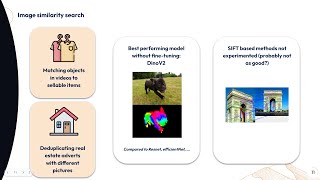
Insights from Diverse Projects in Image Search and RAG
Explore practical insights from real-world vector search projects, covering image matching, property deduplication, and RAG implementations, with focus on DinoV2 and Ada-2 model performance.
FastEmbed - Fast and Lightweight Embedding Generation
Discover how to generate fast, efficient embeddings using FastEmbed library, exploring quantized models and ONNX Runtime for improved throughput and latency in Python applications.
Cohere Embed V3: Innovations in Content Quality and Compressed Embeddings
Discover state-of-the-art embedding models featuring content quality assessment and vector compression techniques, with practical insights on implementation and scaling in vector database setups.