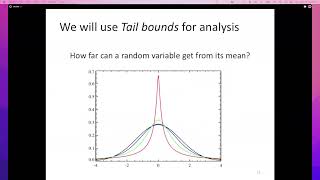
Agnostic Learning in Computational Learning Theory - Lecture 16
Dive into computational learning theory and explore the fundamental concepts of agnostic learning in machine learning applications.
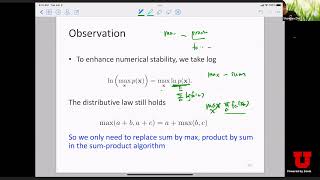
Probabilistic Machine Learning - Lecture 16
Dive into advanced data science concepts through a comprehensive graduate-level lecture covering key theoretical and practical aspects of modern data analysis and machine learning techniques.

Building Search and RAG for OpenAPI Specifications
Discover how to implement vector search and RAG capabilities for OpenAPI specifications, focusing on code summarization, metadata management, and practical UI development techniques.

Advancements and Challenges in Retrieval-Augmented Generation Systems
Explore the latest developments in Retrieval-Augmented Generation systems, their real-world applications, and key challenges in implementing AI-powered information retrieval and generation solutions.

Building a RAG Chatbot with LangChain, OpenAI, and Groq
Learn to build a RAG-powered chatbot from scratch using LangChain, OpenAI's GPT-3.5-turbo, and Qdrant vector database for enhanced knowledge retrieval and response generation.
Production-Scale Retrieval Augmented Generation for Real-Time News Distillation
Discover how to process millions of news articles daily using open-source tools like Flowdapt, Qdrant, vLLM, and TEI for real-time RAG applications, with insights on scaling, deployment, and startup advantages.
Getting Started with DSPy - Building LLM Programs Tutorial
Discover how to build robust LLM programs using DSPy framework, from basic concepts to creating retrieve-then-read RAG systems with optimized instructions and structured data handling.

LLM Reasoning Limitations: Understanding Linear Order and Logical Hallucinations
Delve into groundbreaking research from Stanford and DeepMind revealing LLMs' limitations in causal reasoning, premise ordering, and mathematical logic, highlighting key challenges in AI development.
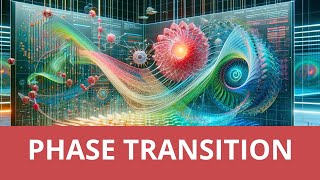
Phase Transitions in Dot-Product Attention Layer Learning - New AI Discovery
Explore groundbreaking research on phase transitions in LLM attention mechanisms, revealing key insights into semantic learning and potential breakthroughs in AI model efficiency.
Building Agents with LlamaIndex and Qdrant - Beyond the Tutorial
Dive into advanced agent development using LlamaIndex and Qdrant, exploring vector database integration and search engine capabilities for building sophisticated AI solutions.
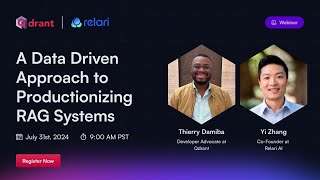
A Data-Driven Approach to Productionizing RAG Systems
Discover practical strategies for deploying RAG applications effectively, focusing on data-driven methods and optimization techniques for enhanced performance and reliability.
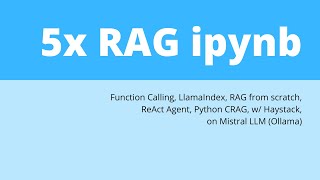
Building RAG Systems: From Vector Embeddings to Self-Reflective CRAG - 5 Python Notebooks
Explore practical RAG implementations through 5 Python notebooks, from basic text embeddings to advanced self-reflective systems using LlamaIndex, Ollama, and ReAct Agent frameworks.
LLM2LLM: Synthetic Data Generation for Fine-Tuning AI Models
Explore how large language models can generate synthetic data to teach and fine-tune other LLMs, with insights into performance metrics and applications for edge devices.
SETFIT Hyperparameter Optimization for SBERT Text Classification - Part 45
Master SETFIT hyperparameter optimization techniques for efficient text classification using Sentence Transformers, focusing on contrastive training and automated parameter tuning for optimal performance.
SetFit with SBERT for Few-Shot Text Classification - Multi-Class and Multi-Label
Master SetFit and SBERT techniques for efficient few-shot text classification, exploring contrastive training, dense embeddings, and classification head implementation for both multi-class and multi-label scenarios.

Graph Inspired Veracity Extrapolation (GIVE) - Integrating LLMs with Knowledge Graphs
Discover how GIVE framework enhances LLM reasoning by combining knowledge graphs with internal model knowledge, enabling more accurate responses through structured, step-by-step logical inference processes.
Qwen 2.5 Math and Vision Models - Latest Open Source Developments
Explore the latest advancements in Qwen2.5-72B models, featuring specialized mathematics capabilities and enhanced vision processing with M-RoPE technology for improved AI performance and versatility.
Reasoning and Tools Framework for AI Forecasting - A New Approach
Discover how advanced AI forecasting combines reasoning capabilities with real-time data through the RTF framework, enabling precise predictions across finance, weather, and material science domains.
Adapting Image-based Reinforcement Learning Policies via Predicted Reward Fine-Tuning
Explore groundbreaking research on Predicted Reward Fine-Tuning (PRFT), a novel approach solving domain shift challenges in image-based reinforcement learning and sim-to-real AI transfer.
Role-Playing Language Agents with MindEcho - Creating Personal AI Clones
Explore groundbreaking Chinese AI research on creating virtual KOL clones through Role-Playing Language Agents, examining technical implementation and ethical considerations.
Fine-tuning Vision Language Models with PaLiGemma-3B - A Practical Guide
Master fine-tuning techniques for Vision Language Models using PyTorch and JAX FLAX, with practical examples for PaliGemma-3B implementation on free compute platforms like Google Colab and Vertex AI.