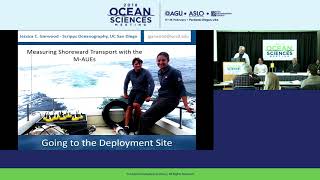
New Technologies to Study the Ocean - Advances in Observations, Robotics, and Imaging
Explore cutting-edge ocean research technologies: next-gen Argo floats, robotic plankton, and 3D coral reef mapping. Learn how these innovations revolutionize our understanding of marine ecosystems and climate change impacts.
Life and Death in a Modern ICU by Paul Ramesh Thangaraj
Explore the complexities of modern intensive care units, examining critical decision-making processes and advanced medical interventions that shape patient outcomes in high-stakes environments.
Lung Disease and AI Applications - From Cough Sounds to CT Scan by Anurag Agrawal
Explore AI applications in lung disease diagnosis, from analyzing cough sounds to interpreting CT scans. Learn how machine learning enhances detection and treatment of respiratory conditions.
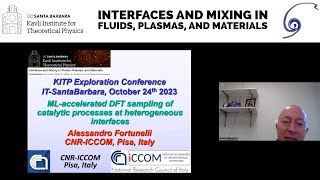
ML-Accelerated DFT Sampling of Catalytic Processes at Heterogeneous Interfaces - Al Fortunelli
Explores machine learning-accelerated density functional theory for sampling catalytic processes at heterogeneous interfaces, advancing computational methods in materials science and chemistry.
HypoSVI- Earthquake Hypocentre Inversion With Stein Variational Inference and Physics Informed Neural Networks
Explore physics-informed deep learning for environmental sciences, covering PINNs for Eikonal equations, probabilistic inversion for earthquake location, and neural operators for in-ice navigation.
Fluid Mechanics-Informed Machine Learning - Successes and Failures
Explore machine learning approaches for fluid mechanics simulations, including physics-based features and CNNs, with insights on successes and challenges in speeding up predictions.
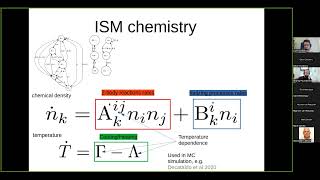
Emulating InterStellar Medium Chemistry with Physics Informed Neural Networks
Exploring Physics Informed Neural Networks to emulate InterStellar Medium chemistry, focusing on Giant Molecular Clouds formation and addressing challenges in astrophysical simulations.
Leveraging Physics-Induced Bias in Scientific Machine Learning for Computational Mechanics
Explore physics-induced bias in scientific machine learning for computational mechanics, focusing on physics-informed, structure-preserved learning for irregular geometries.
Modelling and Controlling Turbulent Flows Through Deep Learning
Explore deep learning applications in fluid mechanics, including flow prediction and control using CNNs, autoencoders, and GANs. Learn about non-intrusive sensing and transfer learning in turbulent flows.

Cell Membrane Transport Mechanisms in Cell Biology
Comprehensive exploration of cell membrane transport mechanisms, covering passive and active transport, protein-mediated processes, and vesicular transport, with detailed examples and characteristics.
Genomics, Imaging and AI - Three Technologies Which Are Changing Basic Research by Ewan Birney
Explore how genomics, imaging, and AI are revolutionizing basic research, transforming our understanding of biology and accelerating scientific discoveries.
Cause of Obesity, Diabetes & CVD Epidemic by Ponnusamy Saravanan
Explores the role of Gestational Diabetes Mellitus in obesity, diabetes, and cardiovascular disease epidemics, discussing its causes, impacts, and potential interventions.
The Healthy Life Trajectories Initiative - Implementation, Challenges and Future
Exploring the Healthy Life Trajectories Initiative's implementation, challenges, and future prospects, focusing on improving health outcomes through data-driven approaches and collaborative research.
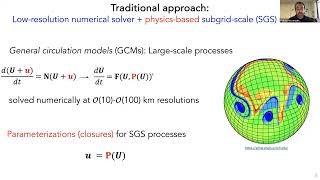
Integrating Physics, Data and Scientific Machine Learning to Predict Climate Variability and Extremes
Explore cutting-edge approaches combining physics, data analysis, and machine learning to enhance climate variability and extreme event predictions with Prof. Pedram Hassanzadeh.
Cracking the Code: Using Data Analysis to Engineer Stronger and Tougher Glasses
Explore data analysis techniques for engineering stronger glasses. Learn how topological data analysis and machine learning accelerate the discovery of fracture-resistant glass compositions.
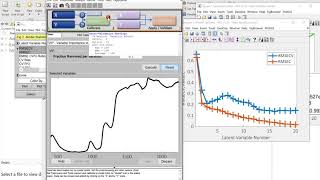
Variable Selection in PLS_Toolbox - Part 3
Explore advanced techniques for variable selection in PLS_Toolbox, enhancing your data analysis skills and improving model performance.
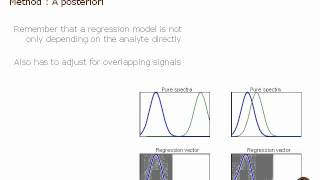
Variable Selection in Multivariate Data Analysis - Part 1
Explore key methods for variable selection in multivariate data analysis, including a-priori, a-posteriori, and model-based approaches. Learn their importance and applications.
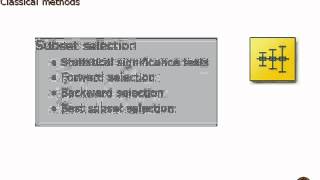
Variable Selection in Chemometrics: Advanced Methodologies - Part 2
Advanced methodologies for variable selection in chemometrics, including genetic algorithms, jack-knifing, and iPLS, building on fundamental concepts.
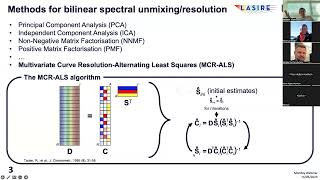
The Black Hole Effect in MCR with Raffaele Vitale
Exploring the black hole effect in Multivariate Curve Resolution, its impact on data analysis, and strategies to overcome this phenomenon in chemometrics and machine learning.
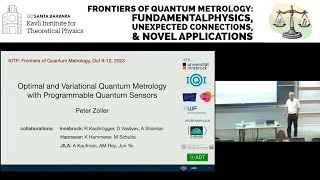
Optimal and Variational Quantum Metrology and Vector Field Sensing - Peter Zoller
Explore optimal quantum metrology and vector field sensing with Peter Zoller. Discover cutting-edge techniques in quantum sensing and their applications in fundamental physics research.
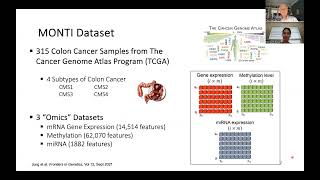
TUSCA: A Method for Tucker3 Modeling with ASCA+ - Webinar
Explore TUSCA, a novel method combining Tucker3 and ASCA+ for analyzing multi-way datasets from designed experiments, enhancing interpretation and visualization of complex data structures.