How to Speak Whale - Decoding Animal Communication
Explore advances in decoding animal communication, focusing on whales. Learn how machine learning tools are revolutionizing our understanding of underwater language and animal intelligence.
How Much Can We Limit the Rising of the Seas? - The Turing Lectures
Explore the science behind sea level rise, its causes, and potential mitigation strategies through expert analysis of glaciers, ice sheets, and climate models.

Machine Learning in Astrophysics and Cosmology
Explore how astrophysics and cosmology leverage machine learning to analyze vast datasets, pioneering new methods and infrastructure for handling big data in scientific research.

Statistical Physics and Learning - Florent Krzakala, Sorbonne Université
Explore the intersection of statistical physics and machine learning, examining algorithmic paradigms, high-dimensional models, and cross-fertilization between statistics and computer science in the era of Big Data.

Transforming Medicine Through AI-Enabled Healthcare Pathways
Explore AI's potential to revolutionize medicine through advanced data analysis, personalized care, and interdisciplinary collaboration, addressing technical and practical challenges in healthcare.
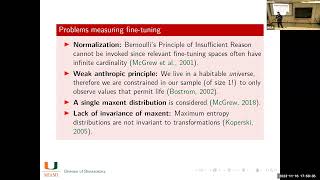
On Some Aspects of Cosmological Fine-Tuning
Explore fine-tuning in cosmology through Bayesian and maximum entropy frameworks. Examine probabilistic measurements, distribution families, and the learnability of fine-tuning concepts.
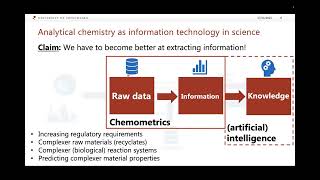
Shift-Invariant Trilinearity and Soft Shift-Invariant Trilinearity in GC-MS Data Analysis
Explore a novel method for shift-invariant non-negative tensor factorization in GC-MS data analysis, offering faster peak resolution and flexible modeling of elution profile changes.

Machine Learning Knowledge Transfer - From LHC to EIC by Sanmay Ganguly
Explore machine learning applications in particle physics, transferring knowledge from LHC experiments to the upcoming Electron-Ion Collider for advanced proton and neutron structure analysis.
Interpretable Machine Learning Approaches for Multi-Year Climate Variability
Explore interpretable machine learning techniques for identifying and understanding predictable multi-year climate variability, focusing on neural networks and explainable AI in climate science research.
Machine Learning and the Hydroxyl Radical for Air Quality and Climate
Explore machine learning applications in predicting hydroxyl radical trends, their impact on air quality and climate, and implications for methane trends and future climate change.
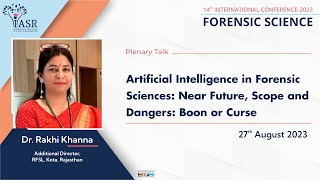
Artificial Intelligence in Forensic Sciences - Boon or Curse
Exploring AI's impact on forensic sciences: opportunities, challenges, and ethical considerations. Discusses potential benefits, risks, and the need for responsible development and implementation.
A Data-Driven Future for Atmospheric Chemistry, Wildfires, Climate, and Society
Explore data-driven approaches in atmospheric science, focusing on ML models for global chemistry, air pollution sensor networks, and prescribed fire modeling to address climate change and wildfires.
Brain-Machine Interfaces in Medical Therapy
Explore the revolutionary potential of brain-machine interfaces in medical therapy, combining IT, machine learning, and nanotechnology to enhance our understanding of the brain and reduce human suffering.
Fluvial Models - Assessing Variability in Distributive Fluvial Systems
Explore variability in fluvial systems through case studies of Huesca and Salt Wash, examining facies models and their implications for interpreting geological records and building predictive models.
Emerging Technologies for Quantitative Interpretation of Carbonate Rock Images
Explore machine learning applications for automatic identification of carbonate facies using core images, improving accuracy and consistency in geological classifications.
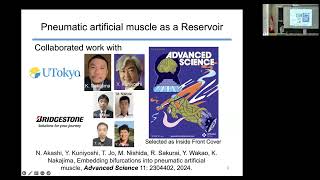
Training Autonomous Dynamics of a Soft Body - Embedding Bifurcation Structures Using Physical Reservoir Computing
Explore physical reservoir computing for embedding bifurcation structures in autonomous dynamics of soft bodies, focusing on innovative machine learning applications in dynamical systems.
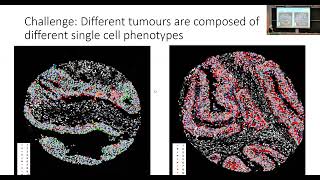
Exploring Cancer Progression: From Static Imaging Data to System Dynamics
Discover innovative approaches to analyze cancer progression using machine learning and dynamical systems, bridging static imaging data with dynamic biological processes.
Using Historical Information to Improve Seismic Data Processing Methods I
Explore innovative seismic data processing techniques, including Bayesian methods, machine learning, and waveform cross-correlation, to enhance earthquake monitoring and location accuracy.
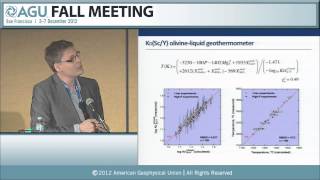
All About Olivine - Crystallography, Hydration, and Geochemistry
Comprehensive exploration of olivine's properties, including crystal orientation, water content, defects, and trace elements. Covers advanced research techniques and implications for mantle dynamics and magma processes.
Space, Time, and Transport in Petrology and Geochemistry - Lecture 1
Explore cutting-edge research on diffusion, isotope exchange, and crystal growth in petrology and geochemistry. Gain insights into magma dynamics, metamorphism, and crust formation from leading experts.
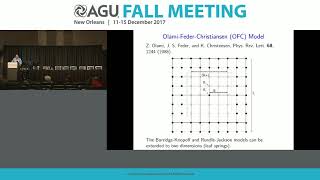
Climate Dynamics and Predictability: Insights from Simple Models - 2017 Fall Meeting Lorenz Lecture
Explore the Lorenz Lecture on simple models in geophysics, covering topics like residual stress, data collapse, and Gutenberg-Richter scaling, with implications for fault behavior and earthquake prediction.