Limit Shapes of Non-Intersecting Brownian Bridges via Harmonic Envelope
Explores limit shapes of non-intersecting Brownian bridges, focusing on macroscopic patterns and connections to random Young tableaux using the tangent plane method and harmonic envelope.
Vertex Model Proof of Imamura-Mucciconi-Sasamoto Correspondence
Explore vertex model proof of q-Whittaker polynomials correspondence, examining lattice path partition functions and their connection to Imamura-Mucciconi-Sasamoto's match between q-Whittaker and periodic Schur measures.
Scaling Limit of Colored Asymmetric Simple Exclusion Process
Explore the scaling limit of colored ASEP using Yang-Baxter equation and Gibbs line ensemble techniques, revealing connections to the KPZ universality class and related probabilistic objects.
Making Sense of Your Data: Statistics and Machine Learning - Lecture 3
Explore advanced statistical techniques and machine learning methods for analyzing complex neutrino data, enhancing your ability to extract meaningful insights from experimental results.
Making Sense of Your Data: Statistics and Machine Learning - Lecture 2
Explore advanced statistical techniques and machine learning methods for analyzing complex neutrino data, enhancing your ability to extract meaningful insights from experimental results.
Making Sense of Your Data: Statistics and Machine Learning - Lecture 1
Explore statistical techniques and machine learning methods for data analysis in neutrino physics, enhancing your ability to extract meaningful insights from complex datasets.
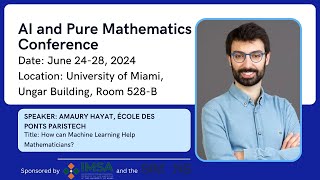
Machine Learning Applications in Mathematical Research
Exploring machine learning's potential to assist mathematicians in research, proof verification, and problem-solving, highlighting innovative applications and future possibilities in mathematical discovery.
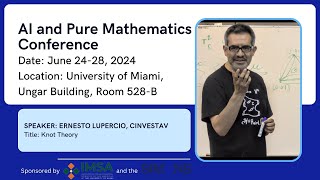
Knot Theory in Mathematics and AI Applications
Explore the fascinating world of knot theory and its connections to mathematics and AI in this engaging talk by Ernesto Lupercio from CINVESTAV.
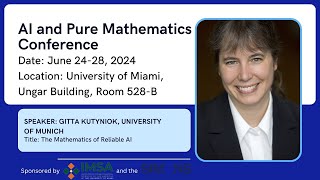
The Mathematics of Reliable AI
Exploring mathematical foundations for reliable AI systems, focusing on theoretical principles and practical applications to enhance AI trustworthiness and performance in real-world scenarios.
Parametrization of Curves in Vector Calculus - Numericals and Examples
Explore curve parametrization through examples, enhancing understanding of vector calculus concepts and their practical applications in mathematics.
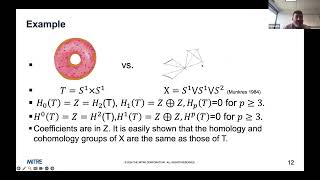
Steenrod Squares and Data Science - Exploring Connections in Algebraic Topology
Explore the potential link between advanced algebraic topology concepts and data science classification, examining how increasing algebraic complexity may solve harder geometric problems.
Qwen Releases New State-of-the-Art Math LLM - Qwen-2 Math 72B Instruct
Explore the groundbreaking Qwen-2 Math 72B Instruct, a state-of-the-art open Math LLM, and its potential impact on mathematical problem-solving and AI advancements.
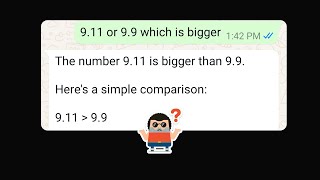
AI Can Be Bad at Math and Stubborn
Explores AI's mathematical errors and persistence in incorrect answers, highlighting potential limitations and biases in artificial intelligence systems.
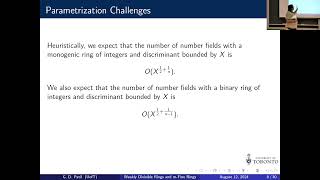
Parametrizations of Rings of Finite Rank - A Geometric Approach
Explore geometric approaches to parametrizing finite rank rings, delving into advanced algebraic concepts and their applications in mathematics research.
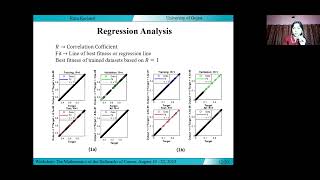
Numerical Analysis for Cervical Cancer Using Stochastic Levenberg-Marquardt Backpropagated Technique
Explore advanced neural network techniques for cervical cancer analysis, focusing on the Stochastic Levenberg-Marquardt Backpropagated method and its applications in oncology research.
Quantum Diffusion Convolution Kernels on Graphs
Explore quantum diffusion convolution kernels for graph neural networks, improving predictive accuracy through quantum particle propagation and multiscale message passing techniques.

The Key Equation Behind Probability - Entropy, Cross-Entropy, and KL Divergence
Explore probability theory fundamentals, from surprise to entropy, cross-entropy, and KL divergence. Learn key concepts applicable to neuroscience and machine learning.
RLBot - Custom Opensource AI for Rocket League
Explore RLBot: Create AI bots for Rocket League, enhancing math and ML skills while joining a vibrant community of developers and competitors.
Poseidon: Efficient Foundation Models for PDEs - Tutorial 1
Explore efficient foundation models for PDEs with Poseidon, focusing on innovative techniques and applications in computational science.
UQ for ML and ML for UQ - Uncertainty Quantification and Machine Learning in Physics-Based Modeling
Explore the interplay between Uncertainty Quantification and Machine Learning in physics-based modeling, examining their roles in solving complex computational challenges across various applications.
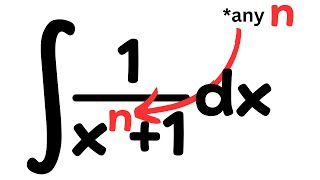
Generalizing a Calculus 2 Integral
Explore a generalized approach to solving a complex Calculus 2 integral, enhancing your problem-solving skills and deepening your understanding of advanced integration techniques.