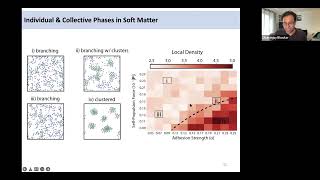
Data-Driven Modeling & TDA of Self-Organized Multicellular Architectures
Explore data-driven modeling and topological data analysis for classifying multicellular structures in cancer and embryonic development, focusing on cell motility and adhesion patterns.
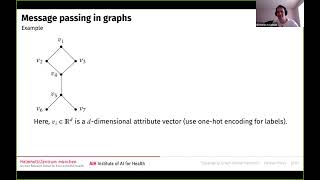
Bastian Rieck - Topological Graph Neural Networks
Explore topological data analysis in graph representation learning, focusing on novel techniques that incorporate topological features to enhance graph neural networks' expressivity and performance.
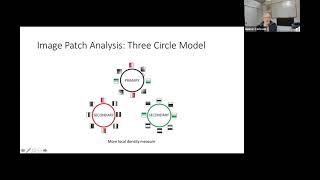
Gunnar Carlsson - Topological Deep Learning
Explore TDA-inspired approaches to deep learning, addressing issues like data hunger and generalization. Discover topological methods for building neural networks and analyzing weight spaces across various datasets.
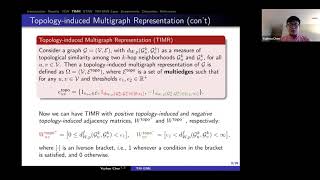
Topological Relational Learning on Graphs
Explore topological relational learning on graphs, enhancing graph neural networks with higher-order information and local structure learning for improved classification and robustness to perturbations.
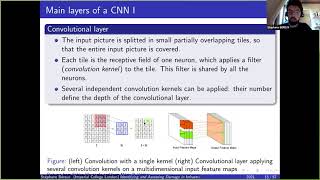
Identifying and Assessing Damage in Infrastructure Using Topological Data Analysis and Machine Learning
Innovative approach using topological data analysis and machine learning for low-cost, imaging-based concrete damage assessment in infrastructure, offering a potential alternative to expensive laboratory diagnostics.
Sequence Alignment - Hidden Markov Models, Category Theory and All That Jazz by Soumyashant Nayak
Explore sequence alignment methods, from traditional algorithms to modern pseudo-alignment techniques, with insights on hidden Markov models and applications in RNA-Seq data analysis and evolutionary genetics.

GPU Accelerated Computation of VR Barcodes in Evaluating Deep Learning Models
GPU-accelerated computation of VR barcodes for evaluating deep learning models, focusing on Ripser++ software and its applications in measuring data distribution shifts and analyzing attention graphs in BERT models.
On Modeling Investors in Simulated Markets
Explore multi-agent market simulations, from market replay to advanced AI-driven models. Learn about trading agent design, market impact analysis, and applications in financial research.
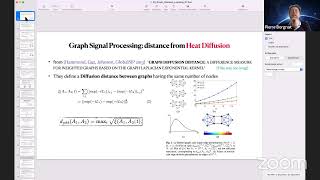
Learning Distances for Attributed Graphs with Optimal Transport
Explore optimal transport techniques for learning distances between attributed graphs, enhancing graph analysis and comparison methods in data science.
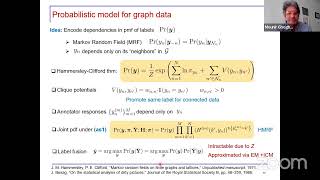
Learning from Unreliable Labels via Crowdsourcing
Explore techniques for learning from unreliable labels in crowdsourcing, presented by experts in signal processing and data science for the DEGAS Webinar Series.
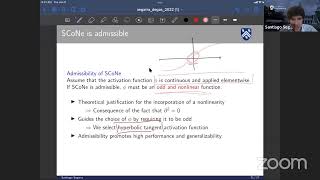
Principled Simplicial Neural Networks for Trajectory Prediction
Learn advanced techniques for trajectory prediction using simplicial neural networks, exploring their principles and applications in data science and signal processing.
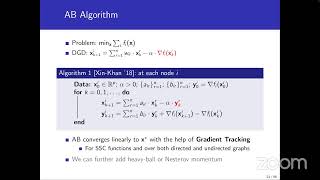
Distributed Stochastic Non-Convex Optimization - Optimal Regimes and Tradeoffs
Explore optimal regimes and tradeoffs in distributed stochastic non-convex optimization with Usman A. Khan. Gain insights into advanced data science concepts and their applications in signal processing.
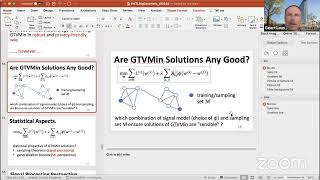
Federated Learning in Big Data Over Networks
Explore federated learning techniques for big data networks, focusing on distributed algorithms and privacy-preserving methods in large-scale data analysis.

Neural Diffusion PDEs, Differential Geometry, and Graph Neural Networks
Explore neural diffusion PDEs, differential geometry, and graph neural networks in this advanced webinar by Michael Bronstein, bridging theoretical concepts with practical applications in data science.
Data Science Basics for Absolute Beginners
Comprehensive introduction to Data Science fundamentals, covering key components, job roles, and career prospects. Ideal for beginners seeking to enter this high-demand field.
Python for Data Science - Data Science Tutorial - Python Tutorial
Learn Python for data science: versatile programming, complex problem-solving, and real-world applications. Covers key concepts, tools, and techniques with hands-on examples and expert guidance.

Amazon SageMaker Tutorial - How to Use Amazon SageMaker for Machine Learning
Learn to build, train, and deploy machine learning models using Amazon SageMaker. Explore its architecture, features, and hands-on implementation for streamlined ML development and production.

Classification Algorithm Tutorial - Machine Learning Tutorial
Comprehensive tutorial on classification algorithms in machine learning, covering techniques for categorizing new observations based on training data. Explores supervised learning methods and practical applications.
Probability and Its Interpretation - Foundations of Humanities Analytics
Explore probability theory, its historical development, and interpretations in this humanities analytics lecture, focusing on frequency and subjective approaches to understanding uncertainty.
Asking Good Research Questions in Humanities Analytics
Explore effective research question formulation in humanities analytics, focusing on clarity, relevance, and avoiding common pitfalls. Learn to craft questions that drive meaningful digital humanities scholarship.
Learning from Simulations - Marc Huertas Company
Explore astrostatistics and machine learning in galaxy formation, comparing models with observations and discussing innovative data analysis techniques for advancing astrophysical understanding.