Foundational Models for Robot Control
Explore recent advancements in using large pretrained networks for robot control, from basic concepts to practical applications in robotics research.
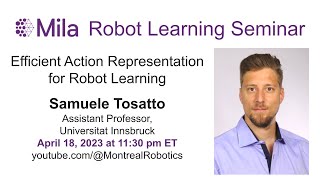
Efficient Action Representation for Robot Learning
Explore efficient action representation techniques for enhancing robot learning, focusing on helpful abstractions and theoretical aspects of reinforcement learning.
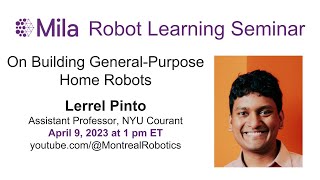
Building General-Purpose Home Robots
Explore advancements in general-purpose home robots, including vision-language models, rapid skill learning, and multi-fingered dexterity. Discover challenges and solutions for creating adaptable, cost-effective domestic assistants.
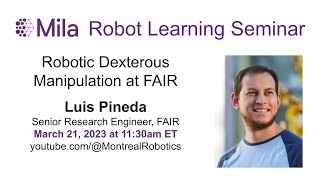
Robotic Dexterous Manipulation - Advances in Learning and Teleoperation
Explore advancements in robotic manipulation, combining classical and learned methods. Discover projects on extrinsic contact learning, visuo-tactile SLAM, and in-hand object rotation using vision and touch.
Building Adaptable Generalist Robots
Explore cutting-edge approaches for building adaptable generalist robots, focusing on in-context learning, unsupervised reinforcement learning, and leveraging foundation models for improved generalization and task versatility.
Towards Large Behavior Models: Versatile and Dexterous Robots via Supervised Learning
Explore advancements in machine learning for robotics, focusing on creating versatile and dexterous robots through supervised learning and the development of Large Behavior Models.
Learning Abstractions from Humans for Generalizable Robot Learning
Explore methods for integrating human knowledge into robot learning abstractions, focusing on feedback as a prior, personalized interface, and framework for user-aligned reward functions.
Robotics as an Enabler and Inhibitor of Sustainable Development Goals
Explore robotics' dual role in achieving UN Sustainable Development Goals. Analyze potential to enable 46% of targets while inhibiting 19%, focusing on economic, social, and environmental impacts.
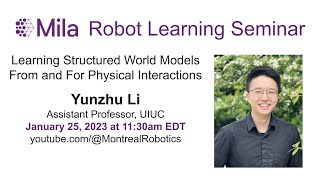
Learning Structured World Models From and For Physical Interactions
Explore structured world models for physical interactions in robotics. Learn novel representations and structural priors for effective model-based planning and complex manipulation tasks.

Sim2Robot - Training Robots for the Real-World with Imperfect Simulators
Explore innovative methods for training robots using imperfect simulators, focusing on navigation and pick-and-place tasks. Learn about leveraging large-scale learning, hierarchical control, and foundation models for real-world deployment.

RoboCat - A Self-Improving Generalist for Robotic Manipulation
Explore RoboCat, a multi-embodiment, multi-task generalist agent for robotic manipulation. Learn about its ability to generalize across tasks and robots, and its potential for autonomous improvement.

Data-Driven Fine Manipulation: Pushing Boundaries in Robotic Precision
Explore data-driven solutions for fine robotic manipulation, enabling low-cost hardware to perform intricate tasks with superhuman precision using imitation and reinforcement learning techniques.
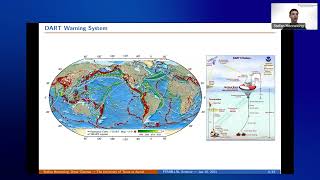
Bayesian Inversion of an Acoustic-Gravity Model for Predictive Tsunami Simulation
Explore Bayesian inversion of acoustic-gravity models for predictive tsunami simulation, focusing on real-time monitoring and early-alert systems using near-field data observation.
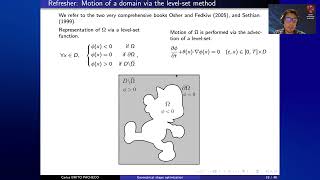
Rodin: Density and Topology Optimization Framework - MFEM Workshop 2022
Explore Rodin, a C++17 framework for shape, density, and topology optimization. Learn its functionalities, from refining shapes to solving variational problems in scientific simulations.
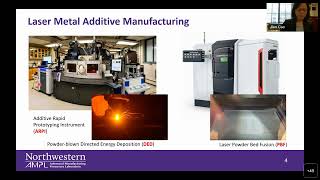
Physics-based AI-assisted Design and Control in Flexible Manufacturing
Explore physics-based AI for flexible manufacturing, focusing on metal powder additive and rapid dieless forming. Learn to integrate process mechanics, control, and machine learning for effective material behavior prediction and in-situ control.
Forging a Secure and Observable DevOps Frontier
Explore AI-driven observability and ML-enhanced security in DevOps. Learn best practices for integrating AI into the DevSecOps lifecycle to balance speed and safety in digital transformation.
Model Training on Snowflake with Ray
Discover how to leverage Snowflake Container Runtime and Ray for efficient, scalable model training through a practical demonstration of performance optimization techniques.
Transforming Large-Scale Data Processing for AI and Science
Discover how IBM leverages Ray for massive-scale data processing, focusing on the Data Prep Kit's capabilities in AI training and scientific research applications.

Predicting Events Using Large Language Models - A Practical Guide to AI Forecasting
Explore practical techniques for event prediction using large language models, from basic forecasting methods to advanced strategies, with hands-on demonstrations and research insights.
Accelerating Data and AI with Spice.ai Open-Source Software
Discover how Spice.ai's open-source software accelerates data and AI development, exploring innovative approaches to streamline machine learning workflows and enhance database integration.
The Evolution of Data Infrastructure in the Age of LLM
Explore how Large Language Models are reshaping modern data infrastructure, examining key architectural changes and emerging best practices for scalable AI systems.