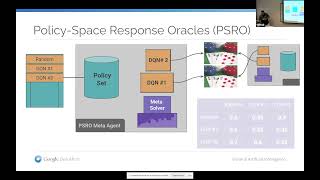
Combining Tree-Search, Generative Models, and Nash Bargaining Concepts in Game-Theoretic Reinforcement Learning
Explore game-theoretic reinforcement learning combining tree-search, generative models, and Nash bargaining concepts for multiagent scenarios and negotiation games.
ML in Practice - Interaction Between ML Modeling and Downstream Design Decisions
Explore ML from an engineering perspective, focusing on real-world applications and the impact of model selection on final solutions in telecommunications networks.

Machine Learning Methods in Geotechnical Engineering
Explore AI-driven machine learning techniques for geomechanics, including slope stability, pile capacity, and soil property prediction. Gain insights into advanced geotechnical applications.

Building a Live Streaming Lyme Disease Surveillance Tool Using Twitter
Explore a real-time Lyme disease surveillance dashboard using Twitter data, machine learning, and NLP techniques to enhance public health monitoring and facilitate prompt interventions during outbreaks.
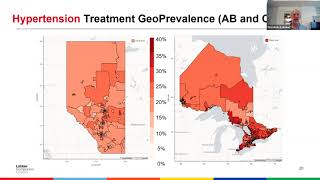
Cardiometabolic Disease Trends in Canada
Explore cardiometabolic disease trends in Canada, analyzing data patterns and implications for public health strategies and interventions.
Cyber Physical Systems and Mobile Security - Threat Landscape and Innovations
Explore cyber security challenges in physical systems and mobile devices. Learn about innovative edge computing and AI solutions for threat detection, containment, mitigation, and recovery.

Intrusion Detection Systems - An Overview
Explore techniques for identifying system intrusions, leveraging AI, edge computing, and big data for enhanced IoT and enterprise security analytics.
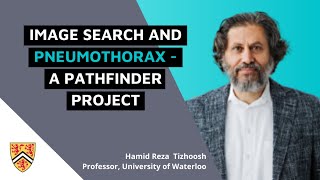
Image Search and Pneumothorax Detection - A PathFinder Project
Explore automated pneumothorax detection using image search in chest X-rays. Learn about AutoThorax-Net for fast diagnosis and assisting radiologists with large image repositories.
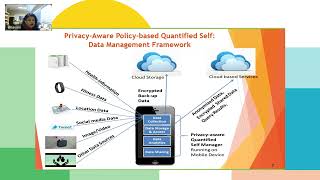
Integrating Cyber Security and Machine Learning for Applications in Transportation Systems
Explore integrating cybersecurity and machine learning in transportation systems. Learn about challenges, research, and innovative solutions for securing Internet of Transportation and Intelligent Transportation Systems.
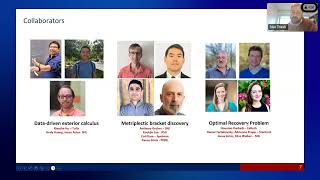
A Data-Driven Finite Element Exterior Calculus
Explore data-driven finite element exterior calculus for developing reduced-order models of multiphysics systems, combining machine learning with traditional finite element methods for robust surrogate modeling.

RT-2: Vision-Language-Action Models Transfer Web Knowledge to Robotic Control
Explore vision-language-action models for robotic control, enhancing generalization and semantic reasoning through Internet-scale data integration and end-to-end training.

A General-Purpose Robotic Navigation Model
Explore advancements in general-purpose robotic navigation models, including data sharing across robots, generalization capabilities, and applications like kilometer-scale navigation and open-vocabulary instruction following.

From Words to Actions - Foundation Models for Generalist Robot Brains
Explore the potential of Foundation models in robotics, discussing lessons from scaling robot data collection and strategies to leverage these models for practical applications.

Foundation Reward Models for General Robot Skill Acquisition
Explore foundation reward models for general robot skill acquisition, leveraging non-robot data to enhance adaptability in unstructured environments.
Developing Robots that Autonomously Learn and Plan in the Real World
Explore autonomous robot learning and planning, covering challenges, techniques, and future directions in creating versatile AI agents capable of solving complex real-world tasks.
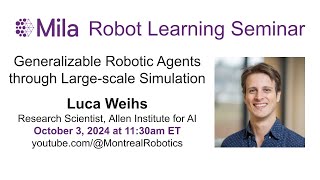
Generalizable Robotic Agents Through Large-Scale Simulation
Explore how large-scale simulation training produces proficient robotic agents capable of real-world navigation and manipulation using only RGB sensors, guided by language instructions.
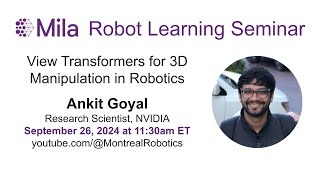
View Transformers for 3D Manipulation in Robotics
Explore state-of-the-art View Transformers for 3D object manipulation in robotics, including RVT and RVT-2, offering improved task success, faster training, and real-world applicability.
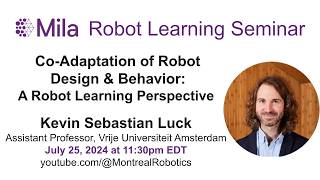
Mila Robot Learning Seminar
Explore cutting-edge robot learning techniques and advancements in AI-driven robotics through expert presentations and discussions at the Mila seminar.
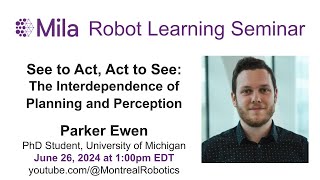
See to Act, Act to See - The Interdependence of Planning and Perception in Robotics
Explore the interdependence of planning and perception in robotics, focusing on physical property learning, multi-modal sensing, and uncertainty modeling for improved task performance.
Engineering AI Systems and AI for Engineering: Compositionality and Physics in Learning
Explore compositional AI system design and physics-integrated learning algorithms for robotics and autonomy. Discover methodologies for reliable deployment and rapid hardware control implementation.
Becoming Bionic: Advancements in Smart Prosthetic Limbs
Explore cutting-edge research in prosthetics and smart limb control. Discover open problems and current solutions in neuroprosthetics, reinforcement learning, and human-robot interaction for improved functionality and usability.