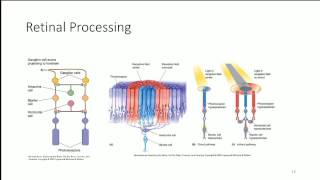
Bio-Inspired Sensing
Explore bio-inspired sensing and its applications in robotics, focusing on how biological systems like the human eye inform edge detection, noise rejection, and data processing in artificial sensors.

Inductance in PCB Layout - The Good, the Bad, and the Fugly
Explore PCB layout inductance: its impacts, mitigation strategies, and real-world applications. Learn to optimize designs for better performance and reliability.
Cyber & Data - Introduction to Splunk and Machine Learning
Explore Splunk and machine learning techniques for data analysis, including anomaly detection, prediction, clustering, feature extraction, and preprocessing methods.
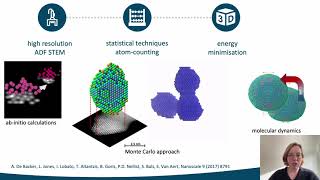
3D Atomic Resolution Through Dose-Efficient Fusion of Image & Analytical Technique
Explore 3D atomic structure analysis of nanomaterials using advanced quantitative TEM techniques, including parameter estimation, deep learning, and fusion of ADF STEM with EDX for heterogeneous materials.

Computational Methods for Mean-Field Games
Explore computational methods for mean-field game systems, including finite-difference, convex optimization, Lagrangian, and machine-learning techniques for solving high-dimensional Hamilton-Jacobi PDEs.
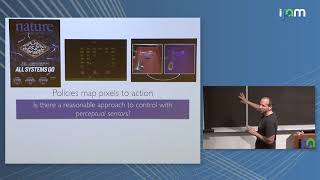
Trying to Make Sense of Control from Pixels
Explores challenges in merging machine learning with control systems, focusing on autonomous vehicles using vision. Discusses uncertainty quantification, robust controller design, and performance guarantees.
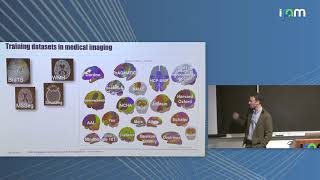
Flexible Machine Learning Approaches for Computer-Assisted Surgery
Explores innovative machine learning strategies for enhancing surgical workflows, focusing on patient-specific decision support tools and integration of AI in complex clinical environments.
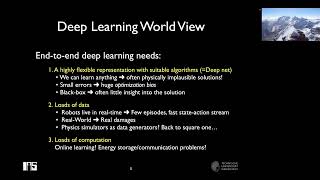
Robot Learning - Quo Vadis?
Explore the future of robot learning with Jan Peters, discussing advancements and applications in machine learning for robotics at the Fields Institute seminar.
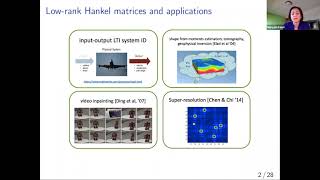
Learning Linear Dynamical Systems with Hankel Nuclear Norm Regularization
Explore finite-sample analysis and insights for learning low-order linear dynamical systems using Hankel nuclear norm regularization, with applications in control and reinforcement learning.
Know Your Data: Protect and Prevent Data Loss with Microsoft Information Protection
Discover Microsoft Information Protection's comprehensive solution for data security, compliance, and loss prevention across cloud, on-premise, and endpoint environments.
Transport in Reservoir Computing
Explore the intersection of machine learning and dynamical systems, focusing on transport phenomena in reservoir computing and its applications in data analysis and prediction.

Google PALM2 - Is It Better Than GPT4?
Explore the capabilities of Google's PALM2 language model and compare its performance to GPT-4, examining key features and potential applications in AI technology.

What is "Race" in Algorithmic Discrimination on the Basis of Race?
Explore the complex relationship between race and algorithmic discrimination, examining causal effects and proposing a constructivist theory to address discrimination in machine learning.
What Is Data Privacy - Exploring Cybersecurity: Data Protection & Privacy
Comprehensive overview of data privacy and protection, covering key concepts, sensitive data types, and classification strategies for enhanced cybersecurity in the digital age.

Achieving PEAK Performance: Introducing the PEAK Threat Hunting Framework
Discover PEAK, a new threat hunting framework enabling diverse techniques like exploratory data analysis and machine learning to uncover elusive threats and elevate your security program.
Physics-Constrained Reservoir-Computing for Turbulence and Chaotic Learning
Explore physics-constrained reservoir-computing for turbulence and chaotic learning, combining physical principles with empirical modeling to predict and optimize complex fluid flows in aerospace propulsion and turbulence.
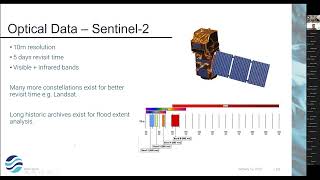
FloodSENS – Smart Sensing of Floods
Exploiting optical satellite data for rapid flood mapping using Machine Learning, addressing SAR limitations in urban and densely vegetated areas, with applications in disaster response and insurance.
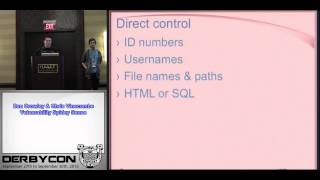
Vulnerability Spidey Sense - Developing Intuition for Security Flaws
Develop your "vulnerability spidey sense" to identify and exploit security weaknesses in applications, guided by expert insights and practical techniques.

Mastering the Maze - Reinforcement Learning for Automated Penetration Testing
Explore how reinforcement learning can revolutionize penetration testing by automating lateral network movement and identifying attack vectors, enhancing efficiency in cybersecurity assessments.

Integrating Renewable Energy into the Power Grid with Open Source Solutions
Explore open-source solutions for integrating renewable energy into power grids. Learn about OpenSTEF, Power Grid Model, and Shapeshifter projects to optimize grid capacity and manage energy distribution efficiently.
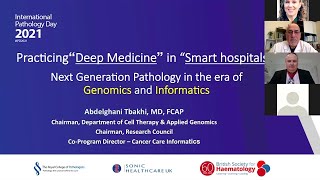
Practicing Deep Medicine in Smart Hospitals
Explore the concept of 'deep medicine' and its application in 'smart hospitals', focusing on innovative approaches to healthcare delivery and patient care in technologically advanced medical settings.