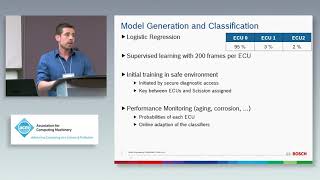
Scission- Signal Characteristic-Based Sender Identification
Explore Scission, an Intrusion Detection System for CAN bus security in vehicles. Learn about sender authentication, ECU fingerprinting, and protecting against adversarial attacks on vehicle functions.
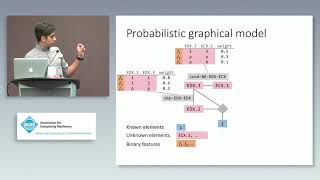
Debin: Predicting Debug Information in Stripped Binaries
Innovative machine learning approach for predicting debug information in stripped binaries, enhancing analysis capabilities for security professionals and reverse engineers.
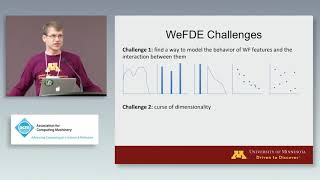
Measuring Information Leakage in Website Fingerprinting Attacks and Defenses
Explore website fingerprinting attacks on Tor, analyzing information leakage, defense mechanisms, and the trade-offs between anonymity and usability in low-latency anonymous networks.

Securing Big Data in the Age of Artificial Intelligence
Explore challenges and solutions for securing big data in AI, including hardware support, federated learning, and privacy-preserving techniques for data science and machine learning.
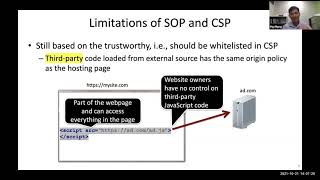
A User Oriented Approach and Tool for Security and Privacy Protection on the Web
Explore web security challenges, user-centric approaches, and innovative tools for protecting against threats. Learn about JavaScript monitoring, machine learning applications, and future cybersecurity visions.
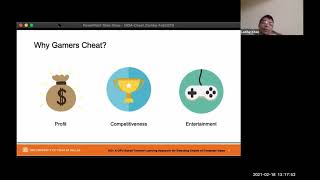
Big Data in Cybersecurity
Explore big data's role in cybersecurity, covering classification, feature extraction, and cheat detection. Learn innovative frameworks and future trends in this field.
Expected Float Entropy Minimisation: A Relationship Content Theory of Consciousness
Explores a mathematical theory of consciousness called Expected Float Entropy minimization, proposing how the brain defines conscious content through relationships and information processing.

How Big Data Makes a Safer Place to Exchange Digital Information - Simon Edwards, Trend Micro
Explore advanced cybersecurity strategies, including zero-day initiatives, machine learning, and threat analysis, to enhance digital information exchange safety and combat evolving cyber threats.
Privacy-Preserving AI - Andrew Trask, University of Oxford
Explore privacy-preserving AI techniques with Andrew Trask, covering differential privacy, federated learning, and shared governance for ethical and secure AI development.
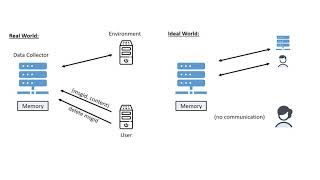
Formalizing Data Deletion in the Context of the Right to be Forgotten
Explore the formalization of data deletion in machine learning, addressing regulatory challenges and implications for the Right to be Forgotten in this research presentation from Eurocrypt 2020.

Unleashing the Power of Convolutional Neural Networks for Profiled Side-Channel Attacks
Explore cutting-edge applications of convolutional neural networks in profiled side-channel attacks, covering design principles, architecture, and data augmentation techniques.

Working Memory Influences Reinforcement Learning Computations in Brain and Behavior
Explore how working memory influences reinforcement learning in the brain, examining experimental results, genetic factors, and EEG data to uncover neural mechanisms of learning.

Economics and Learning
Explore the intersection of economics and machine learning, focusing on game theory, recommendation systems, and decentralized models in data science.
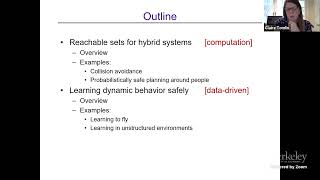
Safe Learning in Robotics
Explore safe learning in robotics, covering reachable sets, collision avoidance, fast planning, and human-robot interaction. Gain insights into cutting-edge techniques for autonomous systems.
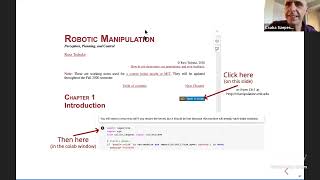
A Few Challenge Problems from Robotics
Explore challenging robotics problems, including backflips, models, perception, and optimization. Gain insights into reinforcement learning, state estimation, and physics-based approaches for advanced robotic systems.
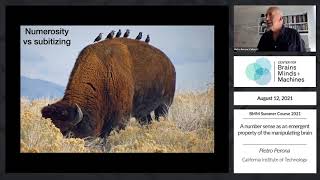
A Number Sense as an Emergent Property of the Manipulation Brain
Explore how number sense emerges from brain manipulation, examining experiments, perceptions, and the role of supervised learning in developing numerical understanding.

Computational Models of Cognition - Reverse-Engineering Common Sense in the Human Mind and Brain Pt 1
Explore cognitive modeling to reverse-engineer human common sense, examining AI progress, scientific context, and probabilistic programming techniques for capturing learning and constructing models.
Generative Adversarial Models for Privacy and Fairness
Explore generative adversarial models for enhancing privacy and fairness in machine learning, covering differential privacy, GANs, and real-world applications in data publishing and encoding.
Towards Generalization of Precise Robot Skills - Accurate Pick-and-Place of Novel Objects
Explore precise robotic generalization for pick-and-place tasks using simulation-learned models. Discover how visuo-tactile sensing enables accurate object manipulation and placement with sub-millimeter precision for novel items.
Better Ways to Measure and Move - Joint Optimization of Agent's Physical Design and Computational Reasoning
Explore joint optimization of physical design and computational reasoning for intelligent agents, enhancing sensor networks, legged robots, and soft robotics through machine learning techniques.
The Power of Gradients in Inverse Dynamics Problems - Tao Du, MIT
Exploring analytical gradients in physics simulation for computational design of dynamic systems, with applications in robotics, biomechanics, and computer graphics.