Adversarial Examples for Humans
Explore blackbox adversary attacks, system methodology, and class conditions in adversarial examples for AI systems.
Scattering Bricks to Build Invariants for Perception - Part 1
Explore high-dimensional classification, wavelet transforms, and deep convolution networks for stable translation invariants in image processing and texture classification.
Artificial Intelligence per Kilowatt-Hour - Max Welling, University of Amsterdam
Explore cutting-edge AI efficiency: compressing neural nets, low-precision computing, and spiking networks to maximize intelligence per kilowatt-hour as AI moves to edge devices.
UW CSE Robotics - Nicholas Roy, "Planning to Fly and Drive Aggressively"
Explore advanced algorithms for autonomous aerial and ground vehicles, enabling aggressive navigation in unknown environments through rapid decision-making and obstacle avoidance techniques.
Robotics Seminar - Bradley Hayes - University of Colorado Boulder
Explainable AI techniques for human-robot collaboration, focusing on shared expectations, interpretable models, and safe task planning to create trustworthy autonomous teammates in various domains.
Robotics Seminar - Michael Beetz - University Bremen, IAI
Explore cognitive architectures and knowledge representation for advanced robot manipulation, focusing on symbolic reasoning, mental simulation, and real-world applications in autonomous systems.
Robotics Seminar - Drones in Public: Distancing and Communication with General Users
Explore drone interactions, user responses to autonomy failures, and communication strategies in public spaces. Insights on novice interactions and applications in various fields.

Science of Modern Electronics - Electric Circuits, Currents, & More
Explore the fundamentals of modern electronics, from AC/DC power to transformers, diodes, and capacitors. Gain insights into how everyday electronic devices function through clear explanations of core principles.

How Your Online Activity Reveals Your Secrets
Explore how online activity reveals personal information, the power of algorithms in data analysis, and ethical concerns surrounding big data usage in the digital age.
Technology and Public Participation in Constitution-Making - Felix-Anselm van Lier, Max Planck
Explore how digital platforms and machine learning can enhance citizen engagement in policy-making, addressing challenges and opportunities in direct democracy initiatives.
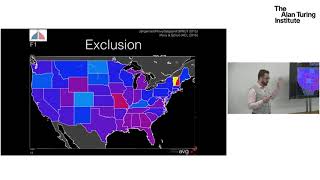
Reading Between the Lines - The Hidden Bias of NLP - Dr Dirk Hovy
Dr Dirk Hovy explores hidden biases in Natural Language Processing, discussing selection, annotation, model, and design biases, with a focus on American English and potential solutions.
City Analytics - Professor Peter Grindrod CBE
Explore urban analytics, scaling laws, and data science applications in cities. Discover insights on citizen behavior, political trends, and smart city concepts through mathematical modeling and real-world examples.
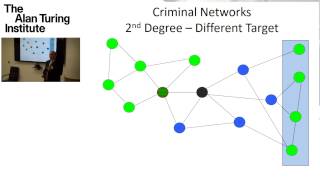
Targeting Crimes and Criminals Through Data - Dr. Rick Adderley
Explore data mining in law enforcement, covering challenges in police data analysis, criminal network analysis, and advanced analytics for crime prevention and resource optimization.

When Biology Moves to Engineering
Exploring AI's role in transforming biology from empirical science to engineering, enabling better diagnostics and biological circuit design for improved healthcare and drug discovery.

Data for Disaster Management - Steven Reece
Explore machine learning approaches for data fusion in disaster management, combining diverse sources to enhance situation awareness and improve response effectiveness.
On the Unreasonable Effectiveness of Compressive Imaging - Ben Adcock, Simon Fraser University
Explores compressive imaging's effectiveness, discussing compressed sensing theory, optimal sampling strategies, and practical applications in data science and imaging technology.

Sharing Your Healthcare Data Safely - SafeData
Workshop on safely sharing healthcare data for research, exploring safeguards to protect patient privacy while unlocking valuable medical information for public benefit.
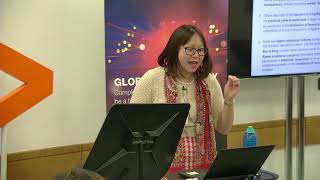
Transparency in Algorithmic Decision-Making - Karen Yeung, Birmingham Law School
Exploring transparency in algorithmic decision-making, focusing on legal, ethical, and social implications of AI and automated systems in light of GDPR implementation and its impact on data protection.
Mel-Frequency Cepstral Coefficients Explained Easily
Explore Mel-Frequency Cepstral Coefficients (MFCCs) in audio processing, covering their history, computation, visualization, and applications in speech and music analysis.
Defining the Fourier Transform with Complex Numbers
Explore complex numbers in Fourier transform, including coefficients, visual interpretation, and inverse transform. Gain insights into elegant mathematical representations for audio signal processing.
How to Extract Audio Features
Explore acoustic feature extraction from audio signals, covering time and frequency domains, spectral leakage, windowing, frames, and hop length for enhanced audio processing understanding.