
Deep Learning: BERT and GPT Models - Lecture 11
Dive into the evolution and architecture of transformer models, exploring BERT, GPT series, and T5 to understand their impact on modern natural language processing.

AI, Large Language Models and University Education
Explore the impact of AI and large language models on university education through expert insights from Prof. Ioannis Pitas in this thought-provoking lecture.
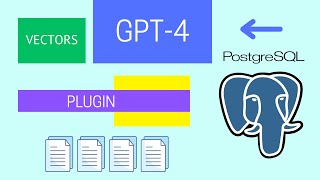
Visualizing Data Integration Between ChatGPT and Enterprise Systems
Discover how to integrate enterprise data with ChatGPT through OpenAI plugins, vector stores, and semantic search capabilities, focusing on GPT-4's dynamic data flow and PostgreSQL integration.
From Documents to Vectors: Understanding ChatGPT's Technical Architecture with OpenAI Plugins
Dive into the technical architecture of ChatGPT plugins, exploring vector databases, API endpoints, and real-time data retrieval methods for enhanced AI capabilities.
Prompt Engineering: Implementing Tree of Thoughts with GPT-4 - AI Education Case Study
Explore the implementation of Tree of Thoughts (ToT) framework in GPT-4, examining its application for AI education planning and demonstrating advanced prompt engineering techniques for complex problem-solving.

Chain of Thought and Instruction Fine-Tuning for Enhanced Language Model Performance
Explore how Chain of Thought and instruction fine-tuning techniques enhance language models' performance, from basic reasoning tasks to simulating human behavior and decision-making processes.
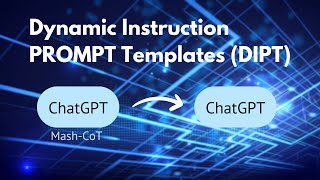
Connecting Multiple ChatGPT Sessions with Dynamic Instruction Prompt Templates
Master advanced prompt design techniques to connect and optimize multiple ChatGPT sessions using Dynamic Instruction Prompt Templates (DIPT), enabling continuous learning and improved effectiveness across conversations.

AI in Political Science and Social Psychology - Predicting Public Opinion with Language Models
Explore how AI language models predict public opinion, analyze media effects on society, and revolutionize political science research through cutting-edge BERT systems and transformer architectures.

Building a Multi-AI System: Upgrading Vector Databases with BERT and GPT-4
Master building a cost-effective multi-AI system by integrating GPT-4 and BERT, transforming vector databases into interactive AI components with or without LangChain framework.

AutoGPT and BabyAGI - Understanding Autonomous AI Agents for Large Language Models
Explore autonomous AI agents AutoGPT and BabyAGI, understanding their capabilities, risks, and integration with GPT-4 and LangChain for automated resource management and task execution.
LangChain - Integrating External Documents and SQL with GPT-4
Dive into LangChain's capabilities for integrating external documents and SQL with GPT-4, learning to chain multiple data sources and leverage advanced language models effectively.
The ALPACA Code: Self-Instruct Fine-Tuning of Large Language Models
Dive into the technical implementation of self-instruct fine-tuning for Large Language Models using ALPACA, covering synthetic dataset generation and parallel task optimization.
Creating Self-Instruct Data Sets for LLM Fine-Tuning with ChatGPT
Master the creation of synthetic instruction datasets using ChatGPT and GPT-4 for fine-tuning language models, covering data generation, multi-task training, and task decomposition techniques.
Self-Instruct Fine-Tuning of Large Language Models - Introduction to Alpaca
Master self-instruct fine-tuning techniques for LLMs, focusing on synthetic data generation using ChatGPT/GPT-4 to enhance model performance in specific tasks like summarization and translation.

Testing Starcoder for Reasoning with PAL
Explore StarCoder's reasoning capabilities and compatibility with PAL Chain in LangChain through demonstrations, code examples, and practical tests.
StarCoder - The LLM to Make You a Coding Star
Explore StarCoder's advanced code generation capabilities, including continuous coding and gap-filling. Learn about its applications, versions, and impressive 8,000-token sequence length for enhanced coding assistance.
Llama Index - Step by Step Introduction
Step-by-step guide to using Llama Index for document storage, indexing, and querying with customizable LLM settings and prompt helpers. Learn to create, manage, and interact with vector store indexes efficiently.
Inside ChatGPT- Unveiling the Training Process of OpenAI's Language Model
Explore the training process behind ChatGPT, including generative pretraining, supervised fine-tuning, and reinforcement learning through human feedback. Gain insights into AI language model development.
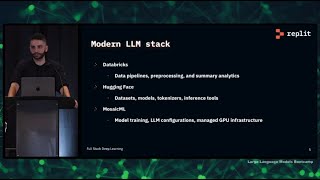
How Replit Trained Their Own LLMs - LLM Bootcamp
Comprehensive guide to training custom LLMs: from data processing and tokenization to evaluation and deployment, with insights on tools, best practices, and essential skills for LLM engineers.
Accelerating High-Performance Machine Learning at Scale in Kubernetes
Hands-on guide for deploying optimized machine learning models in cloud native ecosystems, focusing on GPT-2 NLP model deployment in Kubernetes using ONNX Runtime and Seldon Core Triton server.

AI as CEO: From Skepticism to Optimism - Lessons from a Startup Experiment
Explore an entrepreneur's journey of empowering AI as a startup CEO, challenging perceptions and navigating the balance between AI optimism and caution in shaping our future.