
ChatGPT Prompt Engineering with In-Context Learning - 7 Examples
Master prompt engineering techniques through 7 practical examples, from zero-shot prompting to reverse Turing tests, while exploring innovation theory and strategic AI applications.
Evaluating LLM Embeddings for Information Retrieval and Multilingual Applications
Explore the latest evaluation of LLM embedding APIs, focusing on OpenAI and Cohere's performance in domain generalization and multilingual retrieval capabilities for information retrieval tasks.
ChatGPT Prompt Engineering with In-Context Learning Using OpenAI API
Master prompt engineering techniques for ChatGPT with hands-on practice using In-Context Learning and OpenAI API integration in Python through a practical COLAB environment.

Stanford ALPACA 7B LLM: Fine-tuning Guide with Code and Datasets
Discover how to fine-tune and implement Stanford's ALPACA 7B language model using LLaMA, exploring practical applications and cost-effective methods for creating custom AI solutions.
Generative AI and LLM Technologies - A Comprehensive Tutorial
Explore essential concepts and technologies behind generative AI systems, from pre-training and fine-tuning to prompt engineering and advanced data structures for LLMs.
ChatGPT vs Flan-T5: Comparing Proprietary and Free LLMs with Performance Tuning
Explore the differences between ChatGPT and Flan-T5 LLM models, comparing their capabilities, accessibility, and performance optimization through practical demonstrations and hyperparameter tuning techniques.
The Art of Text to Vector Transformation - A Comprehensive Look at AI and NLP Transformers
Dive into the fundamentals of converting text to mathematical vectors, understanding tokenization methods like BERT and BPE for NLP applications and AI transformer models.

Train a Domain-Specific BERT Tokenizer Using SBERT - Part 50
Master BERT tokenizer training for scientific domains using SBERT, focusing on byte-pair encoding and specialized pre-training for complex domain-specific knowledge like bio-pharmacological content.
Domain-Specific AI Models - Creating Customized BERT and SBERT Models for Business Applications
Discover how to effectively train and fine-tune BERT and SBERT models for specialized domains, focusing on medical and biochemical terminology, with practical solutions for business applications.
Feature Vectors - Understanding BERT and SBERT Transformer Models
Dive into feature vectors and their crucial role in BERT and SBERT transformer models, exploring vectorization techniques, Python implementation, and practical applications in NLP.
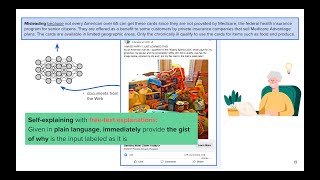
Uncertainty, Prompting, and Chain-of-Thoughts in Large Language Models - Part 2
Dive into advanced AI concepts including temperature scaling, Bayesian calibration, prompt-based finetuning, and chain-of-thought techniques for more reliable and explainable language models.

Building Search and RAG for OpenAPI Specifications
Discover how to implement vector search and RAG capabilities for OpenAPI specifications, focusing on code summarization, metadata management, and practical UI development techniques.

LLM Reasoning Limitations: Understanding Linear Order and Logical Hallucinations
Delve into groundbreaking research from Stanford and DeepMind revealing LLMs' limitations in causal reasoning, premise ordering, and mathematical logic, highlighting key challenges in AI development.

Pre-Training BERT from Scratch - Building, Fine-Tuning, and Running Inference with KERAS NLP
Master BERT model pre-training, fine-tuning, and inference using TF2 and KERAS NLP through hands-on implementation of transformers for domain-specific tasks.

Sparrow - Google's Second Generation Conversational AI After BARD
Explore Google's Sparrow AI system, its architecture, and comparison with ChatGPT, featuring demonstrations and insights into next-generation conversational search technology and language models.

Pre-Training BERT from Scratch for Domain-Specific Knowledge Using PyTorch - Part 51
Master BERT model pre-training from scratch using PyTorch, focusing on domain-specific data. Build custom tokenizers, design architecture, and implement masked language modeling for specialized neural information retrieval systems.

Performance Analysis of 12 AI Language Models for Clinical Decision Making in Healthcare
Explore the comparative analysis of 12 AI language models in clinical settings, examining their effectiveness in processing health records and performance against specialized medical systems.

Fine-tuning ChatGPT with In-Context Learning - Chain of Thought, AMA, and ReAct Reasoning
Master advanced in-context learning techniques like Chain-of-Thought and ReAct to optimize ChatGPT's performance without expensive fine-tuning, based on latest research insights and practical applications.
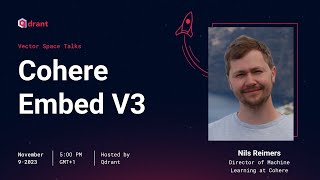
Cohere Embed V3: Innovations in Content Quality and Compressed Embeddings
Discover state-of-the-art embedding models featuring content quality assessment and vector compression techniques, with practical insights on implementation and scaling in vector database setups.

AI-Powered Music Recommendations Based on Mood and Vibe
Discover how AI and vector embeddings can revolutionize music recommendations by analyzing song vibes and moods through LLMs and transformer models for more personalized listening experiences.
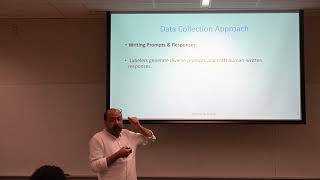
Deep Learning: RLHF, ChatGPT, and Alignment in LLMs - Lecture 14
Dive into advanced concepts of RLHF, ChatGPT training, and LLM alignment, exploring efficient transformers and the technical foundations behind modern language models.