Llama 101 - Introduction to Meta's Large Language Model
Explore Llama's capabilities, applications, and community-building efforts in this state-of-the-art large language model introduction.
LIMA: Less is More for Alignment - Turning Language Models into Chatbots
Explore LIMA, a LLaMa-based model fine-tuned on 1,000 curated prompts, producing impressive responses without user data or RLHF. Discover insights on language model alignment from this innovative approach.
Llama - Scaling Up LLMs in an Open Ecosystem
Explore Llama's evolution, its impact on Generative AI, and learn how to leverage state-of-the-art performance using Ray-based platforms for building with open-source large language models.
RAG with Llama 3.1 for Google Trends Data Scraping and Summarization - Streamlit Web App
Discover how to build a RAG pipeline using LLaMA 3.1 to automate article discovery and summarization based on Google Trends, showcased in a Streamlit web app for efficient content curation.

LongWriter: Generating Extended Text with Large Language Models
Explore LongWriter: an innovative model for generating extensive text in a single pass, with demos, paper insights, and practical applications using various LLMs.
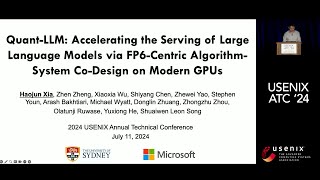
Quant-LLM: Accelerating Large Language Model Serving via FP6-Centric Algorithm-System Co-Design
Innovative GPU kernel design enables efficient 6-bit quantization for large language models, significantly improving inference speed while maintaining quality across various applications.
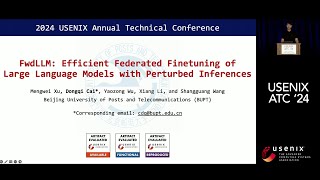
FwdLLM: Efficient Federated Finetuning of Large Language Models with Perturbed Inferences
Innovative federated learning protocol for efficient fine-tuning of large language models on mobile devices, addressing resource constraints through BP-free training and perturbed inferences.
LLM News: Llama 3.1, Self-Improving Agents, and Recent AI Developments
Explore latest AI advancements: Llama 3.1, self-improving agents, text-to-SQL, multi-LLM systems, and GPT-4 fine-tuning. Stay updated on cutting-edge developments in machine learning and artificial intelligence.
RAG from Scratch with Llama 3.1 - Building a Custom Data Chatbot
Hands-on tutorial for building a RAG system from scratch using Llama 3.1, Groq API, Sqlite-vec, and FastEmbed. Learn to create a chatbot with custom data without external libraries.

Fine-Tuning and Deploying LLaMA 3.1 on Hugging Face and Ollama
Step-by-step guide to fine-tune LLaMA 3.1 with custom data, save on Hugging Face and Ollama, and deploy for enhanced AI performance tailored to specific business needs.
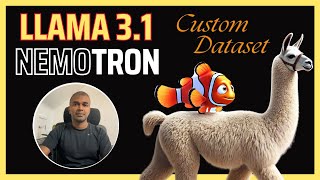
Creating Synthetic Datasets for Instruction Finetuning with LLaMA and Nemotron
Learn to create synthetic datasets for AI instruction fine-tuning using LLaMA 3.1 and Nemotron 4. Master subtopic generation, question creation, response generation, quality filtering, and dataset uploading to Hugging Face.

Building a Retro AI Chat Interface with Pyxel and Ollama
Discover how to create a unique retro-style AI chat interface by combining Pyxel gaming engine with Llama 3.1 and Ollama, bringing a nostalgic 80s twist to modern AI interactions.
RAG - Extracting Information from PDFs Using LlamaIndex, Gemini, and Nvidia NIM with Llama 3.2
Aprende a extraer información de PDFs utilizando LlamaIndex, implementando modelos como Gemini y Nvidia NIM para embeddings junto con LLama 3.2 para procesamiento de lenguaje natural.
Unlocking Local LLMs with Quantization
Discover how quantization optimizes LLMs for local deployment, from pre-training techniques to fine-tuning methods and inference optimization using cutting-edge approaches and community tools.
Understanding How Llama 3.1 Works - A Technical Deep Dive
Dive into Meta's groundbreaking Llama 3 architecture, exploring pre-training techniques, model capabilities, synthetic data quality, and implementation strategies for advanced AI development.

Inside Llama 3 Red Team Process - AI Safety and Security Assessment
Delve into Meta's AI Red Team's comprehensive approach to testing Llama 3's safety, exploring methodologies, automated attacks, and emerging security challenges in AI systems.

LLaMA 3 Deep Dive - Synthetic Data, Privacy, and Model Architecture
Explore LLaMA 3's innovations with Meta's Thomas Scialom, covering synthetic data, privacy concerns, scaling techniques, and architectural choices in this in-depth discussion on advanced language models.

Local RAG with Llama 3.1 for PDFs - Private Chat with Documents using LangChain and Streamlit
Build a local RAG system for PDFs using LLMs, LangChain & Streamlit. Extract text, create vector stores, implement advanced retrieval, and integrate local/remote LLMs for efficient document processing.
Meta's Open Approach with Llama - Leveraging the Llama Ecosystem for Generative AI
Explore Meta's open-source Llama ecosystem for building cutting-edge generative AI at scale, including latest models, access methods, safety components, and future possibilities.
Me-LLaMA - Medical Foundation Large Language Models for Comprehensive Text Analysis and Beyond
Discover how Me-LLaMA, a suite of medical language models trained on vast biomedical datasets, outperforms existing LLMs in medical text analysis tasks, advancing healthcare AI applications through improved accuracy and accessibility.
How to Pick a GPU and Inference Engine for Large Language Models
Explore GPU selection and inference engine optimization for large language models. Compare quantization effects, software options, and cost-efficiency across various GPUs and model sizes.