
Introduction to Semiotics and Structuralism - Lecture 8
Explore semiotics through Saussure's work, examining key concepts like langue/parole and signifier/signified. Apply semiotic theory to everyday examples and understand its relation to other literary approaches.

Introduction to Theory of Literature - Linguistics and Literature
Explore Roman Jakobson's work, structuralism, and literary linguistics. Analyze poetic functions, semiotics, and the Oedipus myth through various theoretical lenses in this engaging lecture.

Language in the Brain and Mouth - How We Communicate
Explore the fascinating world of language, from its basic structures to complex theories of acquisition, and discover how our brains process and produce speech.

Faulkner's Light in August - Race and Language Analysis - Lecture 24
Explore the complex racial dynamics in Faulkner's "Light in August" through an analysis of the varied uses and implications of racial language, examining its impact on character development and social commentary.
Language Learning, Language Use, and The Evolution of Linguistic Structure
Explores the interplay between language learning, use, and evolution through experiments on artificial languages, interaction, and cultural transmission, revealing insights into linguistic structure formation.
Murray Gell-Mann and the Evolution of Human Languages - The Burden of Proof
Explore the evolution of human languages, challenging traditional linguistic theories and proposing new approaches to understanding language relationships and historical classifications.
Could a Purely Self-Supervised Foundation Model Achieve Grounded Language Understanding?
Exploring the potential of self-supervised foundation models for grounded language understanding, discussing semantics, multi-modal streams, and causal abstraction in large networks.
Language Comprehension Requires Affordances
Explore how language comprehension is grounded in physical interactions with the world, challenging traditional views of cognition and offering insights into embodied intelligence.
The Rise of the Speaking Machine - Human Language Evolution
Explore the fascinating journey of human language evolution, from its origins to modern complexities, with insights into cognitive development and cultural impacts.
Eating Our Words: What the Language of Food Reveals About History and Culture
Explore how language in food reveals insights on history, economics, and culture. From ketchup's origins to menu linguistics, uncover surprising connections between words and cuisine.
The Language Hoax: Debunking Linguistic Determinism
Debunking the myth that language shapes worldview, John McWhorter explores how this belief can lead to dangerous cultural assumptions and emphasizes our shared human experiences.
Reading Ancient Minds: Metaphor, Culture, and Complexity
Explore how cognitive science and archaeology reveal the impact of conceptual metaphors on human societies, challenging traditional views on cultural influence throughout history.
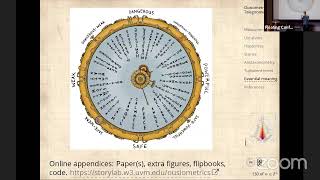
Ousiometrics and Telegnomics - Measuring Essential Meaning and Remote Knowledge
Explore the study of essential meaning and remotely sensed knowledge through innovative frameworks, examining language patterns, storytelling, and temporal dynamics in various contexts.
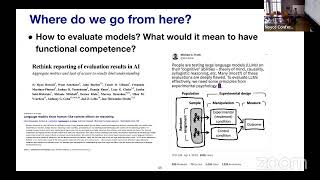
Formal and Functional Competence in Large Language Models - A Cognitive Perspective
Explore cognitive perspectives on large language models, examining formal and functional competence, linguistic confidence, and implications for AI development and evaluation.
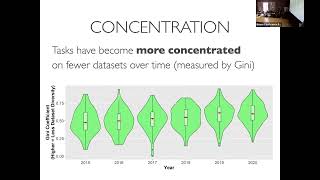
Deconstructing the Barrier of Meaning
Explore the concept of meaning and its barriers with Jacob Foster in this thought-provoking talk, delving into complex ideas and their implications for understanding our world.
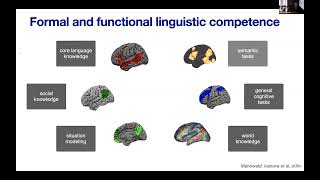
Language Understanding Goes Beyond Language Processing
Explore how language comprehension extends beyond traditional processing, delving into cognitive mechanisms and neural networks that shape our understanding of communication and meaning.
Simple Models of Language Evolution
Explore the fascinating world of language evolution through simple models, uncovering insights into how communication systems develop and change over time.
Bigger Data About Smaller People - Studying Language Learning at Scale
Explore innovative approaches to studying language acquisition in children using large-scale data analysis and computational methods to uncover patterns in early linguistic development.

Principles and Parameters in Natural Language
This course offers a view of human language as a rule-governed system. It will show how language is learned and how the human mind stores the structure of language. This course will introduce components of linguistics theory in a generative framework.

Introduction to Film Studies
The objective of this course is to enable students to understand the language of cinema and to help them recognize significant film movements and theories as well as filmmakers who have shaped the course of world cinema, along with a reading of key cinem…
The Psychology of Language
Explore the cognitive processes behind communication, from speech perception and production to word recognition, sentence comprehension, and bilingualism. Gain insights into reading, writing, and discourse analysis.