Linguistics by CrashCourse
In 16 episodes, Taylor Behnke teaches you linguistics! The content is based on an introductory university-level curriculum, curated by a team of linguists: Lauren Gawne, Jessi Grieser, and Gretchen McCulloch.
Vertebrate Paleontology
Explore vertebrate evolution through fossils, anatomy, and key adaptations. Uncover the origins of major groups like fish, amphibians, reptiles, birds, and mammals, including human ancestors.

Introduction and Core Concepts - Morphology Linguistics
Comprehensive introduction to morphology in linguistics, covering key concepts like morphemes, word categories, affixation, inflection, derivation, and allomorphy with practical examples and exercises.
Introduction to Modern Linguistics
Explore key concepts in modern linguistics, from speech production to syntax and discourse analysis. Gain a comprehensive understanding of language structure and function.
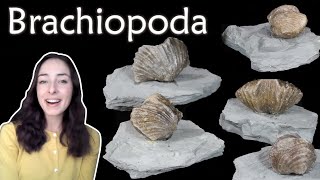
Brachiopoda - Invertebrate Paleontology - GEO GIRL
Explore brachiopod anatomy, morphology, and classification. Learn to distinguish these marine invertebrates from mollusks and understand their evolutionary history and diverse shell shapes.

Language in the Brain and Mouth - How We Communicate
Explore the fascinating world of language, from its basic structures to complex theories of acquisition, and discover how our brains process and produce speech.
Adjectives Antonym of Indonesian Language
Explore Indonesian adjectives and their antonyms, enhancing vocabulary and language skills through practical examples and daily usage.
Grammar & Tenses of Indonesian Language
Explore Indonesian grammar, tenses, prepositions, comparisons, suffixes, imperatives, auxiliary verbs, and unique particles. Enhance your language skills and understanding of Bahasa Indonesia.
Paterae- Io’s Most Common Volcanic Feature- Surprisingly Different Than Earth Volcanism - GEO GIRL
Explore Io's unique volcanic features, paterae, and their formation, distribution, and composition. Learn about the differences between Io's volcanism and Earth's, and current hypotheses on lava lakes.
Foraminifera - Invertebrate Paleontology
Explore foraminifera's role in paleoclimate reconstruction, their classification, ecology, anatomy, and evolution. Learn about planktonic and benthic types, wall structures, and the significance of fusulinids as index fossils.
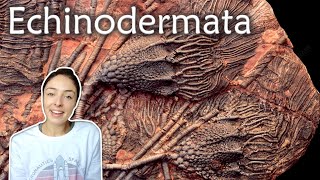
Echinoderms - Invertebrate Paleontology - Crinoids, Starfish, Sand Dollars, & More
Comprehensive exploration of echinoderms: diversity, anatomy, evolution, and classification. Focuses on crinoids and echinoids, their morphology, ecology, and evolutionary history. Includes identification practice and comparisons to vertebrates.
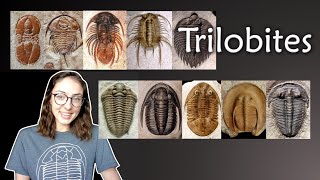
Arthropoda - Trilobites- Invertebrate Paleontology
Comprehensive exploration of trilobite morphology, classification, and evolution. Covers 12 orders, key features, and ecological significance of these ancient marine arthropods from the Paleozoic Era.
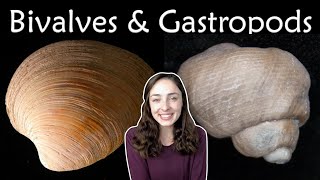
Mollusca - Bivalves & Gastropods- Invertebrate Paleontology
Explore bivalve and gastropod mollusks: anatomy, morphology, classification, ecology, and evolution. Learn key characteristics for identification and understand their evolutionary history.

Bryozoa - Invertebrate Paleontology - GEO GIRL
Explore the fascinating world of Bryozoa, from their unique anatomy and reproduction to diverse morphology and classification. Gain insights into fossil identification and evolutionary history of these invertebrate animals.
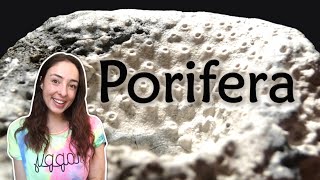
Porifera - Morphology, Classification, & Evolution - Invertebrate Paleontology
Comprehensive exploration of Porifera, covering anatomy, classification, evolution, and ecology. Delves into spicule types, morphological complexity, and the debate surrounding archaeocyathids' classification.
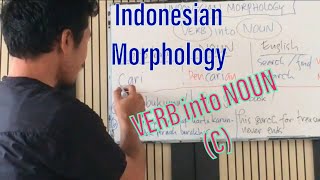
Noun - Building Vocabulary
Pelajari pembentukan kata benda dalam bahasa Indonesia melalui praktik langsung. Tingkatkan kosakata dan pemahaman morfologi dengan metode yang mudah dan menyenangkan.
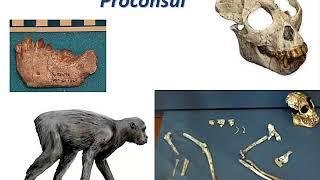
Fossil Monkeys and Apes from the East African Rift Valley
Explore early primate evolution in East Africa through fossil discoveries, focusing on monkeys and apes predating Lucy. Learn about ancient landscapes and their impact on primate diversity.

Classification of Bacteria - Antibiotics Lecture 1
Learn how to classify bacteria using morphology, gram stain, and other tests, creating a practical scheme for clinical use. Explore bacterial naming, important tests, and shorthand for efficient identification.
Modeling American Sign Language via Linguistic Knowledge Infusion
Explore innovative approaches to modeling American Sign Language, enhancing recognition accuracy and addressing challenges in sign language research through linguistic knowledge infusion.
Causes and Consequences of Word Structure - 2000
Explore word storage and access in speech perception and morphological productivity. Examine frequency effects on speech signals and lexicon structure, considering phonological patterns and lexical frequency.
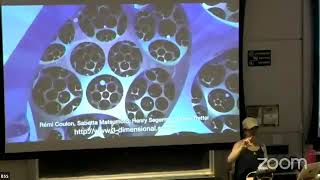
Geometry of Shape Change - Lecture 3
Explore advanced concepts in the geometry of shape change with expert E. Matsumoto at the BSS Physics School.