
Coordination Between Forensic Scientists, Police, Advocates and Doctors - Panel Discussion
Panel discussion exploring challenges and solutions for collaboration between forensic science experts, police, advocates, and doctors in the criminal justice system, featuring insights from leading professionals in the field.
Truth Serum and Human Rights in Criminal Justice
Explore the history, importance, and ethical challenges of narco analysis in criminal justice with Dr. Ruchi Sinha, examining its impact on human rights and legal admissibility.
Legal Interpretation of Forensic Reports in Criminal Convictions
Explore legal interpretation of forensic reports in criminal convictions. Learn how scientific evidence is viewed from a legal perspective and its admissibility challenges in court.

Access to Justice and Forensic Criminology - The Way Forward
Explore the evolution of justice delivery and the role of forensic criminology in expediting case resolutions, with insights on addressing challenges in complex social relationships.
Difficulties Faced by Forensic Scientists at Crime Scenes
Explore challenges faced by forensic experts at crime scenes, including interactions with legal and police officials, based on Dr. Asha Srivastava's extensive experience in the field.
Science of Crime and Criminal Justice System
Explore scientific approaches in crime-solving and criminal justice with insights from Dr. Akhil Chaudhary IPS. Learn how forensic evidence aids police investigations and judicial processes.
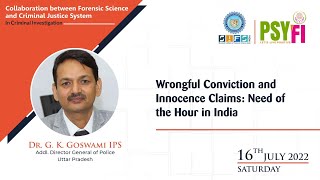
Wrongful Conviction and Innocence Claims in India - The Role of Forensic Science
Exploring forensic science's role in sexual offense investigations, wrongful convictions, and the Innocence Project's importance in India's criminal justice system.

From Seed to Table: Revolutionizing Food Quality Through Seed Diversity
Explore the impact of seed control on food quality and nutrition. Learn about initiatives to prioritize flavor and nutrition in seed breeding for a healthier, more sustainable food system.

The Brain on Trial - Neuroscience and the Law
Explore the intersection of neuroscience and law, examining how brain research challenges judicial systems and impacts legal decision-making processes.

Neuroscience and the Law - Strange Bedfellows
Explore legal and ethical implications of neuroscience in courtrooms with Judge Jed S. Rakoff, examining potential benefits and risks as brain science influences judicial decisions.

Living Body - Forensics in the Courtroom - Christmas Lecture 3
Forensic anthropologist Sue Black investigates a heist, demonstrating forensic techniques and their courtroom applications in this engaging Royal Institution Christmas lecture.
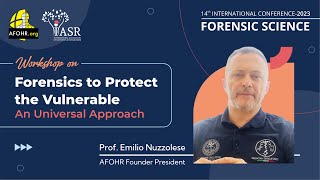
Forensic Science in Maltreatment, Border Control, and Migrant Issues
Explore forensic science's role in protecting vulnerable populations, focusing on maltreatment cases, border control, and issues involving minors and migrants with Prof. Emilio Nuzzolese.
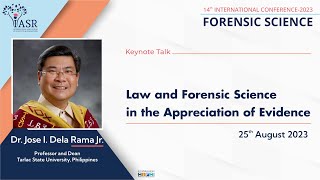
Law and Forensic Science in the Appreciation of Evidence
Explore the crucial intersection of law and forensic science in evidence evaluation, focusing on admissibility standards and the weight given to forensic evidence in criminal justice.

Bias in Forensics: Challenges and Solutions
Dr. Hemlata Pandey explores bias in forensic investigations, discussing its impact on reliability and objectivity. She examines contributing factors and proposes solutions to enhance the accuracy of forensic analyses.

Challenges for Police Forensic Science Services
Explore challenges faced by police forensic science services worldwide and strategies to overcome them, enhancing efficiency and effectiveness in law enforcement investigations.
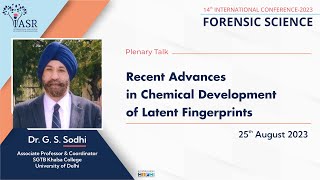
Recent Advances in Chemical Development of Latent Fingerprints
Explore cutting-edge techniques for latent fingerprint development in forensics, enhancing accuracy and efficiency in crime-solving. Dr. Sodhi presents cost-effective, versatile methods for challenging conditions.
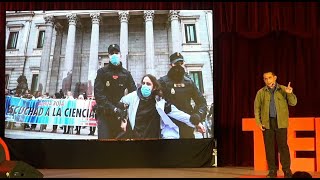
Just Transition - Addressing Climate Change Through Systemic Change
Exploring systemic change for climate action: prioritizing equity, justice, and human rights in harmony with nature while transitioning from fossil fuels to renewable energy sources.

Warm Truth of Forensic Medicine
Forensic medicine's role in uncovering truth, safeguarding rights, and contributing to society. Explores the field's unique perspective on life and death, highlighting its importance in advancing medical knowledge and justice.
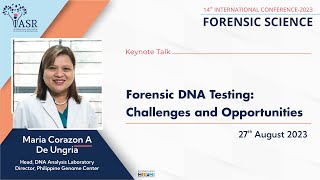
Forensic DNA Testing - Challenges and Opportunities
Explore the power of forensic DNA testing in criminal investigations, its expanding applications, and the scientific, ethical, and legal considerations for enhancing investigative capabilities.
Current Antibiotic Management of Multi-Drug Resistant Gram-Negative Bloodstream Infections
Explore management strategies for multi-drug resistant Gram-negative bloodstream infections, including classification, resistance mechanisms, surveillance, and new antibiotics.
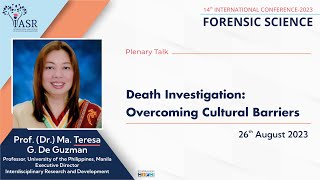
Death Investigation: Overcoming Cultural Barriers
Explore strategies for navigating cultural sensitivities in forensic investigations, enhancing evidence collection and promoting justice across diverse communities.