Infectious Disease - How Vulnerable Is Your Family and Our Community?
Explore influenza, measles, and emerging diseases like Ebola. Learn about new discoveries, risk reduction strategies, and Stanford's Level 1 Trauma Center capabilities for protecting your family and community.

Should Law Foster Forgiveness? Child Soldiers, Sovereign Debt, and Alternatives to Punishment
Exploring legal, historical, and cultural perspectives on forgiveness in law, examining child soldiers, sovereign debt, and alternatives to punishment across domestic and international contexts.
Crime and Punishment in the Shadows of Doubt
Explore stereotypes' impact on criminal justice, from decision-making under uncertainty to controversial issues. Gain insights into creating a more equitable society through understanding these effects.

How to Detect Lies and Deception
Learn practical techniques for detecting deception in criminal investigations. Gain insights into scientific methods and useful strategies for uncovering truth in law enforcement and related fields.
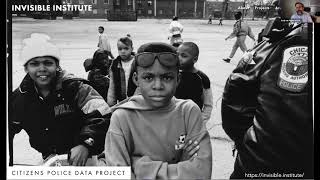
The Network Structure of Police Misconduct
Explore police misconduct networks in Chicago, examining individual and institutional factors influencing co-misconduct patterns. Gain insights into potential police reform strategies.

Ask What You Can Do - Inspiring Public Service
Engaging discussion on public service careers featuring diverse perspectives from military, politics, and law enforcement. Explores motivations, challenges, and personal experiences in serving the public.

Feeling the Way to Truth - Rethinking Modern Philosophy's Development
Exploring the overlooked contributions of women in modern philosophy's development, challenging assumptions and advocating for a more inclusive understanding of philosophical history.
The Race for Technological Supremacy - Emerging Technologies and Global Implications
Explore global tech competition, emerging technologies' impact, and policy challenges with experts discussing AI, data privacy, and US-China dynamics in the digital age.

AI's Global Impact on Democracy and Governance
Explore AI's influence on global democracy, disinformation, and governance. Learn about challenges and strategies to ensure democratic values prevail in the digital age.

Police Brutality Teach-Out
In this Teach-Out, you will learn about the history of police violence in America, become aware of laws and policies that prevent accountability, understand the demands of protesters, and gain the knowledge and tools to fight for change locally.

Why Life Behind Bars Varies Around the World - David Skarbek, Hayek Lecture Series
Explore the surprising diversity of prison life worldwide, examining governance structures and social order behind bars through an economic and empirical lens.
Rethinking Our Assumptions During the COVID-19 Crisis with David Krakauer
Exploración de cómo la pandemia de COVID-19 desafía nuestras suposiciones en educación, negocios, investigación y gobernanza, examinando el equilibrio entre estándares universales y flexibilidad ágil en tiempos de crisis.
Rajiv Sethi on Stereotypes, Crime, and The Pursuit of Justice
Exploring stereotypes' impact on society, justice, and online interactions. Discusses biases in attention and cognition, their consequences, and potential strategies for humanizing encounters with unfamiliar individuals.
The Brain and the Law - How Neuroscience Will Shift Blameworthiness
Explore how neuroscience challenges criminal justice assumptions, examining brain equality, incarceration effectiveness, and rehabilitation technologies. Insights into unconscious behavior drivers and future-focused legal approaches.
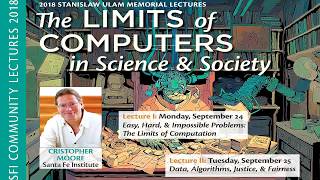
Data, Algorithms, Justice and Fairness - Lecture 2
Exploring algorithmic fairness in justice systems: accuracy, data sources, and potential biases. Discusses AI decision-making, explainability, and societal implications of algorithms in criminal justice.
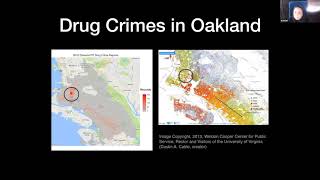
Fairness, Accountability, and Transparency in Predictive Models for Criminal Justice
Explore fairness, accountability, and transparency in predictive modeling for criminal justice, with examples highlighting their importance in real-world applications.
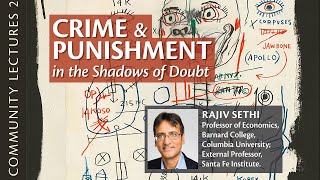
Crime and Punishment: Stereotypes and Uncertainty in the Justice System
Explore how stereotypes influence criminal justice decisions, from offenders to jurors, and their impact on controversial issues, aiming for a more equitable society.
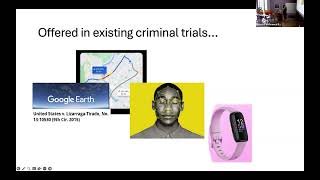
Beyond Prediction: Algorithmic Proof of Guilt or Innocence in Criminal Trials
Explore the use of algorithms in criminal trials for evidence, examining accuracy, fairness, and transparency concerns. Discuss challenges and potential solutions for courts and researchers.
Barrett's Esophagus - Link Between Acid Reflux & Esophageal Cancer
Comprehensive overview of Barrett's esophagus: causes, risks, screening, and treatment options. Learn about its link to esophageal cancer and latest management strategies from a UCLA expert.

Thyroid Nodules & Thyroid Cancer: What You Need to Know
Comprehensive overview of thyroid nodules and cancer, covering diagnosis, treatment options, and latest guidelines. Experts discuss strategies to avoid surgery and best practices for managing thyroid conditions.
A Hidden Workforce: Prison Labor, Human Rights, and the Legacy of Slavery
Explore the history and current state of prison labor in the US, examining its roots in slavery and its impact on human rights, while discussing potential reforms for more dignified work.