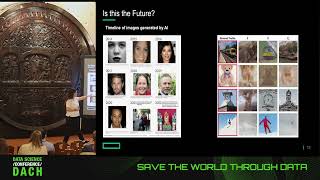
How Generative AI is Changing the Way People Interact with Computers
Explore the evolution, capabilities, and ethical implications of generative AI technologies, focusing on how they're revolutionizing human-computer interaction and shaping future applications.

Improving Sales and Customer Experience Using Chatbots for Hotel Booking Recommendations
Discover how to leverage chatbots and language models to enhance hotel bookings, improve customer experience, and boost sales through controlled information flow and personalized recommendations.

Use of Python for Cutting-Edge Language Model Research
Explore Python's role in cutting-edge language model research, focusing on mechanistic interpretability, causal interventions, and practical examples using interpretability libraries.

The Future of Application Development - Cloud Native Summit
Explore Kappa architecture, stream processing, and LLM integration for innovative application development. Learn to build scalable systems leveraging real-time data and AI capabilities.
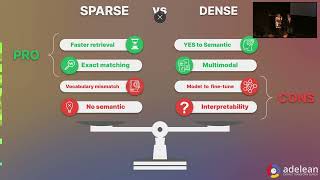
Dive into NLP with the Elastic Stack
Explore practical NLP applications using Elasticsearch, including semantic vectorization, semantic search, named entity recognition, multimodal search, and automatic classification.
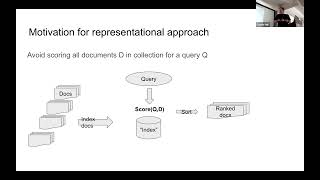
Navigating Neural Search: Avoiding Common Pitfalls
Explore neural search, text embedding models, and vector retrieval. Learn to choose models based on language, task alignment, accuracy, and cost-effectiveness. Understand potential pitfalls in embedding retrieval.
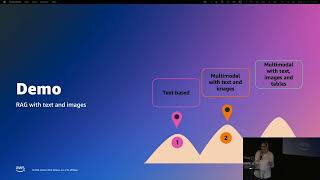
Expanding RAG with Multimodal Capabilities - Haystack US 2024
Explore multimodal RAG workflows for enhanced retrieval and generation, incorporating text, tables, and images. Live demo showcases PDF processing, vector database usage, and LLM-enriched responses.

Red Teaming Language Model Detectors with Language Models
Explore strategies to compromise LLM detectors using synonym replacement and instructional prompts, revealing vulnerabilities in text detection systems and emphasizing the need for robust safeguards.

Do Androids Know They're Only Dreaming of Electric Sheep?
Explore transformer language models' internal representations to detect and analyze hallucinatory behavior in AI-generated content, with insights on task-dependent patterns and evaluation methods.

The Data Provenance Initiative: A Large Scale Audit of Dataset Licensing and Attribution in AI
Explore a comprehensive audit of 1800+ text datasets, examining legal and ethical risks in AI data practices. Gain insights into dataset lineage, licensing, and the divide between open and closed datasets.

Transforming the Retail Industry with Transformers
Explore how transformers and language models revolutionize retail data processing, overcoming challenges in deployment and automation for improved business outcomes.

YOCO: Decoder-Decoder Architectures for Language Models Explained
Explore YOCO, a decoder-decoder architecture for LLMs that improves inference memory, prefill latency, and throughput by caching key-value pairs once across context lengths and model sizes.
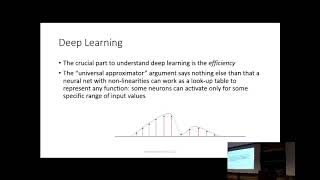
Deep Learning in NLP and Beyond - 2015
Explore advanced machine learning in NLP, focusing on recurrent neural networks and deep learning. Gain insights into future research directions for developing language-understanding machines.
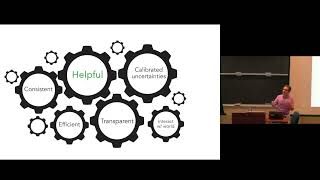
Building Helpful Language Models - Challenges and Solutions
Explore challenges and solutions in aligning language models, including self-instruction, source tracing, and web interaction. Gain insights into building robust, transparent AI systems for practical applications.
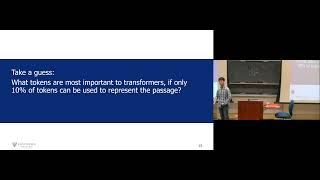
Nugget: Neural Agglomerative Embeddings of Text
Explore dynamic text embedding with Nugget, a novel approach for encoding language into meaningful units, enhancing semantic comparison and expanding contextual windows in language models.
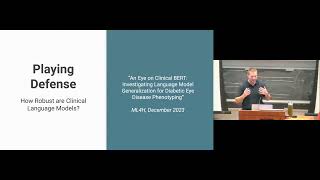
Fighting Bias from Bias: Robust Natural Language Techniques to Promote Health Equity
Explore AI's role in addressing health disparities, examining clinical phenotyping, language model robustness, and efforts to identify stigmatizing language in medical records.
Concordia Contest 2024 - Basic Agent Development Tutorial
Develop cooperative AI agents for text-based environments using the Concordia framework. Advance language model intelligence in open-ended worlds similar to tabletop RPGs.

ChatGPT Tutorial for Beginners - How to Use ChatGPT in 2024
Discover how to harness ChatGPT's power in 2024. Learn essential techniques, explore practical applications, and unlock AI's potential for your tasks.

Everything to Know About ChatGPT: Dialogue, Backend, API, and Python Implementation
Explore ChatGPT's dialogue capabilities, backend operations, API, and Python implementation. Gain comprehensive insights into this specialized AI technology.

Seeing Like a Language Model - Understanding Embeddings and Meaning in AI
Explore how language models process text and represent meaning through embeddings. Gain insights into building better retrieval-augmented LLM systems and designing natural interfaces for reading and writing.
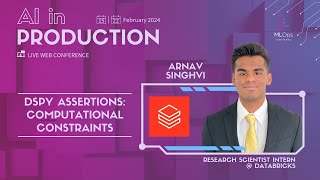
DSPy Assertions: Computational Constraints for Self-Refining Language Model Pipelines
Explore DSPy Assertions for enhancing language model pipelines with computational constraints, enabling more reliable and accurate systems through automatic prompt optimization and self-refinement.