
Microsoft Phi-3 vs Llama 3 8B: Performance Comparison and Azure Deployment
Explore Microsoft Phi-3's performance vs. Llama 3 8B in coding tests. Learn about benchmarks, technical details, and how to deploy Phi-3 in Azure for Python applications.

Meta's Llama 3 - The Next Generation of Open-Source Language Models
Explore Meta's Llama3 models: architecture, training, benchmarks, and real-world performance. Discover how this open-source AI compares to competitors and its potential impact on the field.

GPT-4o Mini: Fast, Cheap, and Impressive AI Model - First Impressions
Explore OpenAI's GPT-4o mini: a cost-effective, high-performance AI model for developers. Learn its capabilities, pricing, and potential impact on AI applications.
MIT 6.S191 - Automatic Speech Recognition
Explore automatic speech recognition with Rev.com experts, covering data selection, speech input processing, and advanced ASR techniques like attention-based models and language modeling.
Applications of Stanford DSPy for Self-Improving Language Model Pipelines
Explore Stanford DSPy's adaptive LM pipelines for complex tasks. Learn to create self-improving systems using text transformation graphs and parameterized modules, boosting performance with minimal code.
Vertex AI Gemini: Model Selection and Prompt Design Principles and Strategies
Master Vertex AI Gemini model selection and prompt design. Learn to map capabilities to use cases, craft effective prompts, and implement robust engineering strategies.

LoRA Explained - Efficient Fine-Tuning of Large Language Models
Explore LoRA, a technique for efficient fine-tuning of large language models. Learn about its low-rank matrix decompositions and reduced trainable parameters for task-specific adaptations.
What's in My AI? A Comprehensive Analysis of Datasets Used to Train GPT 1, GPT 2, GPT 3, GPT NeoX 20
Comprehensive analysis of datasets used to train major language models, exploring size, content, and documentation practices for GPT-1 to Gopher. Insights into AI development and dataset transparency.

Composable Interventions for Language Models
Explore composable interventions for language models, enhancing accuracy and mitigating harmful outputs. Learn about interactions between different intervention types and their practical implications.
Breaking the Language Barrier - How Do We Quickly Add Multilanguage Support in Our AI Application
Explore machine translation APIs to quickly add multilingual support to applications. Learn to identify, translate, and transliterate speech/text for a global audience.
Mastering Automotive Language Models and Edge Deployment in 2024
Explore how Small Language Models revolutionize automotive AI through edge computing, focusing on optimization techniques, deployment strategies, and real-world applications in vehicles.
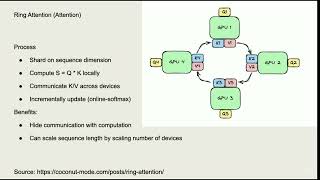
Unraveling Long Context: Existing Methods, Challenges, and Future Directions
Explore the complexities of scaling transformer models for longer context, examining current methodologies, implementation hurdles, and emerging solutions in AI development.
How to Fine-Tune Mamba for Question Answering
Dive into practical Mamba language model fine-tuning for question-answering tasks, from basic prompt engineering to complete model training implementation.
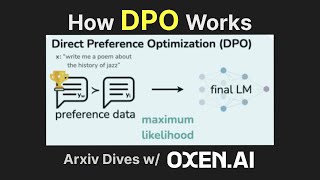
Direct Preference Optimization (DPO) vs RLHF - Understanding Language Model Training
Delve into Direct Preference Optimization (DPO) and discover how it eliminates the need for separate reward models in language model training, offering a more efficient alternative to RLHF.
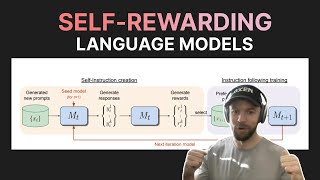
Deep Dive Into Self-Rewarding Language Models - Training Models as Their Own Judges
Explore how language models can be trained to evaluate and improve themselves, eliminating the need for human-labeled data while achieving superior performance in AI development and training.
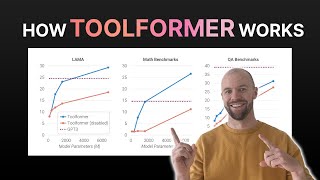
Teaching Language Models to Use Tools - Deep Dive into Toolformer
Explore how language models can self-learn to utilize tools through API calls, covering architecture, training data generation, filtering mechanisms, and experimental results from Meta's Toolformer paper.

Fine-Tuning Self-Rewarding Language Models with Mistral 7B
Dive into implementing Meta's Self-Rewarding Language Model with Mistral 7B, covering fine-tuning techniques, data preparation, prompt generation, and practical demonstrations.
PDL: A Declarative Language for Smarter and Faster LLM Programming
Discover how PDL revolutionizes prompt programming with a declarative YAML-based approach, enabling modular, reusable patterns for enhanced LLM interactions and sophisticated application development.
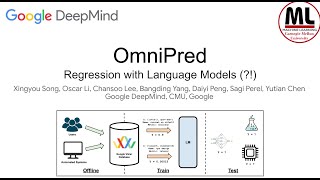
OmniPred - Towards Universal Regressors with Language Models
Explore groundbreaking research on OmniPred's innovative approach to using language models as universal regressors, demonstrating superior performance over traditional regression methods across diverse experiments.
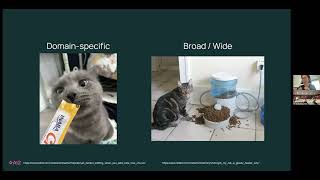
Demystifying Data Curation for Pretrained Language Models
Dive into effective data curation techniques for language models, exploring key strategies and best practices for optimizing pretrained model performance through quality dataset preparation.

How to Train GPT-3 with Your Own Dataset
Discover practical techniques for customizing GPT-3 through dataset training, exploring real-world applications and methods to enhance model performance for specific use cases.