Optimizing Resilience and Availability by Migrating from JupyterHub to Kubeflow Notebook Controller
Explore the migration from JupyterHub to Kubeflow Notebook Controller, highlighting improved resilience, scalability, and user satisfaction in Kubernetes-native architecture.
Kubeflow Explained: NLP Architectures on Kubernetes - YOW! 2018
Explore NLP architectures on Kubernetes with Kubeflow, enhancing machine learning workflows and deployment efficiency in cloud-native environments.
Building Reproducible ML Processes with an Open Source Stack
Explore open-source tools for reproducible machine learning, covering code, data, and environment management. Includes hands-on demonstration of experiment replication using KubeFlow, Git, Minio, and lakeFS.
Optimizing Kubernetes Cluster Scaling for Advanced Generative Models
Explore advanced techniques for scaling Kubernetes clusters to support complex generative models, leveraging tools like Flyte, MLflow, and Kubeflow for efficient deployment and management.
A Scalable Platform for Training and Inference Using Kubeflow at CERN
Explore CERN's Kubeflow-based machine learning platform for data preparation, analysis, training, and inference in physics research, with insights from the ATLAS experiment.
AutoML and Training Working Group Updates for Kubeflow
Explore AutoML and Training Working Group updates for Kubeflow, including Katib's 2024 roadmap, Training Operator enhancements, and advancements in distributed ML training on Kubernetes.
Dynamically Tuning Pods - Leveraging Time Series ML Models with KubeFlow
Explore advanced pod resource optimization using Prometheus and KubeFlow. Learn to implement time series ML models for dynamic tuning in Kubernetes clusters, enhancing performance and efficiency.
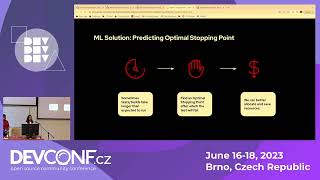
Optimize Long Test Runtimes Using Open AIOps
Optimize CI/CD workflows with AI4CI: Predict test failure times, determine optimal stopping points, and efficiently manage development resources using open AIOps tools and ML models.
Machine Learning Made Easy on Kubernetes - DevOps for Data Scientists
Explore DevOps for ML on Kubernetes: streamline data prep, model training, testing, and deployment using tools like Tensorflow, Kubeflow, and Pachyderm. Ideal for data scientists and SRE teams.
Embrace DevOps Practices to ML Pipeline Development
Integrating DevOps practices into ML pipeline development using Kubeflow and Tekton, focusing on workflow orchestration, CI/CD, and overcoming challenges in the process.
Scaling ML Pipelines with KALE - The Kubeflow Automated Pipeline Engine
Discover KALE, the Kubeflow Automated Pipeline Engine, for scaling ML pipelines. Learn how to transform Jupyter Notebook experiments into production-grade pipelines for efficient model training and real-time serving.
Taming the Beast - Managing the Day 2 Operational Complexity of Kubeflow
Explore strategies for managing Kubeflow's operational complexity, covering deployment, configuration, and maintenance. Learn tips and lessons from experienced practitioners to streamline ML workflows on Kubernetes.
Building and Managing a Centralized ML Platform with Kubeflow at CERN
Explore CERN's centralized ML platform using Kubeflow, covering data preparation, model training, and serving. Learn about resource optimization, integration challenges, and cloud expansion possibilities.

One Does Not Simply Put Machine Learning into Production
Explore challenges and trade-offs in implementing machine learning in products, focusing on accuracy, cost, maintainability, and interpretability. Learn key considerations for successful ML integration.
Accelerating Machine Learning DevOps with Kubeflow
Explore Kubeflow for seamless machine learning deployment on Kubernetes. Learn to move models from development to production efficiently, enhancing ML DevOps practices.
Kubeflow for Machine Learning
Explore Kubeflow for ML: tooling, scaling Python with Dask/Ray, API comparisons, and insights on distributed computing. Learn from experts about advancements in machine learning infrastructure.
From Experimentation to Products - The Production Machine Learning Journey
Explore the journey from ML experimentation to production, covering MLOps, TensorFlow Extended, and pipeline architectures for scalable, maintainable machine learning applications.

Kubeflow for Machine Learning
Explore Kubeflow's role in enhancing ML tooling with experts Holden Karau and Adi Polak. Discover how this platform improves machine learning workflows and compare it with other distributed computing frameworks like Ray and Dask.
MLPerf Meets Kubernetes
Exploring MLPerf's adaptation for evaluating machine learning performance on Kubeflow and Kubernetes, guiding future optimizations of cloud-native ML platforms.
Elephant on Wheels - Petabyte-scale AI @ LinkedIn
Explore LinkedIn's journey in integrating Kubernetes for AI workloads, focusing on secure HDFS access and innovative scheduling solutions for petabyte-scale operations.
Kubeflow 1.0 Update by a Kubeflow Community Product Manager
Comprehensive overview of Kubeflow 1.0, covering community processes, user survey results, key features, business benefits, and a live demonstration of building and deploying a Kubeflow Pipeline.