
Solving Real World Data Science Problems With Python - Computer Vision Edition
Learn to build and improve convolutional neural networks for computer vision tasks using Python, TensorFlow, and Keras. Explore data augmentation, preprocessing, and network architecture optimization techniques.
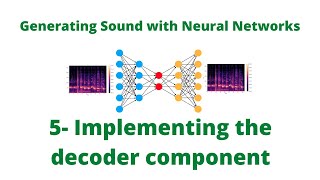
How to Implement Autoencoders in Python and Keras - The Decoder
Learn to implement the decoder component of autoencoders using Python, TensorFlow, and Keras. Covers building methods, layers, and architecture for generating sound with neural networks.
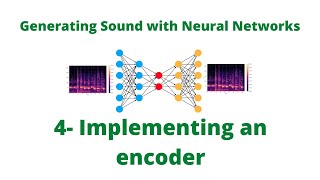
How to Implement Autoencoders in Python and Keras - The Encoder
Learn to implement autoencoders in Python and Keras, focusing on building the encoder component. Covers autoencoder class construction, convolutional layers, bottleneck creation, and practical implementation.
Audio Processing in Keras with Kapre
Learn to process audio in Keras using Kapre, exploring its advantages, features, and implementation. Discover how to embed audio transformations within deep learning models for optimized GPU-based calculations and easier deployment.
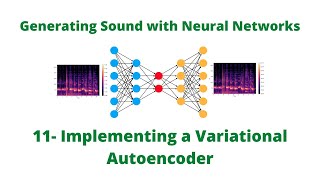
How to Implement a Variational Autoencoder in Python and Keras
Implement a Variational Autoencoder using Python, TensorFlow, and Keras. Learn to modify the encoder, update loss functions, train the model, and visualize the latent space for data generation.
Generation with AutoEncoders - Results and Limitations
Explore image generation using autoencoders, analyze latent space representations, and understand limitations in generative tasks. Learn why variational autoencoders are necessary for improved generation.
Building and Training an Autoencoder in Keras - TensorFlow - Python
Learn to build and train autoencoders using Python, TensorFlow, and Keras. Explore encoder-decoder architectures, implement training with the MNIST dataset, and gain practical insights into autoencoder development.
Generative Adversarial Networks for Image Synthesis and Translation - Dr. Jan Kautz
Explore recent GAN advancements for image synthesis and translation, including conditional GANs, supervised vs unsupervised methods, and multimodal approaches. Learn to design, modify, and understand GAN architectures.
An AI Engineer's Guide to Machine Learning with Keras
Comprehensive guide to building and evaluating machine learning models using Keras, covering data preparation, model creation, training, and performance analysis with practical examples.
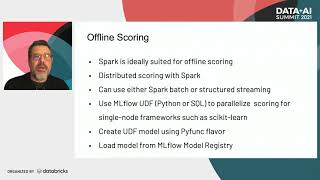
MLflow Model Serving - Methods and Best Practices
Explore MLflow model serving techniques, including batch and real-time scoring, open-source and Databricks-managed options, with emphasis on new production-ready model serving features.
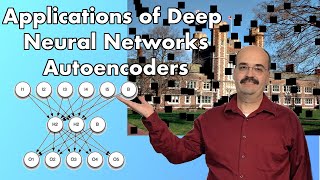
Deep Neural Network Autoencoders in TensorFlow and Keras - Part 1
Learn to create and implement autoencoders in Keras and TensorFlow, including denoising autoencoders, for deep neural network applications in image processing and function approximation.
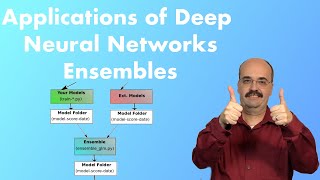
Neural Networks with Ensembles for TensorFlow and Keras
Learn to create and evaluate ensemble models using random forests and deep neural networks with TensorFlow, Keras, and scikit-learn. Explore feature importance and perturbation ranking techniques.
Deep Learning Cross Validation for TensorFlow and Keras
Learn to implement cross-validation techniques for deep learning models using TensorFlow and Keras, enhancing model evaluation and performance in regression and classification tasks.
Early Stopping and Encoding a Feature Vector for Deep Neural Networks
Learn to implement early stopping, encode feature vectors, and use validation sets in Keras neural networks for improved deep learning model performance and efficiency.
Introduction to TensorFlow and Keras with Anaconda Python
Learn to build neural networks using TensorFlow and Keras for classification and regression tasks. Covers key concepts, data handling, model creation, training, and evaluation.
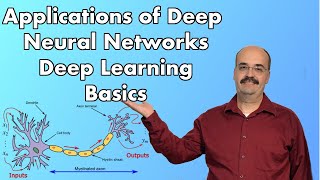
Deep Neural Network Basics for Keras and TensorFlow
Explore deep neural network fundamentals including activation functions, bias neurons, and output calculation for Keras and TensorFlow implementation.
Transfer Learning Using Keras
Learn to classify car brands using transfer learning with Keras and ResNet50. Hands-on tutorial covers dataset preparation, model configuration, training, and prediction visualization.
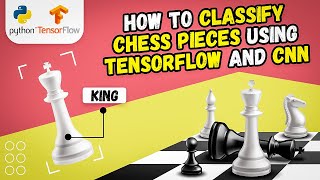
Convolutional Neural Networks - Deep Learning Basics with Python, TensorFlow and Keras
Learn to build and train a convolutional neural network for chess piece image classification using Python, TensorFlow, and Keras. Covers dataset preparation, model creation, and prediction testing.

How to Classify Flowers Using Deep Learning
Learn to build a convolutional neural network for flower image classification using TensorFlow and Keras, from dataset preparation to model testing and prediction.

Setting Up CUDA, CUDNN, Keras, and TensorFlow on Windows 11 for GPU Deep Learning
Comprehensive guide for setting up GPU-accelerated deep learning environment on Windows 11, covering CUDA, CUDNN, Keras, and TensorFlow installation with step-by-step instructions.
Installing Miniforge and Anaconda/Miniconda Side-by-Side on Mac M1 Monterey
Learn to install and run Anaconda and Miniforge simultaneously on Mac M1, including TensorFlow and Keras setup, with step-by-step guidance and troubleshooting tips.