Coding a Neural Network - Full Stack Deep Learning - Spring 2021
Code a neural network from scratch using Google Colab, NumPy, PyTorch, and Keras. Learn linear regression and multi-layer perception models through hands-on implementation and visualization.
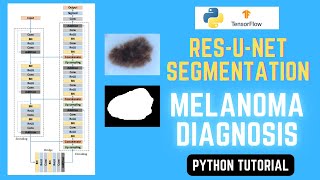
Res-UNet for Melanoma Segmentation - TensorFlow Tutorial
Step-by-step guide to implement and train a Res-UNet model for Melanoma detection using TensorFlow and Keras. Learn to build, train, test, and visualize results for accurate skin lesion segmentation.
Keras Preprocessing Layers
Learn to streamline model development with Keras Preprocessing Layers. Build end-to-end models, transform inputs, and improve performance using tf.data and multi-worker training.
Build a Deep CNN Image Classifier with Any Images
Learn to build a custom deep CNN image classifier from scratch using Python, TensorFlow, and Keras. Covers data pipeline, preprocessing, network building, training, evaluation, and model saving.
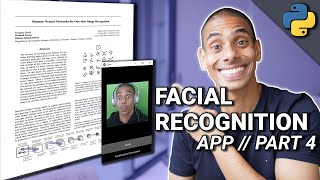
Build a Deep Facial Recognition App - Building a Siamese Neural Network - Python
Learn to build a Siamese Neural Network for facial recognition using TensorFlow, including image embedding, L1 distance layer, and model integration in a Kivy app.

Real-World Python Neural Nets Tutorial - Image Classification with CNN - Tensorflow & Keras
Learn to build and train a CNN for image classification using TensorFlow and Keras. Covers data preparation, model improvement, hyperparameter tuning, and practical applications in Python.

Enhance Low Light Images Using Keras, Python and Weights & Biases
Learn to enhance low-light images using Zero-DCE, an unsupervised technique implemented with Python, Keras, and Weights & Biases. Explore model training, experiment tracking, and result visualization in this hands-on tutorial.
NLP Workflows with Keras
Explore NLP workflows using Keras, covering text vectorization, various modeling techniques, and practical implementations for efficient natural language processing tasks.
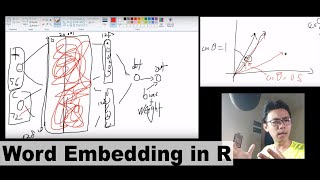
Word Embedding with Keras - A RStudio Tutorial
Learn word embedding techniques using Keras in RStudio. Covers theory, concepts, and practical implementation, including Keras basics and machine learning fundamentals for natural language processing.
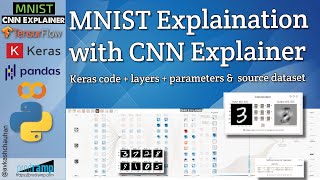
Deep Understanding of MNIST Problem and Its CNN Solution Using CNN Explainer
Comprehensive tutorial on MNIST problem and CNN solution using CNN Explainer. Covers dataset preparation, model architecture, training, and evaluation. Ideal for beginners in deep learning and neural networks.
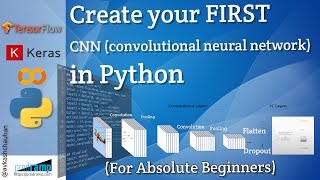
Create and Visualize Your First Convolutional Neural Network in Python
Learn to create and visualize a Convolutional Neural Network (CNN) in Python, covering key concepts like convolution, pooling, flattening, and dropout with practical examples and code implementation.
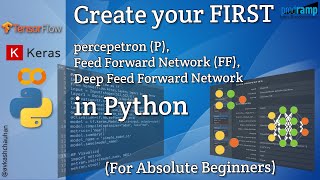
Create and Visualize Your First Perceptron and Feed Forward Network in Python
Learn to build and visualize Perceptron and Feed Forward networks in Python using Keras and TensorFlow. Ideal for beginners, this hands-on tutorial covers network creation, visualization, and fundamental deep learning concepts.
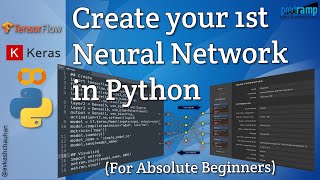
Create and Visualize Your Very First Neural Network in Python
Create and visualize your first neural network in Python using Keras and TensorFlow. Learn step-by-step, from basic concepts to building a sequential model, with helpful visualizations and a pre-trained network example.
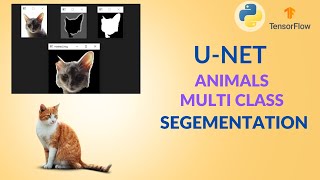
Creating an Animal Segmentation Model with U-Net and TensorFlow Keras
Learn to implement and train a U-Net model for animal segmentation using TensorFlow/Keras. Covers data preprocessing, model architecture, training, and evaluation with practical code examples.
Deep Reinforcement Learning Tutorial for Python
Learn to create OpenAI Gym environments, build deep learning models, and train reinforcement learning agents using Tensorflow, Keras, and Keras-RL in this hands-on tutorial for Python developers.
TensorFlow Tutorial - Model Subclassing with Keras - Part 8
Learn to build flexible TensorFlow models using Keras subclassing, including a ResNet-like model with skip connections. Gain advanced model creation skills beyond Sequential and Functional APIs.
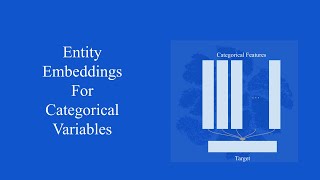
Entity Embeddings for Categorical Variables
Learn to implement entity embeddings for categorical variables using TensorFlow/Keras, with a focus on converting the model to PyTorch. Practical application using Kaggle competition data.
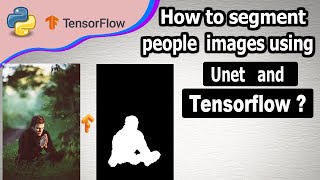
U-Net Person Segmentation - How to Segment Persons in Images
Learn to implement and train a U-Net model for person segmentation using TensorFlow/Keras. Covers data preprocessing, model architecture, training, and evaluation with practical code examples.

Medical Polyp Image Segmentation with U-Net and TensorFlow Keras
Step-by-step guide to implement U-Net for medical polyp image segmentation using TensorFlow/Keras, covering data preprocessing, model architecture, training, and evaluation.
How to Implement a Simple Neural Network With TensorFlow 2
Learn to implement a simple neural network using TensorFlow 2 and Keras for arithmetic sum, covering model building, training, testing, evaluation, and prediction.

Introduction to Neural Networks in Python - Tensorflow-Keras
Learn neural network basics, architecture, hyperparameters, and implementation in Python using TensorFlow/Keras. Includes hands-on coding examples for various classification tasks, from simple to complex datasets.