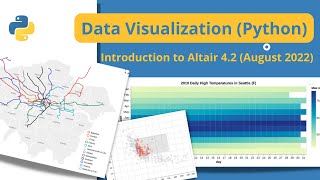
Data Visualization in Python - Altair 4.2 Tutorial
Comprehensive tutorial on Altair for data visualization in Python, covering setup, basic plots, customization, interactivity, and advanced features. Ideal for beginners and intermediate users.
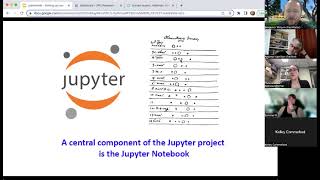
Integrating Jupyter Notebooks in High School Physics - Creating a JupyterHub
Learn to integrate Jupyter notebooks into high school physics classes, with insights on setting up JupyterHub and leveraging interactive tools for engaging STEM education.
Jupyter Notebook Assignment Development - Introduction and Learning Goals
Explore the process of creating Jupyter Notebook assignments for computational research methods, focusing on setting learning goals and structuring effective content.
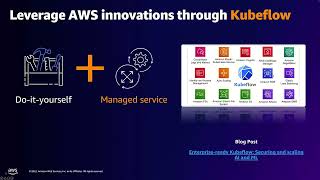
Machine Learning at Scale Using KubeFlow on AWS
Explore scalable machine learning architecture using Kubeflow on AWS, featuring hands-on demos of distributed storage and Kubernetes-based ML toolkit implementation.
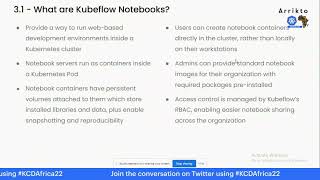
Transforming Jupyter Notebooks to Reproducible Machine Learning Pipelines with Kale
Learn to convert Jupyter notebooks into scalable Kubeflow pipelines using Kale, enabling seamless deployment of ML workflows on Kubernetes for improved reproducibility and efficiency.
How GitLab.com Uses Long-Term Monitoring Data for Capacity Forecasting
Explore GitLab's Tamland tool for capacity planning, leveraging long-term monitoring data and predictive forecasting to anticipate and address potential issues in large-scale service operations.
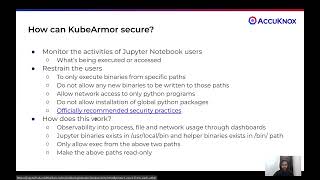
Securing Jupyter Notebooks with KubeArmor
Learn to enhance security for Jupyter Notebooks using KubeArmor, exploring advanced protection techniques for cloud-native environments and data science workflows.
Scheduling Jupyter Notebooks Using Airflow on Kubernetes
Learn to schedule Jupyter notebooks using Airflow on Kubernetes, enabling scalable data pipelines and machine learning workflows with enhanced security and resource management.
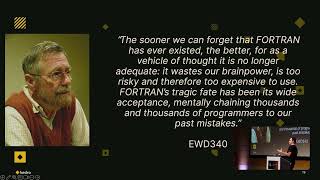
Data Science in Production - Crossing the Chasm
Explore the challenges of integrating data science tools like notebooks into production environments, drawing parallels with spreadsheets and proposing solutions to bridge the gap between experimentation and structured systems.
Exploring Data Wrangler in VS Code - Python Data Science
Discover Data Wrangler in VS Code: Efficiently explore, analyze, and clean Airbnb listings data. Learn to invoke and use this powerful tool for streamlined data preprocessing in Python notebooks.
Simplifying Data Analysis and Visualization with Developer Tools and AI
Explore data analysis and visualization using AI-assisted tools. Learn to leverage GitHub, Jupyter, Copilot, and LIDA for efficient insights and visualizations, even without extensive Python experience.
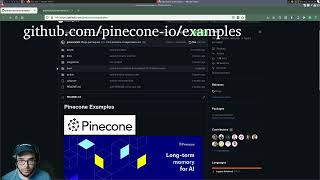
How to Use Jupyter Notebooks for Machine Learning and AI Tasks
Learn to leverage Jupyter Notebooks for ML and AI tasks, covering setup, security, best practices, and practical applications like semantic search using Pinecone's vector database.
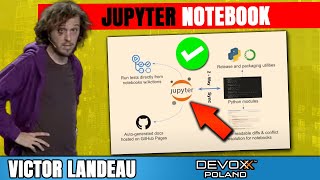
Jupyter Notebook vs Classical IDEs - Do You Have to Choose?
Explore the strengths and limitations of Jupyter Notebooks and traditional IDEs, understanding when to use each for optimal coding efficiency and productivity.
Caching for Jupyter Notebooks
Aprenda técnicas de caching para acelerar o desenvolvimento em Jupyter Notebooks, melhorando o fluxo de trabalho e reduzindo o tempo de espera em células dispendiosas.
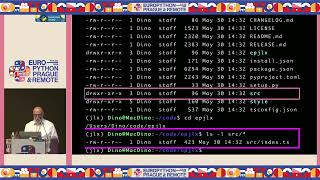
Creating Your Own Extensions for JupyterLab
Learn to create custom JupyterLab extensions, enhancing functionality and integrating complex tasks. Explore the extension infrastructure and build a step-by-step app with styling and parameter options.
Why ML in Production is Still Broken
Explore challenges in deploying ML projects to production, focusing on the disconnect between development and real-world application. Learn key aspects distinguishing ML from traditional software engineering.
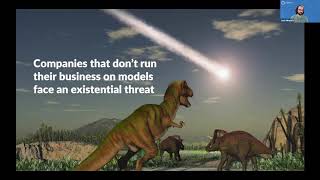
Introduction to Machine Learning with Python
Explore machine learning fundamentals using Python, covering key concepts and practical applications in this hands-on workshop led by a field engineer from Domino.
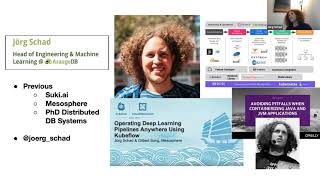
Building and Operating an Open Source Data Science Platform
Develop an end-to-end data analytics pipeline, from exploratory analysis to model deployment. Learn pipeline orchestration, distributed training, automation, and monitoring for scalable machine learning projects.
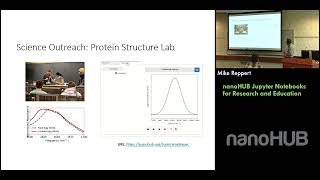
NanoHUB Jupyter Notebooks for Research and Education in Chemistry
Explore nanoHUB Jupyter Notebooks for creating chemistry teaching applications. Learn about tools for simulating proteins, analyzing lab data, and studying molecular spectroscopy. Discover how to develop and share scientific software effectively.

Exploring Datasets with Python and Pandas
Explore datasets using Python and pandas. Learn essential data analysis techniques for scientists, engineers, and analysts working with diverse datasets.
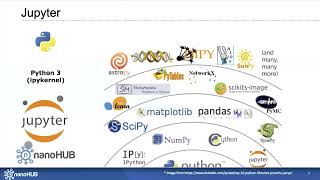
A Guided Tour of Interactive Jupyter Notebooks Powered by nanoHUB
Explore interactive Jupyter Notebooks on nanoHUB. Learn fundamentals, develop code, analyze data, create visualizations, and build GUIs using Jupyter widgets and nanohub-uidl library.