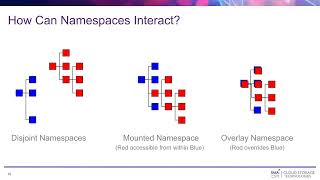
Simplified Namespace Management Using CDMI and Open Standards
Discover how to simplify complex namespace management using SNIA's CDMI open standard, covering discovery, introspection, exports, and imports across distributed systems and multiple protocols.
Hardware-accelerated Data Integrity Check on Computational Storage Devices
Discover how hardware-accelerated data integrity checks on Computational Storage Devices enhance performance, reduce data transfer overhead, and enable scalable storage solutions through practical demonstrations.
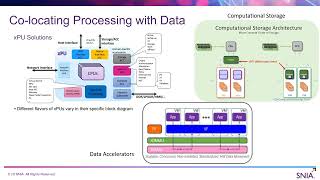
Storage Management Standards in Virtualized Environments - Managing Complexity Through Standards-Based Solutions
Explore modern storage management standards and their crucial role in navigating complex virtualized environments, from fabric technologies to open-source frameworks and RESTful interfaces.
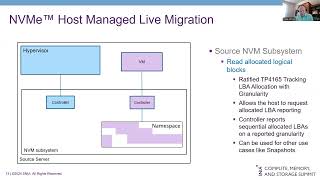
NVM Express Host Managed Live Migration for Virtual Machines
Explore seamless Virtual Machine migration techniques in cloud environments, focusing on NVMe capabilities for transferring namespaces between controllers without service interruption.
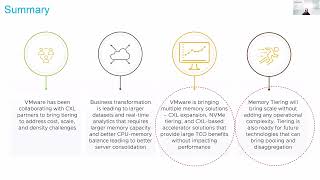
VMware Memory Vision for Real-World Applications - Memory Tiering and CXL Implementation
Explore VMware's memory innovations journey, from persistent memory to CXL technology, focusing on performance improvements, TCO reduction, and real-world applications in mission-critical databases and AI/ML workloads.
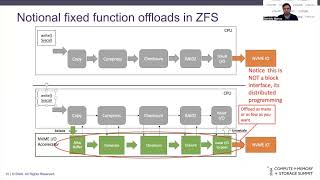
Improving Storage Systems for Simulation Science with Computational Storage
Explore how computational storage enhances HPC systems for simulation science, focusing on improved efficiency, transparent implementation, and real-world applications for petabyte-scale datasets.
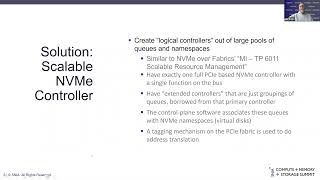
NVMe as a Cloud Interface - Scaling Challenges and Solutions for Virtual Environments
Explore how NVMe interfaces scale from single machines to cloud environments, covering challenges in virtual machine implementation and developments in scalable storage architecture.

Trends in Storage and Data: New Directions for Industry Standards
Discover how SNIA adapts to evolving storage technologies, collaborates across industries, and drives standards development for managing complex data systems and emerging storage solutions.
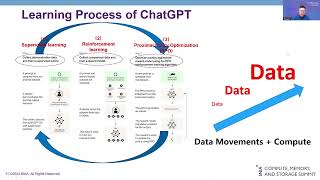
Overcoming Real-World Challenges Between Data and AI Infrastructure
Explore infrastructure innovations for managing AI workloads, optimizing data processing, and achieving lower latency in real-time analytics and predictive modeling across industries.
A New Adapter for Zoned Namespace SSD - Performance Improvements and Implementation
Discover how xZTL adapter enhances ZNS SSD performance, improving transaction processing by up to 90% and reducing latency by up to 47% compared to conventional SSDs through practical benchmarking insights.
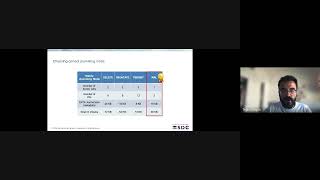
Improving Flash Storage Performance and Lifespan on Android Phones
Discover techniques for optimizing Android flash storage through I/O conversion, compression, and database modifications to enhance device performance and extend storage lifespan.

Linux DRM Bridge: A Potential Replacement for DRM Encoders in Display Solutions
Explore the evolution of Linux DRM subsystem's display drivers, focusing on the transition from encoders to bridges and its impact on modern display solutions in the Linux kernel.
Xen-based GPU Virtualization: VirtIO and Passthrough Implementation
Explore AMD's advancements in GPU virtualization for Xen platforms, covering VirtIO GPU implementation, passthrough capabilities, and performance improvements for enhanced graphics support in virtual environments.

Wine and Windowing: Challenges in Windows API Integration with Linux - XDC 2023
Explore the technical challenges and solutions for running Windows applications on Linux through Wine, focusing on windowing system compatibility and user experience improvements.

Wayland Driver for Wine: Development Journey and Implementation Challenges
Explore the development journey of Wine's Wayland driver, from experimental beginnings to full GPU acceleration support, including technical challenges and solutions for Windows-Wayland compatibility.
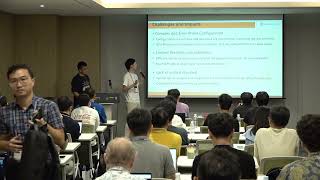
Kata Containers 4.0 - Full Lifecycle GPU Management for AI/ML Workloads
Discover how Kata Containers 4.0 revolutionizes GPU management for AI/ML workloads through CDI framework integration, enhanced security features, and streamlined resource allocation in Kubernetes environments.
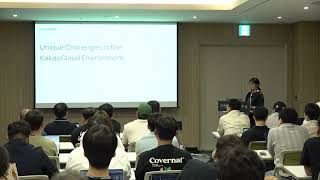
Implementing a Kubernetes Engine with Cluster-API and OpenStack
Discover how to implement and manage Kubernetes clusters using Cluster-API and OpenStack, focusing on automated deployment, controller patterns, and practical solutions for public cloud service development.
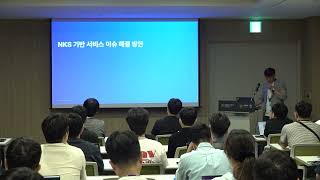
Developing Container-based Data Platform Services on NHN Cloud
Discover how to develop secure and scalable data platform services using NHN Container Service, exploring infrastructure management challenges and practical solutions for container-based environments.
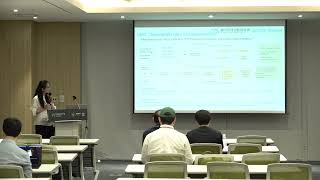
LOKI and AIops in China Mobile Cloud Computing Architecture
Discover how China Mobile's LOKI system integrates with BC-EC computing architecture to enable AI-driven operations, enhancing cloud service management and operational efficiency for enterprise solutions.
A Controlled, Secure Vsock Tunnel for High-speed Data Transfer Between Guest and Host
Discover how to implement fast data transfer between guest and host systems using vsock tunnels, with focus on security controls, kernel-level implementations, and performance optimization techniques.
Four-Year Case Study: From Nomad to Kubernetes Container Orchestration at eFishery
Explore eFishery's 4-year journey with HashiCorp Nomad, from startup scaling to enterprise transition, covering implementation challenges, operational insights, and the strategic shift to Kubernetes.