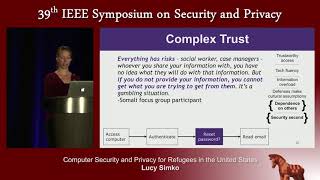
Computer Security and Privacy for Refugees in the United States
Explores computer security challenges faced by US refugees, highlighting reliance on technology, cultural barriers, and the need for tailored security practices to protect this vulnerable population.

To Boldly Go - What Makes an APT Research Successful
Insights from Kaspersky's GReAT director on cybersecurity research: career paths, successful APT investigations, naming conventions, discoveries, job highlights, overcoming challenges, and advice for newcomers.
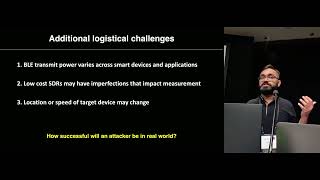
Evaluating Physical-Layer BLE Location Tracking Attacks on Mobile Devices
Explore physical-layer BLE location tracking attacks on mobile devices, examining privacy risks, hardware imperfections, and real-world tracking experiments.
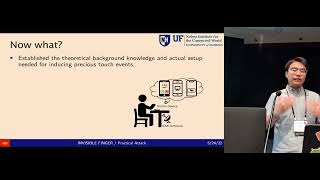
Invisible Finger - Practical Electromagnetic Interference Attack on Touchscreen Electronic Devices
Explore electromagnetic interference attacks on touchscreens, including precise touch events, phone locators, and various attack scenarios for enhanced device security awareness.
Phishing in Organizations: Findings from a Large-Scale and Long-Term Study
Explore findings from an extensive, long-term study on organizational phishing, covering vulnerability patterns, training effectiveness, and reporting mechanisms.
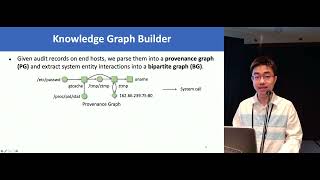
ShadeWatcher: Recommendation-Guided Cyber Threat Analysis Using System Audit Records
Explore recommendation-guided cyber threat analysis using system audit records, enhancing detection effectiveness and efficiency through innovative connectivity modeling and learning techniques.
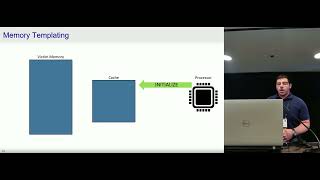
SpecHammer: Combining Spectre and Rowhammer for New Speculative Attacks
Explore innovative security vulnerabilities combining Spectre and Rowhammer, uncovering new speculative attack techniques and their potential impacts on modern computing systems.
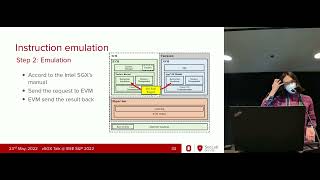
vSGX: Virtualizing SGX Enclaves on AMD SEV
Explore virtualizing Intel SGX enclaves on AMD SEV, addressing vendor lock-in and enabling software-defined trusted execution environments. Learn design goals, challenges, and performance implications.
SEVerity - Code Injection Attacks against Encrypted Virtual Machines
Explore code injection attacks on encrypted VMs, focusing on SEVerity technique. Learn about vulnerabilities, remapping strategies, and SMP implications for enhanced cybersecurity understanding.
Evaluation of the Executional Power in Windows Using Return Oriented Programming
Explore Windows vulnerabilities through Return Oriented Programming, evaluating execution power and discussing implications for system security in this IEEE workshop presentation.
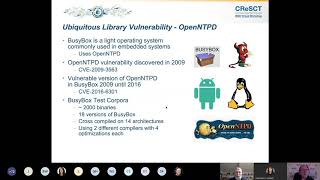
Identifying Ubiquitous Third Party Libraries in Compiled Executables Using Annotated and Translated
Explore techniques for identifying third-party libraries in compiled executables, focusing on firmware indicator translation and machine learning approaches for enhanced security analysis.
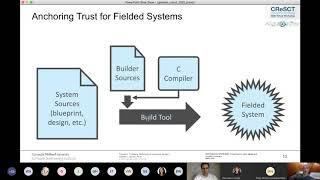
Toward a Trustable, Self-Hosting Computer System
Explore the concept of a self-hosting computer system, focusing on hardware security, trust issues, and the potential for a more secure computing environment.

EM Fingerprints - Identifying Unauthorized Hardware Substitutions in the Supply Chain Jungle
Explore electromagnetic fingerprinting techniques to detect unauthorized hardware substitutions in supply chains, enhancing security against sophisticated attacks.
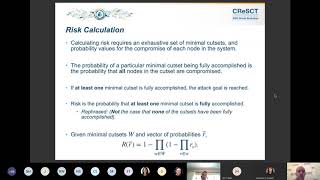
Modeling and Assessment of IoT Supply Chain Security Risks
Explore IoT supply chain security risks through modeling and assessment techniques, focusing on system models, practical examples, and effective risk mitigation strategies.

Birds of a Feather - Sharing Cybersecurity Research Artifacts to Accelerate Progress
Unveiling SEARCCH: A collaborative hub for sharing cybersecurity research artifacts, fostering reproducibility, and accelerating progress through community-driven feedback and development.
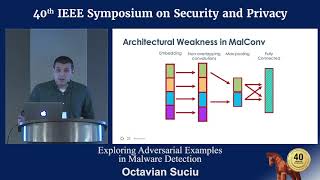
Exploring Adversarial Examples in Malware Detection
Explore adversarial examples in malware detection using CNNs, examining attack strategies, their effectiveness, and implications for model robustness in cybersecurity applications.

WannaCry Ransomware - How it Attacks and How to Protect Your Business
Comprehensive analysis of WannaCry ransomware: attack methods, global impact, and essential protection strategies for businesses. Experts provide latest insights and critical actions.

Threat Review Webinar - The Shamoon 2.0 – A New Wave of Wiper Attacks
Explore Shamoon 2.0, a sophisticated wiper attack targeting Middle East organizations. Learn about its evolution, ransomware capabilities, and potential origins from Kaspersky's senior security researcher.
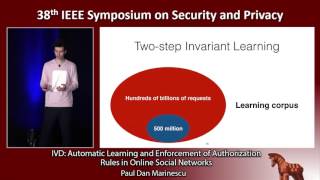
Automatic Learning and Enforcement of Authorization Rules in Online Social Networks
Automatic learning and enforcement system for detecting and preventing authorization bugs in online social networks, enhancing security without compromising performance.

XHOUND - Quantifying the Fingerprintability of Browser Extensions
Quantifying browser extension fingerprintability and its impact on user privacy. Explores detection methods, analyzes popular extensions, and discusses implications for online tracking and user identification.
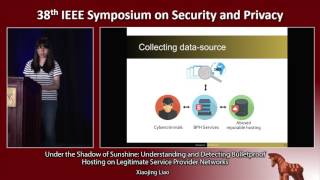
Under the Shadow of Sunshine - Understanding and Detecting Bulletproof Hosting
Explore techniques for detecting bulletproof hosting services that exploit legitimate providers, using novel features and machine learning to identify malicious sub-allocated network blocks.