Why Perfect Compliance Is the Enemy of Good Kubernetes Security
Discover practical approaches to Kubernetes security that balance compliance requirements with operational efficiency, focusing on risk reduction and platform functionality rather than perfect security scores.
Working Together to Improve Security Visibility in Kubernetes
Discover how Kubernetes security teams collaborate on CVE management, dependency vulnerabilities, and release processes while exploring future improvements for enhanced security visibility across the platform.
Pushing Authorization Further: CEL, Selectors and RBAC in Kubernetes
Explore recent authorization advancements in Kubernetes, including CEL integration, selector-aware features, and potential RBAC enhancements for more dynamic runtime security controls.
Rogue No More: Securing Kubernetes with Node-Specific Restrictions
Discover essential security enhancements for Kubernetes that prevent escalation attacks through node-specific restrictions, bounded service account tokens, and validating admission policies for robust infrastructure protection.
Powering Automatic Authorization in Envoy Through Live Traffic Inspection
Discover how to leverage live traffic inspection for automatic authorization in Envoy, using CNCF Pixie to generate OPA policies and implement effective service-to-service access controls.

Micro-Segmentation and Multi-Tenancy: The Brown M&Ms of Platform Engineering
Explore essential strategies for implementing secure multi-tenant architectures in cloud-native platforms, focusing on micro-segmentation, GitOps automation, and policy-driven approaches for optimal workload isolation.

Seccomp and eBPF: Understanding Container Security and Kernel Access Control
Explore container security hardening through Seccomp and eBPF, comparing their approaches to limiting Linux kernel access and implementing the principle of least privilege in Kubernetes environments.
WASM and KWOK Wizardry - Writing and Testing Kubernetes Scheduler Plugins at Scale
Discover how to optimize Kubernetes scheduling by building custom plugins with WebAssembly and testing at scale using KWOK, focusing on performance metrics and efficient cluster management.
Running Quantum-Safe Applications on Kubernetes
Discover how to protect cloud applications from quantum computing threats by implementing quantum-safe cryptography in Kubernetes environments, with practical steps for securing data against future quantum attacks.
Solving Access Control Problems with FHIR Information Gateway in Healthcare Solutions
Master FHIR Information Gateway's access control features to enhance healthcare data security, implement robust authorization mechanisms, and leverage SMART on FHIR scopes for digital health solutions.

Building a Privacy-Focused Pregnancy App with AI and Decentralized Web Nodes
Discover how to leverage AI and decentralized web nodes to build a privacy-focused pregnancy tracking application, with practical demonstrations and implementation insights.
MLOps: Herramientas para Detectar y Proteger Datos Médicos
Descubre cómo anonimizar y proteger datos médicos sensibles usando Microsoft Presidio, con enfoque en imágenes DICOM y estándares FHIR, cumpliendo normativas GDPR, PII y HIPAA.
MLOps Tools for Health Data Anonymization in Healthcare and Medical Environments
Master healthcare data anonymization techniques using Microsoft Presidio and specialized tools for DICOM images and FHIR formatting, ensuring compliance with privacy regulations like GDPR and HIPAA.
Asymmetric Encryption: From RSA to Post-Quantum Cryptography
Delve into the mathematical foundations and practical applications of asymmetric encryption, exploring RSA, ECDSA, their limitations, and future developments in post-quantum cryptography.
How GitOps Changes Identity and RBAC Management with OAuth2 and OIDC
Discover how to streamline GitOps permissions using OAuth2-Token Exchange, Dex, and GitHub Teams with ArgoCD AppProjects for consistent repository access and automated RBAC management.
Taming the Chaos: Fine-Grained RBAC in Argo CD for Incident Avoidance
Discover how to implement fine-grained RBAC policies in Argo CD to prevent accidental actions and enhance security, drawing from Intuit's experience in protecting production systems and enabling confident development.
Build-Time Auto-Instrumentation in Android Using OpenTelemetry
Discover how to implement OpenTelemetry's build-time auto-instrumentation for Android applications, exploring bytecode weaving techniques and client-side telemetry generation without manual code modifications.
The Tools We Still Need to Build with AI
Explore the critical challenges and opportunities in AI development, focusing on data provenance, compensation, and infrastructure needs while building towards an ethical and sustainable AI-powered future.
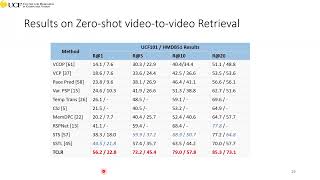
Towards Label Efficiency and Privacy Preservation in Video Understanding
Explore advanced techniques for efficient video analysis while maintaining data privacy, focusing on label-efficient learning methods and privacy-preserving frameworks for video understanding.
Outsmarting the Genie - Smart Architecture Decisions for Generative AI Applications
Master architectural best practices for building reliable, safe, and performant generative AI applications through real-world use cases and practical implementation strategies.
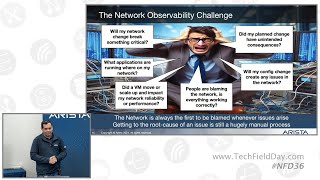
Arista CloudVision 360 - Network Observability and Automation for Enterprise Networks
Discover how CloudVision simplifies network operations through advanced automation, observability, and zero-trust security features across enterprise networking domains - from campus to cloud environments.