Effective Practices for Engineering Teams
Explore proven engineering practices for optimizing team performance, enhancing software quality, and accelerating product development through knowledge sharing, design, monitoring, and incident response strategies.
Basic Web Applications Security
Explore SQL Injection, XSS, and CSRF vulnerabilities through live demonstrations. Learn to detect, exploit, and fix these common web application security issues using Java and Spring Boot examples.
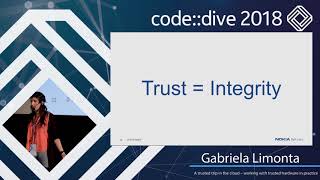
A Trusted Trip in the Cloud - Working with Trusted Hardware
Exploring trusted computing in cloud environments using TPM 2.0. Discusses practical challenges and experiences in setting up a secure cloud infrastructure with remote attestation and evolving open-source software.
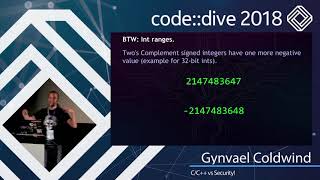
C-C++ vs Security
Explore security vulnerabilities, pitfalls, and unexpected behaviors in C/C++ programming from a researcher's perspective. Learn about classical and lesser-known bugs in software development.
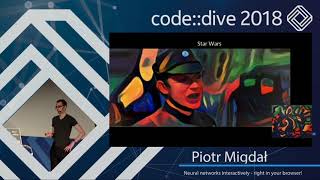
Neural Networks Interactively - Right in Your Browser
Explore neural networks interactively in your browser with TensorFlow.js. Learn about applications, demos, and privacy-focused machine learning projects through hands-on examples and visualizations.
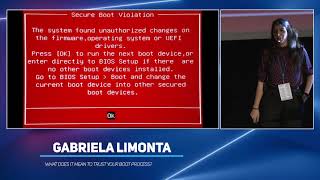
What Does It Mean to Trust Your Boot Process
Explore boot processes, secure boot, and trust establishment in x86 and ARM architectures. Learn about firmware, TPM, and measured boot to enhance device security from startup.
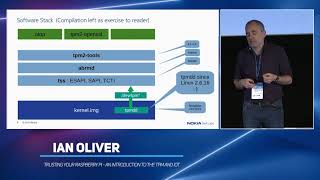
Trusting Your Raspberry Pi - An Introduction to the TPM and IoT
Explore TPM and IoT security using Raspberry Pi. Learn about trusted computing, chain of trust, and mitigating firmware attacks for building secure IoT systems.
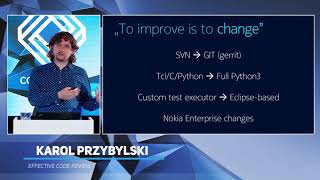
Effective Code Review
Explore techniques to enhance code review processes, including social engineering, gamification, and automated tools. Learn strategies for effective communication and conflict resolution in software development teams.
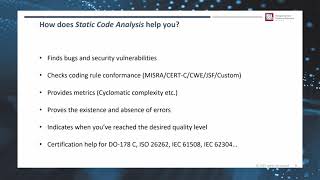
Implementing Innovations in a Safe and Secure Way
Explore automated static code analysis for software safety and security. Learn to prove absence of runtime errors using formal methods and tools like Polyspace for exhaustive testing.
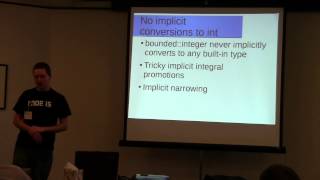
Removing Undefined Behavior from Integer Operations - The Bounded-Integer Library
Learn to eliminate undefined behavior in integer operations using the bounded::integer library, exploring its features, syntax, and practical applications in C++ programming.

Undefined Behavior in C++ - What Is It, and Why Do You Care?
Explore the concept of undefined behavior in C++, its implications, and why it matters for developers. Learn about common pitfalls and compiler optimizations.
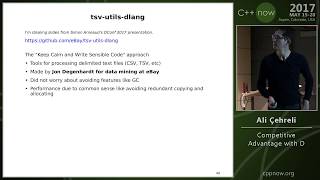
Competitive Advantage with D
Explore D programming language's competitive advantages, focusing on compile-time features, safety, and productivity. Learn how D simplifies systems programming and enhances software engineering.

Rust - Hack Without Fear
Explore Rust's ownership concept, memory safety, and parallelism advantages. Learn how Rust combines low-level control with high-level programming, ensuring thread safety and efficient abstractions.
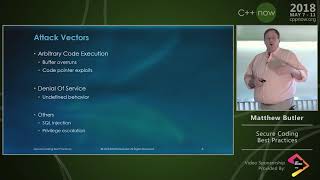
Secure Coding Best Practices
Explore secure coding practices in C++ to protect systems from vulnerabilities. Learn to identify attack surfaces, balance security with performance, and integrate security measures from the design phase.
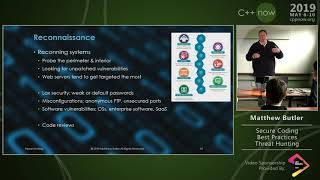
Secure Coding Best Practices - Threat Hunting
Explore threat modeling and secure coding practices in C++, focusing on identifying attack surfaces, analyzing vulnerabilities, and implementing effective defense strategies for robust software design.
If You Can't Open It, You Don't Own It
Exploring hardware vulnerabilities and their impact on C++ systems, this talk delves into side-channel attacks, physical penetrations, and supply chain risks, offering insights for securing modern C++ designs.

Safety and Security - The Future of C++
Explore C++'s future through safety and security lens, examining its role as critical infrastructure and the ethical responsibilities of developers to address its challenges.

Coding for Safety, Security, and Sustainability in C++ - Panel Discussion
Expert panel explores C++'s future, addressing safety, security, and sustainability challenges. Discusses language evolution, competition, and community needs for improved software development.
Carbon Language Successor Strategy - From C++ Interop to Memory Safety
Explore Carbon Language's successor strategy, C++ interoperability, and memory safety features. Learn about its unique approach, implementation challenges, and potential impact on large-scale C++ codebases.
Privacy-Preserving Methods - Building Secure Projects
Explore privacy-preserving techniques for secure data handling and machine learning, including anonymization and pseudonymization methods to protect user information while maintaining data utility.
Charla: Detección automatizada de archivos maliciosos en el repositorio PyPI
Detección automatizada de malware en PyPI: vectores de ataque, sistema de detección integrado, tipos de chequeos implementados y cómo combatir amenazas en el repositorio.