Reviewing NuGet Packages Security Using OpenSSF Scorecard
Explore OpenSSF Scorecard for assessing NuGet package security. Learn to evaluate maintenance, workflows, and security tools to improve application safety and make informed decisions.
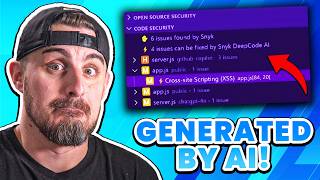
Exploiting AI-Generated Code Vulnerabilities and Their Solutions
Discover vulnerabilities in AI-generated code and learn how to exploit and fix them. Gain insights into potential security risks and implement effective solutions using Snyk.

Broken Economic Models in Tech That Hurt Humans at Scale
Explore how surveillance capitalism and flawed economic models impact human rights and society. Learn about alternative approaches prioritizing social good, privacy, and human welfare over unchecked growth.
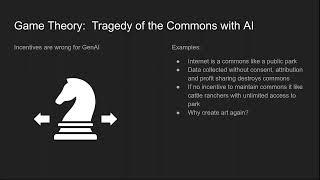
Broken Economic Models in Tech That Hurt Humans at Scale
Explore how surveillance capitalism and current economic models in tech threaten human rights and societal well-being. Learn about potential solutions and actions to prioritize human welfare.
Identifying Signs of Runtime-Linking and Building Context for API Hashes in Lockbit Malware - Part 3
Explore Lockbit's runtime linking techniques and API hash obfuscation. Learn to reverse engineer malware by understanding dynamic import table construction and decoding precomputed values.
Secure Software Supply Chain: Current State in PHP and Drupal Ecosystem
Explore the secure software supply chain, recent global events, and tools for digital signatures, SBOM generation, and vulnerability scanning in PHP and Drupal projects.
Cyber Resilience Act's Impact on Open Source CMS - Webinar
Explore the Cyber Resilience Act's impact on Open Source CMS. Learn about potential consequences, collaboration importance, and how to support open source communities facing legislative challenges.
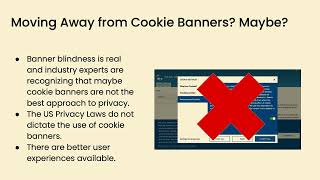
Demystifying Privacy Consent for Marketers and Website Owners - Pittsburgh 2023
Explore privacy consent essentials for marketers and website owners, focusing on legal requirements and best practices for data protection.
Generating Synthetic Tabular Data that is Differentially Private
Explore approaches to applying differential privacy in generating synthetic tabular data, including measuring low-dimensional distributions and learning graphical model representations for enhanced data privacy.
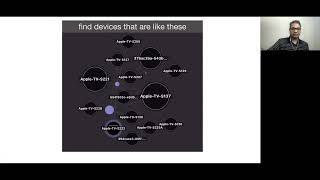
Weak Supervision and Next-Gen AI-Based Threat Detection
Explore weak supervision for efficient AI-based threat detection in network security, leveraging analyst heuristics to build predictable models and overcome traditional machine learning challenges.
Counting Down for CRA - Updates and Expectations
Explore the EU's Cyber Resilience Act: timeline, critical discussions, and new responsibilities for software developers. Learn about PSF's preparations and how to ready your Python projects for increased security liability.
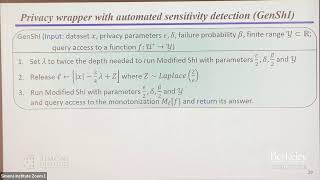
Privately Evaluating Untrusted Black-Box Functions
Explore tools for sharing sensitive data with untrusted analysts, focusing on differentially private algorithms and privacy wrappers for black-box functions on datasets.
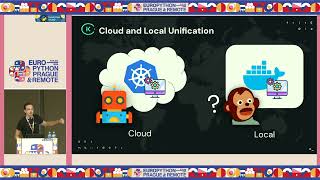
Impersonation in Data Engineering: No More Credentials in Your Code
Discover how to streamline data engineering workflows using IAM, Workload Identity, and impersonation. Eliminate credential hassles, improve security, and boost productivity in your development process.
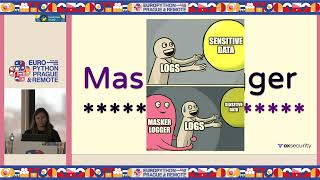
Secure Logging Practices: Protecting Sensitive Information in Python Applications
Explore secure logging practices to protect sensitive data in Python applications. Learn to identify, redact, and safeguard confidential information from accidental disclosure in log files.
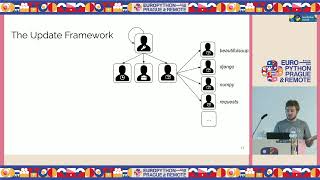
TUF Joins PyPI - Securing Package Delivery with The Update Framework
Explore TUF integration with PyPI using RSTUF, addressing security challenges in package delivery and updates. Learn about PEP 458 and Warehouse implementation.
Zero Trust APIs with Python
Explore Zero Trust Security for APIs using Python. Learn to identify and address vulnerabilities, implement robust data validation, and use tools for automated security testing.
Small Space Differentially Private Graph Algorithms in the Continual Release Model
Explore sublinear space differentially private graph algorithms for continual release, covering densest subgraphs, k-core decomposition, maximum matching, and vertex cover.
Mastering Data Fabrication: Enhance Testing and Protect User Privacy with Python
Generate realistic, fictitious data for enhanced application testing while adhering to privacy standards. Master tools like Faker to create diverse data types and ensure compliance.
Finding PII Reports and Making Your Data Safer in Power BI
Discover techniques to identify PII reports and enhance data protection, including automated methods and tools like Microsoft Purview, DLP, and Defender.
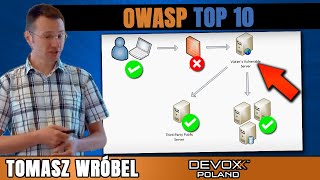
What's Not So New in the New OWASP Top 10 - Devoxx Poland 2022
Explore OWASP Top 10 updates, focusing on insecure design. Learn defense-in-depth strategies, secure design principles, and threat modeling methodologies like STRIDE for improved web application security.
ID, EGO and Super EGO of Your Entity - Performance and Identity Management
Explore entity identifier management in business applications, examining performance impacts and innovative solutions for efficient code development and maintenance.