
Practice Thoughtful Chaos Engineering - Gamedays
Explore chaos engineering through GameDays, a practice of intentionally creating failure scenarios to test system resiliency, improve observability, and enhance incident management in a safe environment.

Beyond Chaos Engineering - Continuous Verification
Explore continuous verification in complex systems, sensitizing teams to drifting safety boundaries and informing work practices for improved resilience and failure prevention.
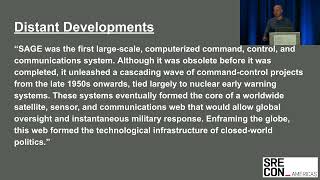
Epic Incidents of History - The 1979 NORAD Nuclear Near Miss
Explore the 1979 NORAD nuclear near-miss incident, its causes, and implications for modern distributed systems maintenance and operation. Learn from this historical event to improve current practices.

Incident Commanders to Incident Analysts - How We Got Here
Explore the transition from incident management to incident analysis, highlighting the distinct skills required and the value of post-incident learning for driving meaningful organizational change.

Far from the Shallows - The Value of Deeper Incident Analysis
Explore the value of in-depth incident analysis in SRE, moving beyond surface-level metrics to uncover hidden insights and improve system reliability through qualitative investigation.

Incident Management at Netflix Velocity
Discover Netflix's approach to handling incidents at high velocity, focusing on preparation, expertise, and continuous learning to ensure quick recovery and unique outage scenarios.
Observing from Incidents
Leveraging techniques from multiple companies to improve incident response, reduce impact, and enhance observability through knowledge sharing and effective visualization strategies.
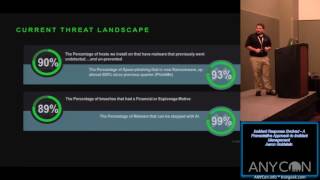
Incident Response Evolved - A Preventative Approach to Incident Management
Explore preventative incident management strategies, evolving threat landscapes, and real-world case studies to enhance your organization's cybersecurity preparedness and response capabilities.

Why I Love Kubernetes Failure Stories and You Should Too
Explore Kubernetes failure stories and learn from real-world incidents. Gain insights on operating clusters, improving reliability, and leveraging Kubernetes despite its complexity.
Learning from Incidents
Explore how Seek leverages incident analysis and team involvement to build resilience in diverse software systems, emphasizing the importance of human factors in incident management.
Incident Management - Talk the Talk, Walk the Walk
Practical strategies for efficient incident management in DevOps. Learn proactive approaches and best practices to handle unexpected issues, minimize downtime, and streamline problem-solving processes.
What We Talk About When We Talk About Resilience
Insights from 10,000+ incident reports reveal counterintuitive truths about resilience in modern software systems, challenging common metrics and transforming approaches to system architecture and incident management.

Presenting Security Metrics to the Board
Learn effective strategies for presenting security metrics to executive boards, focusing on clear communication, risk quantification, and tailoring your approach to board expectations.
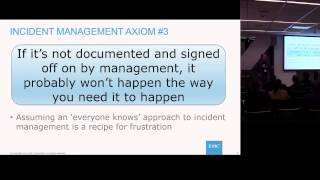
Next Gen Incident Management - Building out a Modern Incident Management Capability
Explore modern incident management strategies, focusing on key components, roles, and technologies for effective breach response and system resilience.
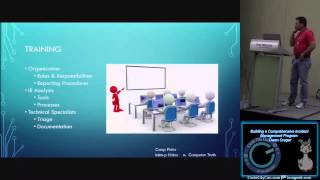
Building a Comprehensive Incident Management Program
Learn to build a comprehensive incident management program, covering roles, processes, tools, and advanced capabilities for effective cybersecurity response and mitigation.
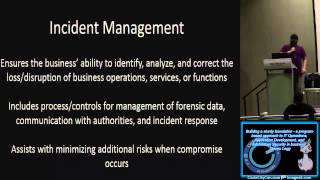
Building a Sturdy Foundation - A Program-Based Approach to IT Operations and Application Development
Learn to build a robust IT operations foundation using a program-based approach, covering essential management areas like asset, change, configuration, and incident management for improved efficiency and resilience.
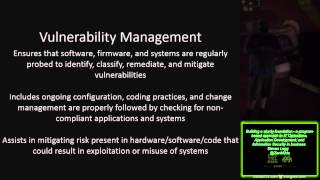
Building a Sturdy Foundation - A Program-Based Approach to IT Operations Application Development
Explore a program-based approach to IT operations and application development, covering key management areas for building a robust foundation in technology infrastructure.
Applying Agile Principles to Incident Management
Explore how agile principles can revolutionize incident management, balancing innovation with operational stability to enhance customer experience and maintain a competitive edge in the digital landscape.
AutoARTS - Taxonomy, Insights and Tools for Root Cause Labelling of Incidents in Microsoft Azure
Comprehensive study on incident root causes in Microsoft Azure, proposing a novel hierarchical taxonomy and automated labeling tool to improve postmortem analysis and prevent future incidents.
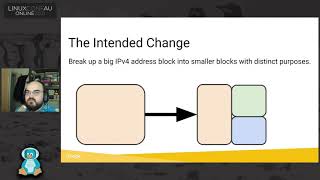
The Worst Outage I Never Caused
Exploring a near-catastrophic Google backbone outage, its prevention, and lessons learned in building effective testing and validation tools using Python libraries.
On the Importance of Visibility
Explore the importance of visibility in orchestrated services, learn from real-world incidents, and discover strategies to prevent hidden issues in internal tools and products.