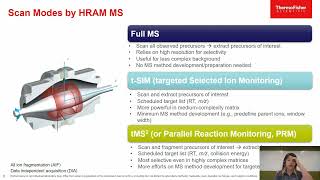
Monitoring Intact Light Chain of Therapeutic Monoclonal Antibodies in Human Serum by LC-MS for Clinical Research
Explore intact light chain quantitation for measuring therapeutic mAb concentrations in human serum using Orbitrap Exploris 240 MS. Learn about simplified workflows and solutions for challenging mAbs.
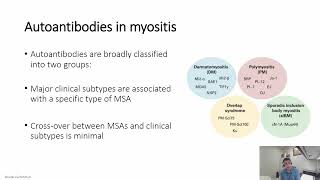
Autoantibodies in Myositis: Clinical Importance and Current Laboratory Methods for Detection
Explore inflammatory myopathies, their classification, and laboratory detection methods for associated autoantibodies. Gain insights into pathophysiology and current diagnostic approaches.
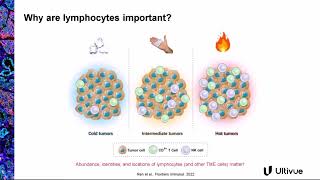
Understanding Immune Activation and Evasion in the Tumor Microenvironment - Why Lymphocyte Relationships Matter
Explore immune activation and evasion in tumors, focusing on lymphocyte relationships. Gain insights into tissue phenotyping and multiplex immunofluorescence for biomarker identification and disease understanding.
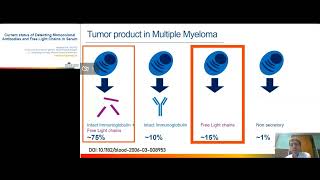
Current Status of Detecting Monoclonal Antibodies and Free Light Chains in Serum
Explore advancements in detecting monoclonal antibodies and free light chains in serum for diagnosing and monitoring multiple myeloma and related disorders. Learn about new testing methods and their clinical implications.
Hurdles and High Resolution of Spatial Proteomics in the Study of the Alloimmune Microenvironment in Liver Transplant Rejection
Explore spatial proteomics in liver transplant rejection, focusing on T-cell mediated rejection and Imaging Mass Cytometry for in-depth immune cell identification and spatial resolution of cell interactions.

Pathogen Discovery and Diagnostic Tools for Pandemic Preparedness and Prevention
Explore advanced techniques for pathogen discovery and diagnostic tools crucial for pandemic preparedness. Learn about emerging viruses, their impact on public health, and strategies for early detection and prevention.
Interferons - Friends or Foes in Lung Virus Infections?
Explore interferons' role in lung virus infections, their impact on immune responses, and potential applications in vaccine development. Gain insights from Dr. Ivan Zanoni's research.
Adjuvant Elicited T Cell Responses for Therapeutic Intervention
Explore adjuvant-elicited T cell responses for therapeutic intervention in cancer treatment. Learn about vaccine design changes to enhance cellular immunity for improved therapeutic outcomes.
The Arenavirus-Host Cell Interface: At the Crossroads of Virus Replication, Host Cell Response and Pathogenesis
Explore the molecular determinants of pathogenesis in hemorrhagic fever-causing viruses, focusing on arenaviruses and their interaction with host cells. Gain insights into virus biology and host responses.

Advancing RSV Research: Expanding Therapeutic Options with Recombinant Antibodies and Antigens
Explore RSV research advancements, focusing on recombinant antibodies and antigens for improved diagnostics, therapeutics, and vaccines. Gain insights into viral pathogenesis and expanding treatment options.

Innate Immunity and Microbiome of the Human Female Reproductive Tract
Explore the intricate balance of female reproductive tract immunity, its regulation by sex hormones, and the crucial role of vaginal microbiome in protecting against HIV/STIs.

Why They Can't Make an HIV Vaccine - Challenges and Progress
Explore the challenges in developing an HIV vaccine and learn about promising advancements using broadly neutralizing antibodies and mRNA technology.

細胞から最期のサイン - 私を食べて!
Discover how cells signal their death and get cleaned up by macrophages, exploring the fascinating mechanisms behind cellular recognition and removal in our bodies.
Safety and Open Source Software: Evolution and Future Directions
Explore the evolution and future of safety in open source software, focusing on challenges, best practices, and the ELISA Project for safety-critical systems.

Reproducible Multi Element System Composition with Linux, Xen and Zephyr
Explore system architectures for safety-critical systems using Linux, Xen, and Zephyr. Learn about reproducible prototyping, documentation, and collaboration in open-source projects for complex systems.

Elements Towards Functional Safety Use Cases with Linux in Automotive
Explore Linux's role in automotive functional safety, focusing on warning signs in instrument clusters as a starting point for more complex safety-critical applications.

How ELISA Is Helping Use Linux in Safety-Critical Systems
Explore how the ELISA Project facilitates Linux adoption in safety-critical systems, enhancing reliability and security for critical applications across industries.
Enabling Linux in Safety-Critical Applications - ELISA Project Overview
Explore ELISA project's efforts to enable Linux in safety-critical systems, covering goals, strategies, work groups, and challenges in automotive, medical, and industrial IoT applications.
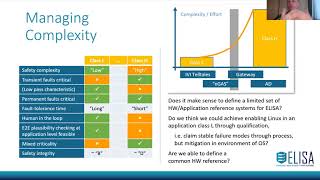
Designing, Configuring and Verifying Linux Systems for High Quality and Fault Mitigation
Explore techniques for creating robust Linux systems with high quality and fault mitigation, focusing on design, configuration, and verification methods used in the LF ELISA project.

Enabling Linux Usage in Space Applications
Explore Linux's potential in space applications, focusing on safety, monitoring, and implementation using COTS hardware. Learn about challenges and future prospects for Linux in orbit.
Geometric Machine Learning for Molecular Medicine
Explore geometric machine learning applications in molecular medicine, focusing on AI models for therapeutic science and drug repurposing using knowledge graphs and contextual approaches.