
DINOv2: Data Pipeline, Model Training and Results - Meta AI's Visual Feature Learning System
Delve into Meta AI's DINOv2 architecture, exploring its data pipeline, training methodology, and innovative features for robust visual processing without supervision in just 12 minutes.
Scientific Problem-Solving with GPT-4 Vision - Mathematical Formula Recognition and Python Code Generation
Discover how GPT-4 Vision transforms complex mathematical problem-solving by converting formula images into executable Python code, streamlining scientific calculations and verification processes.
BLIP-2: Connecting Vision-Language Models with Q-Former for Image Chat
Explore BLIP-2's innovative approach to combining vision and language models through Q-Former, enabling advanced image-based conversations and multimodal AI interactions.
Building a BLIP-2 Application: Vision Transformer and Language Model Integration
Master building a multimodal AI system that combines Vision Transformers and language models to analyze images and generate contextual responses through practical implementation of BLIP-2 architecture.

OpenAI DevDay: New Features and Innovations Revealed
Discover key OpenAI DevDay innovations: Real-Time API, Vision Fine-Tuning, Prompt Caching, and Model Distillation. Explore implementation, pricing, and real-world applications of these groundbreaking AI technologies.
Capsule Networks: An Introduction
Explore capsule networks and their potential to revolutionize computer vision, addressing limitations of convolutional neural networks in image recognition tasks.
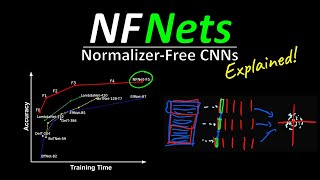
NFNets - High-Performance Large-Scale Image Recognition Without Normalization
Explore Normalizer-Free Networks, a novel approach to image recognition that achieves state-of-the-art accuracy without batch normalization, offering faster training and improved transfer learning performance.
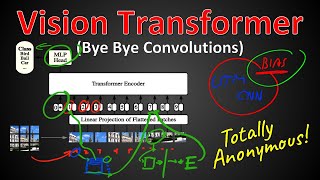
An Image is Worth 16x16 Words - Transformers for Image Recognition at Scale
Explore how Transformers outperform CNNs in image recognition, delving into Vision Transformer architecture, experimental results, and implications for AI research.

Deep Residual Learning for Image Recognition - Paper Explained
Explore deep residual learning for image recognition, covering the problem of depth, residual connections, and their impact on neural network performance in computer vision tasks.

Transfer Learning for Image Classification with PyTorch & Python Tutorial - Traffic Sign Recognition
Learn to classify traffic signs using transfer learning with PyTorch. Explore data, build datasets, train a pre-trained ResNet model, evaluate performance, and make predictions on new images.
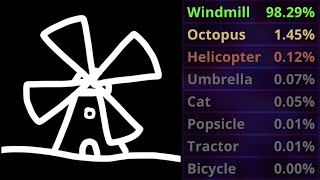
How to Create a Neural Network and Train It to Identify Doodles
Comprehensive guide to building and training neural networks from scratch, covering key concepts and practical implementation for image recognition tasks.

ChatGPT vs. Bard vs. Claude 2 - Which Is Best?
Comparative analysis of leading AI chatbots, exploring capabilities in web browsing, content summarization, image recognition, data analysis, creativity, coding, and accuracy.
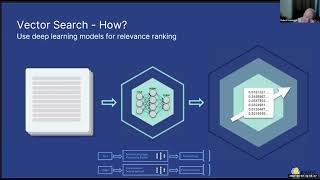
Vector Search in Elasticsearch 8
Explore vector search in Elasticsearch 8, covering basics, indexing, efficient search algorithms, and machine learning model integration for advanced similarity-based applications.

Convolutional Neural Networks with TensorFlow 2022
Comprehensive live-coding tutorial on Convolutional Neural Networks using TensorFlow, covering data preparation, model architecture, optimization techniques, and practical applications in image recognition and object detection.
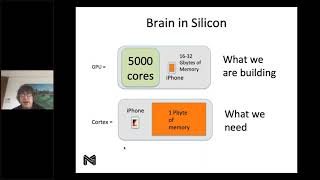
The Software GPU - Making Inference Scale in the Real World
Discover how to achieve GPU-level performance for deep learning inference using only software on commodity CPUs, challenging conventional wisdom and offering a cost-effective, flexible solution for scaling AI models.
Physics Matters - In Artificial Intelligence - Natural and Artificial Cognition
Explore natural and artificial cognition, machine learning, and computer vision applications in healthcare, research, and autonomous vehicles with Professor Kalle Åström.
Captcha Recognition Using PyTorch - Convolutional-RNN + CTC Loss
Learn to implement a Convolutional-RNN model for captcha recognition using PyTorch. Covers data preparation, model architecture, CTC loss, and training/inference processes.
Analysis of Large-Scale Visual Recognition - Bay Area Vision Meeting
Explore large-scale visual recognition challenges, focusing on IMAGENET competitions, object classification, localization techniques, and advancements in computer vision for diverse object classes.

Pixy2 Camera - Image Recognition for Arduino & Raspberry Pi
Explore Pixy2, a smart camera for Arduino and Raspberry Pi projects. Learn setup, training, and coding for object detection, line tracking, and barcode reading.
State of the TinyAutoML Market - Keynote
Explore the emerging tinyAutoML market, its challenges, opportunities, and potential impact on IoT and edge computing. Gain insights from industry experts on automating tiny machine learning applications.
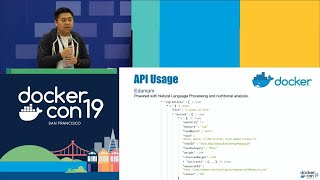
Building a Food Scanning App with Docker for Dietary Restrictions
Discover how Docker powers "Phood," an innovative app that scans food and menus to identify allergens and provide personalized dietary recommendations, enhancing dining safety and health.