Deriving Brain Stimulation Targets Using Causal Mapping of Human Brain Function
Explore causal mapping techniques for identifying brain stimulation targets, enhancing understanding of human brain function and potential therapeutic applications.
Neuroimaging Markers and Mechanisms of Neurodegeneration in Hereditary Cerebellar Ataxias
Explore neuroimaging markers and mechanisms of neurodegeneration in hereditary cerebellar ataxias, focusing on research approaches, clinical trials, and anatomical consequences.
Time-Dependent Diffusion MRI for Microstructural Mapping of the Human Brain and Tumor
Explore time-dependent diffusion MRI for microstructural mapping of the brain and tumors, covering applications, pulse sequences, and advancements in clinical imaging.
Pediatric Neuroimaging: Challenges and Solutions
Explore challenges and innovative solutions in pediatric neuroimaging with expert insights from Dr. Onur Afacan of Boston Children's Hospital and Harvard Medical School.
Mapping Fetal Brain Development In-Utero
Explore cutting-edge techniques for mapping fetal brain development in-utero, presented by Harvard Medical School expert Dr. Ali Gholipour.
Causal Mapping of Symptoms onto Human Brain Circuits
Explore causal mapping of neuropsychiatric symptoms onto brain circuits. Learn lesion network mapping, depression localization, and therapeutic applications in addiction and epilepsy.
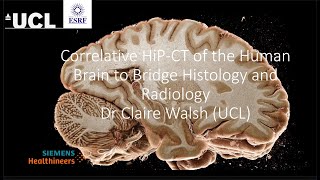
Correlative HiP-CT of the Human Brain to Bridge Histology and Radiology
Explore correlative HiP-CT techniques bridging histology and radiology in human brain imaging, presented by Claire Walsh from University College London.
Advancing Physiological MRI in Brain Tumour Imaging Diagnostics
Explore advanced physiological MRI techniques for improved brain tumor diagnostics, focusing on innovative imaging methods and their clinical applications.
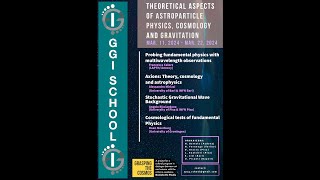
Probing Fundamental Physics with Multiwavelength Observations - Lecture 3
Explore multiwavelength observations in fundamental physics, focusing on advanced techniques and their applications in probing cosmic phenomena and particle interactions.
Host-pathogen Co-evolution
Explore host-pathogen interactions, evolutionary dynamics, and their impact on disease ecology. Gain insights into co-evolutionary processes shaping infectious diseases and their ecological consequences.
Understanding Pathogen Evolution Using Genomics
Explore genomic techniques to analyze pathogen evolution, enhancing understanding of disease dynamics and outbreak management in changing ecosystems.
Investigating Pathogens in Bird Communities
Explore disease ecology in bird communities, focusing on pathogen dynamics, sequencing techniques, and data analysis to understand and manage outbreaks in changing ecosystems.
Understanding Host Communities
Explore factors shaping disease dynamics in animal populations, integrating ecology, evolution, and mathematics to address real-world challenges in disease ecology and emerging infectious diseases.
Ecological Sampling and Analyses to Understand Communities - Part 1
Explore ecological sampling techniques and analytical methods for understanding community structures, focusing on practical approaches to study biodiversity and ecosystem dynamics.
Approaches to Study Pathogens in Ecological Communities
Explore methods for studying pathogens in ecosystems, integrating ecology, evolution, and data analysis to understand disease dynamics and address real-world challenges in disease ecology.
Biodiversity and Zoonoses - An Introduction
Explore the link between biodiversity changes and emerging infectious diseases, focusing on ecological and evolutionary aspects of disease transmission and public health implications.
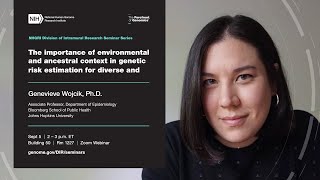
The Importance of Environmental and Ancestral Context in Genetic Risk Estimation for Diverse Populations
Explore genetic risk estimation in diverse populations, focusing on environmental and ancestral context. Learn about statistical methods for complex trait mapping and polygenic risk scores to address health inequities.
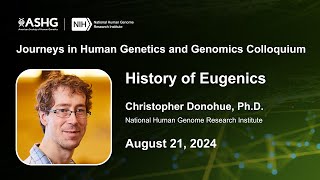
History of Eugenics - Journeys in Human Genetics and Genomics Colloquium
Explore the history of eugenics with Dr. Christopher Donohue, delving into its societal impact and ethical implications in human genetics and genomics research.
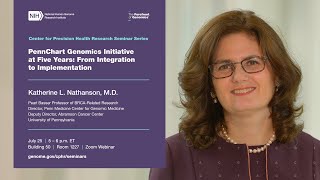
PennChart Genomics Initiative at Five Years: From Integration to Implementation
Explore the PennChart Genomics Initiative's progress in integrating and implementing genomics in healthcare, presented by renowned cancer genetics expert Dr. Katherine Nathanson.

Volume Disorders in Clinical Medicine
Comprehensive exploration of volume disorders, covering pathophysiology, complications, diagnosis, and treatment for hypovolemia and hypervolemia. Ideal for medical students and healthcare professionals seeking in-depth understanding.

Happy Healthy Children: Implementing What We Know - Part 2
Explore strategies for improving child health through primary care, focusing on Professor Saxena's research and insights from the Imperial Child Health Unit.