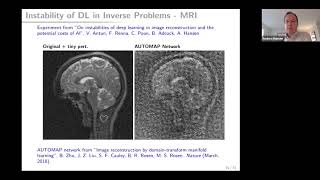
Foundations of Deep Learning and AI: Instabilities, Limitations, and Potential
Exploring deep learning's instability, AI limitations, and potential impacts on scientific computing and medical imaging. Compares AI's current state to early 20th-century mathematics, predicting similar foundational challenges.
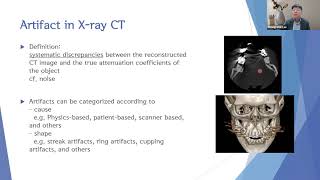
Artifact Suppression in X-ray CT Images - SIAM-IS Virtual Seminar
Explore X-ray CT imaging, artifact suppression techniques, and recent advancements in metal and scattering artifact reduction for improved medical and industrial applications.
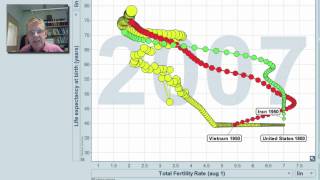
Hans Rosling Answers Top Questions from TED and Reddit Community
Hans Rosling addresses top community questions, offering insights on global health, data visualization, and socioeconomic trends in an engaging 18-minute interview with TED and Reddit.

An Age-Structured Model of COVID-19 Transmission with Optimal Vaccination
Explore an age-structured model for COVID-19 transmission and optimal vaccination strategies, presented by Polly Sy as part of the inaugural Asian-Oceanian Women in Mathematics meeting.
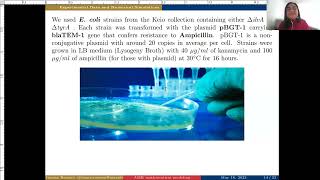
Mathematical Modeling of AMR in Complex Microbial Communities
Explore mathematical approaches to model antimicrobial resistance in complex microbial ecosystems, focusing on advanced techniques and their applications in public health.
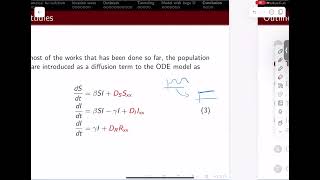
Modelling of Spatial Infection Spread Through Heterogeneous Population
Explore spatial infection spread modeling in heterogeneous populations, examining key factors and methodologies for understanding disease transmission dynamics.
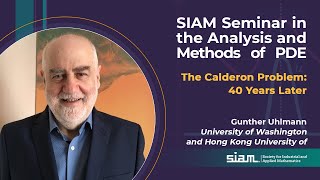
The Calderon Problem: 40 Years Later - Seminar in the Analysis and Methods of PDE
Explore Calderon's inverse problem, its applications in medical imaging and geophysics, recent developments, and open questions with expert Gunther Uhlmann in this insightful seminar.
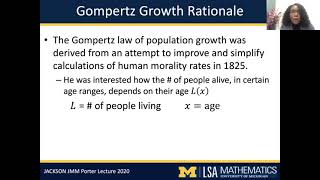
Turning Cancer Discoveries into Effective Treatments with Mathematical Modeling
Explore how mathematical modeling aids in transforming cancer research into effective treatments, bridging the gap between scientific discoveries and clinical applications.

Oxford Mathematician Explains SIR Travelling Wave Disease Model for COVID-19
Explore the SIR Travelling Wave model for disease spread, focusing on COVID-19. Learn how population movement affects epidemic dynamics, including spread speed and severity, and the importance of social distancing measures.

Oxford Mathematician Explains SIR Disease Model for COVID-19
Explore the SIR disease model's application to COVID-19, covering its derivation, spread prediction, peak infection, and total cases. Learn how social distancing impacts these factors.
Statistics in Medicine - Introduction to Clinical Research Analysis
Explore key statistical concepts in clinical research, including descriptive and inferential statistics, confidence intervals, p-values, and various statistical tests used in medical studies.
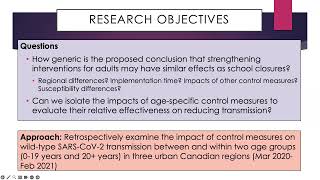
Retrospective Modelling Analysis on the Effects of Control Measures on COVID Transmission in Canada
Explore the impact of COVID-19 control measures in Canada through retrospective modeling analysis, examining transmission patterns and effectiveness of interventions.
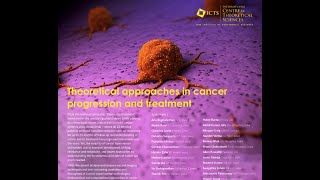
Understanding Tumour Responses to Radiotherapy Using Mathematical Models - Lecture 2
Explores mathematical modeling of tumor responses to radiotherapy, focusing on theoretical approaches to understand and predict treatment outcomes in cancer progression.
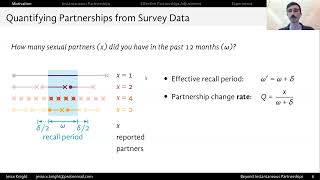
Re-examining the Force of Infection Equation in Compartmental HIV Transmission Models
Explore innovative approaches to HIV transmission modeling, focusing on the force of infection equation and its implications for public health strategies and interventions.
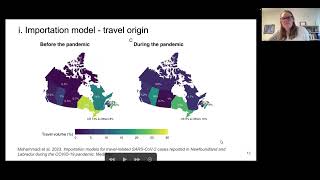
Modelling to Support Regions Implementing an Elimination Strategy
Explore mathematical modeling techniques for regional disease elimination strategies, focusing on public health applications and policy support.

Logarithms: Applications in Mobile Technology, Pandemic Modeling, and Social Networks
Explore logarithms' relevance in modern life, from pandemic modeling to information theory and social networks. Discover their history and applications in this insightful lecture by Professor Oliver Johnson.
Vectors and How Climate May Impact Them
Explore how climate change affects disease vectors, their ecology, and transmission dynamics. Gain insights into vector-borne diseases and their potential future impacts on ecosystems and public health.
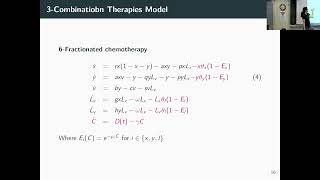
Comparing Combination Therapies with Oncolytic Viruses in a Simple Mathematical Framework
Explore mathematical models for comparing combination cancer therapies using oncolytic viruses, examining their effectiveness and potential outcomes in treatment strategies.
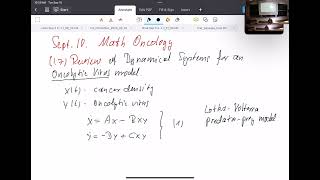
Nondimensionalization and Biochemical Reaction Networks in Mathematical Oncology
Explore nondimensionalization and biochemical reaction networks in mathematical oncology, enhancing your understanding of complex biological systems and their analysis.
The Hallmarks of Cancer - A Mathematical Perspective
Explore mathematical perspectives on cancer hallmarks, including proliferation, growth suppression, cell death, and metastasis, through differential equations and modeling techniques.
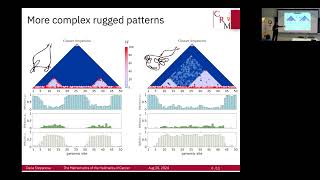
Modelling the Erosion of Epigenetic Landscapes in Cancer and Ageing
Explore mathematical models of epigenetic landscapes in cancer and aging, focusing on erosion processes and their implications for disease progression and cellular behavior.