Preparing for Emergencies: Planning and Partnerships with Families
Explore emergency preparedness strategies for families with children with special health needs. Learn about community partnerships, intervention development, and key insights from a virtual home preparedness study.

Zen Practice and Experience - From Tradition to Personal Journey
Delve into Zen practice and philosophy through personal insights from Head Priest Tanaka Kanju, exploring core teachings, challenging training methods, and profound experiences in the Rinzai tradition.
如何健康促進,養出真實的力量?- 以促進方式讓生活更美好
探索健康生活方式,克服年齡挑戰。透過營養、愛和信仰,培養真實力量。以自身為例,學習成為健康的最大責任人,實現全面的生活改善。
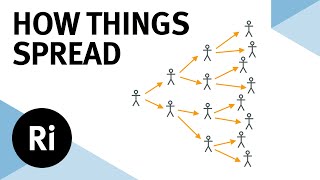
The Maths of Contagion: Why Things Spread and Why They Stop - With Adam Kucharski
Explore mathematical models for disease spread, misinformation, and internet memes. Learn how outbreaks occur, why some are predictable, and strategies for controlling epidemics and viral content.
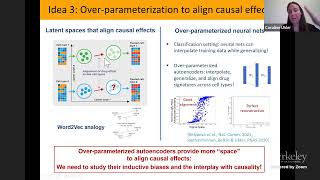
Causality and Autoencoders in Light of Drug Repurposing for COVID-19
Explore causal inference and autoencoders in drug repurposing for COVID-19, covering observational data, causality hierarchy, and predicting interventions with Caroline Uhler from MIT.

The Mathematical Essence of Aging - Theoretically Speaking
Explore mathematical models of aging using large-scale medical data, revealing seasonal hormone patterns and insights into age-related diseases, with implications for optimal treatment strategies.
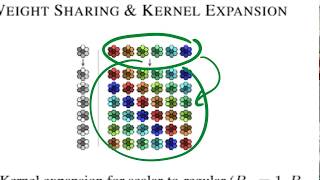
Gauge Equivariant Convolutional Networks and the Icosahedral CNN
Explore gauge equivariant CNNs on manifolds, focusing on icosahedral surfaces. Learn how this approach improves image segmentation and climate pattern analysis with enhanced efficiency and performance.
Mathematical and Statistical Modelling in the Fight to Control Tuberculosis by Emma McBryde
Exploring mathematical models to combat tuberculosis, from basic concepts to advanced simulations. Insights on disease dynamics, latency, mortality, and regional applications in the Asia Pacific.
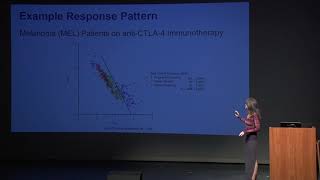
Teaching Contemporary Math - Modeling Cancer Treatment
Explore innovative approaches to teaching math through real-world applications in cancer treatment, data modeling, and error analysis with Helen Moore.
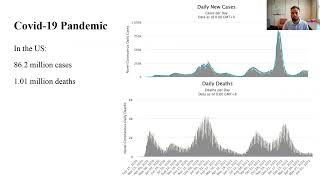
Mathematical Modeling of Diseases Spread - The Dextrous Use of Simple Machine-Learning Tools
Explore machine learning techniques for modeling disease spread, focusing on data preparation, model training, and interpreting results to inform public health policies.
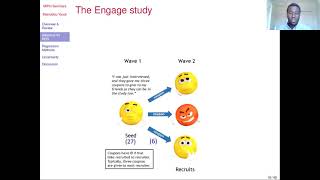
Recent Developments in Respondent-Driven Sampling
Explore recent advancements in respondent-driven sampling techniques for surveying hidden populations, including network-based approaches and regression methods for data analysis.
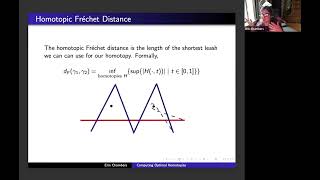
Computing Optimal Homotopies
Explore optimal curve similarity measures using homotopy-based approaches, examining structural properties, algorithms, and open questions in topology and computational geometry.
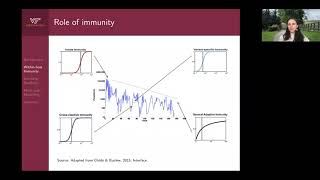
Modelling Immunity to Malaria
Explore mathematical models of malaria immunity, examining within-host dynamics, antigenic variation, and population-level impacts to enhance understanding and control strategies.
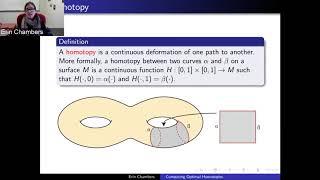
Computing Optimal Homotopies
Explore curve similarity measures and homotopy-based deformations in GIS, medical imaging, and graphics. Survey geometric and topological metrics, algorithms, and open questions in optimal homotopy computation.
Integer Optimization for Predictive & Prescriptive Analytics in High Stakes Domains
Explore integer optimization techniques for developing interpretable, robust, and fair decision-tree models to assist high-stakes decision-making in social services and healthcare domains.
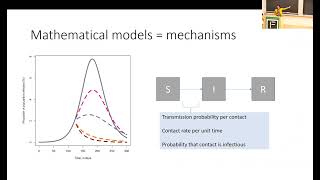
Mathematical Modeling of Epidemics - Are We Confronting or Amplifying Health Inequities?
Explores how mathematical models of epidemics impact public health decisions and their potential to address or exacerbate health inequities, using examples from HIV, COVID-19, and mpox.
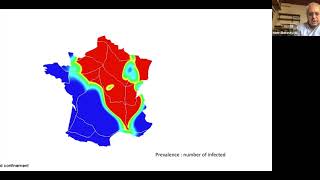
Mathematics for Public Health - Inaugural Lecture by Henri Berestycki
Exploring diffusion in epidemiology models, including SIR equations and reaction-diffusion systems, with applications to COVID-19 spread and the impact of individual behaviors on epidemic dynamics.
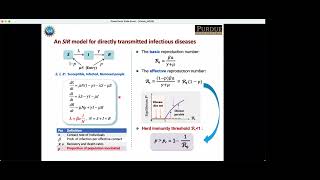
Mathematical Models of Infectious Diseases - Consequences of Underlying Assumption
Explore the impact of underlying assumptions in mathematical models of infectious diseases, examining their consequences for disease dynamics and control strategies.
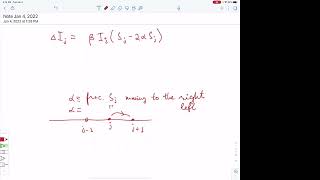
Modelling of Disease Spread Through Heterogeneous Population
Explore spatial variability in disease spread using PDEs with state-dependent diffusion. Examine density-dependent infection rates and super-diffusive propagation, with a case study on coronavirus in Nova Scotia.
Investigating Transmission-Blocking Anti-malarial Drugs: A Mathematical Modelling Approach
Explore mathematical models assessing transmission-blocking antimalarial drugs' impact on disease control, focusing on treatment coverage, drug efficacy, and protective effects in malaria hotspots.
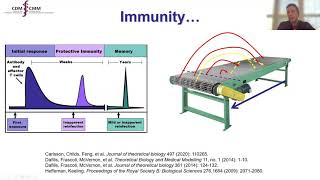
Modelling Immunity
Explore mathematical models of immunity generation and waning, fitted to data for estimating seroprevalence in Canadian jurisdictions, with applications to COVID-19 vaccination programs.