Systemic Infection Syndromes Presenting with Rash - Diagnostic Approach and Treatment
Explore diagnostic approaches for systemic infections with rash, focusing on urgent syndromes and timely treatment strategies to enhance clinical decision-making.
Bone Marrow Transplant in Sickle Cell Disease
Explore bone marrow transplantation for sickle cell disease, covering indications, techniques, and complications. Learn about donor selection, conditioning agents, and post-transplant challenges.
Targeted Therapy for Non-Hodgkin Lymphoma - Diagnosis and Treatment Advances
Explore targeted therapies for non-Hodgkin lymphoma, including diagnostic techniques and clinical trials to optimize treatment with fewer side effects.
Principles of Antibiotic Chemotherapy and Antimicrobial Stewardship
Comprehensive exploration of antibiotic principles, classes, and stewardship strategies, emphasizing clinical reasoning, responsible prescribing, and global health implications.
Diagnosis and Management of Candidemia - Epidemiology, Resistance, and Treatment
Learn about candidemia's epidemiology, diagnosis, and treatment, including emerging resistant strains and management strategies for this serious fungal infection.
Inflammatory Bowel Disease: Histopathological Assessment and Diagnosis - Lecture 18
Comprehensive overview of histopathologist's role in inflammatory bowel disease, covering assessment techniques, diagnosis challenges, and reporting practices.
Approaches to Liver Biopsy Examination - Lecture 23
Comprehensive guide to liver biopsy analysis, covering history, physiology, biochemistry, special stains, and injury patterns for accurate diagnosis and interpretation.
Prognostic and Predictive Factors in Breast Carcinoma - Lecture 19
Explore prognostic factors, molecular aspects, and classification of breast cancer to enhance understanding and improve patient outcomes in oncology.
Endometrial Carcinoma: Tips for Reporting Pathologists
Comprehensive guide for pathologists on reporting endometrial carcinoma, covering key factors like type, grade, invasion depth, and staging systems. Emphasizes systematic approach using datasets for accurate diagnosis.

How Does Antimicrobial Resistance Affect Us - Expert Panel Discussion
Explore the impact of antimicrobial resistance across pathology specialties with expert insights on patient safety, challenges, and future implications.
Implementation Guidance for Reporting of Liver Resection Specimens
Guidance on histopathological reporting of liver resection specimens, covering primary and metastatic carcinoma, presented by expert guideline authors.
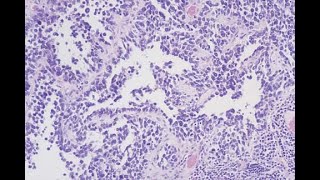
Implementation Guidance for Reporting of Soft Tissue Sarcomas
Expert guidance on histopathological reporting of soft tissue sarcomas, covering key dataset elements and best practices for accurate diagnosis and classification.
Implementation Guidance for Reporting of Uveal Melanoma
Comprehensive guidance on histopathological reporting of uveal melanoma, featuring expert insights and dataset implementation strategies.
Implementation Guidance for Reporting Carcinomas of Nasopharynx and Oropharynx
Guidance on histopathological reporting of nasopharyngeal and oropharyngeal carcinomas, covering key aspects of the 2021 dataset and implementation recommendations.

Cytochemical Stains and Their Applications in Haematology Diagnosis
Explore the evolution and current role of cytochemical stains in haematology diagnosis, including their applications in disease classification and diagnostic service delivery.
Lipid Metabolism and Disorders - Lecture 15
Comprehensive exploration of lipid metabolism, disorders, and cardiovascular implications, covering structure, investigations, risk management, and associated diseases.
Benign Disorders of Leucocytes - Evaluation and Common Causes
Explore benign white cell disorders, including evaluation approaches, distinguishing features of leucocytosis, congenital neutropenia causes, and adult neutropenia assessment.

Practical Approach to Specimen Grossing for Colorectal Cancer - Lecture 19
Overview of resection specimen handling, macroscopic description, and block selection for colorectal cancer, emphasizing dataset usage and linking macroscopic and microscopic features to key items.
Management of Refractory Non-Hodgkin Lymphoma - Lecture 8
Explore effective salvage therapies for refractory non-Hodgkin lymphoma, including biological agents, autologous stem cell transplants, and CAR-T therapy for low and high-grade lymphomas.
Meeting the Pathologists - Virtual Careers Talk
Explore pathology careers with insights from infection, histopathology, and microbiology experts. Learn about their roles, daily work, and career paths in this informative virtual talk for students.
Meet the Pathologists - Virtual Careers Talk in Histopathology and Haematology
Explore pathology careers with histopathologists and a haematologist in this virtual talk. Learn about their roles, daily work, and get your questions answered by medical professionals.