Core Slicing - Closing the Gap Between Leaky Confidential VMs and Bare-Metal Cloud
Explores core slicing, a novel approach to enhance cloud security by enabling multiple untrusted guest OSes to run on shared bare-metal hardware, addressing vulnerabilities in confidential VMs.
Confidential Computing within an AI Accelerator
Explore IPU Trusted Extensions for secure AI workloads, offering confidentiality and integrity with low overhead. Learn about hardware isolation, encryption, and multi-party training capabilities in Graphcore's AI accelerators.
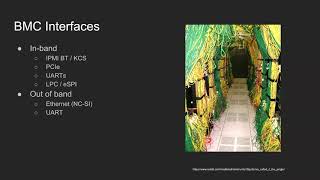
Service Processor Privilege Isolation and Getting Caught with Your Pants Down
Explore service processor vulnerabilities in servers, focusing on BMC security flaws and hardware-based attack methods for gaining persistent control of management systems.
Betrusted - Better Security Through Physical Partitioning
Explore Betrusted, a device designed for secure applications using open-source hardware and security-first principles. Learn about its physical partitioning approach to enhance digital security and user focus.
PMFault - Voltage Fault Injection on Server Platforms Through the PMBus
Explore voltage fault injection attacks on server platforms via PMBus, revealing vulnerabilities in power management systems and discussing potential security implications for data centers.
If You Can't Open It, You Don't Own It
Exploring hardware vulnerabilities and their impact on C++ systems, this talk delves into side-channel attacks, physical penetrations, and supply chain risks, offering insights for securing modern C++ designs.
Security Technology Adoption: Challenges Beyond Hardware Development
Exploring challenges in hardware security adoption, this talk examines market barriers and proposes solutions for integrating advanced security features into connected devices and systems.
Hardware Is the New Software - Finding Exploitable Bugs in Hardware Designs
Explore techniques for identifying and exploiting security vulnerabilities in hardware designs, focusing on RISC-V and OR1k CPU architectures using innovative tools and symbolic execution.
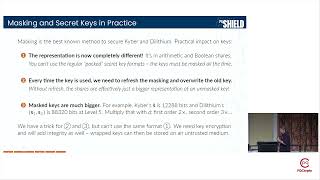
WrapQ: Side-Channel Secure Key Management for Post-Quantum Cryptography - Session 7
Explore side-channel secure key management for post-quantum cryptography with WrapQ, focusing on hardware implementation and security challenges.

Micron Silicon Trust and Cybersecurity in the Subscription Economy
Discover how Micron's Authenta platform revolutionizes cybersecurity in the subscription economy, enabling secure product evolution and dynamic revenue streams through silicon-to-cloud trust technology.
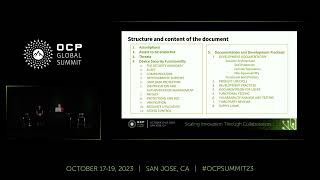
Security Guardrails and Guidelines for BMC Systems in Cloud Data Centers
Discover essential security guidelines for protecting Baseboard Management Controllers (BMCs) in cloud data centers, focusing on preventing unauthorized access and maintaining system integrity at scale.
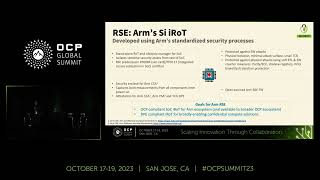
A Standardized Interface for Root of Trust (RoT) Security Systems
Explore platform security fundamentals and standardized Root of Trust (RoT) interfaces, using ARM's RSE iRoT implementation as a practical example for system architecture innovation.
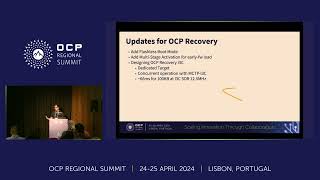
Secure System Boot Architecture and Protocols for OCP Flashless Boot
Explore the architecture and protocols of OCP Flashless Boot, including system boot processes, PCIe device booting, and future adoption roadmap for secure computing infrastructure.
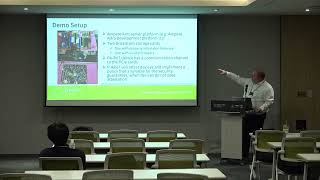
Secure System Design on ARM Using PA-RoT
Explore secure system architecture implementation using PA-RoT technology on ARM platforms, focusing on robust hardware-based security measures and trusted computing principles.
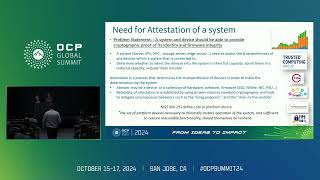
Leveraging FPGA-Based Root of Trust for Efficient, Dynamic, and Remote Platform Attestation
Discover how FPGA-based Root of Trust enables secure platform attestation, providing dynamic cryptographic proof of identity and firmware integrity in modern computing systems.
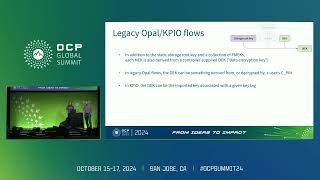
Deep Dive on OCP LOCK: Key Management Security for Storage Devices
Explore Caliptra's LOCK feature extension for enhanced storage device security and key management, focusing on implementation and integration with storage controllers.
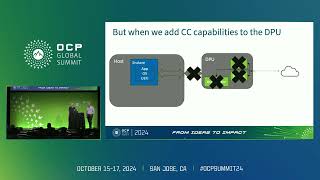
Beyond CPUs and GPUs - Extending Confidential Computing to DPUs for Enhanced AI Security
Explore how confidential computing extends beyond CPUs and GPUs to DPUs, examining privacy-preserving AI implementations and hardware-based security solutions for third-party infrastructure.
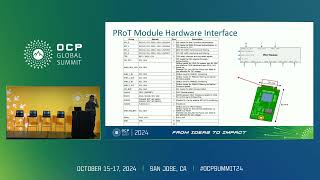
Platform Root of Trust Module Interface Architecture and Design
Explore a modular Platform Root-of-Trust architecture that enables flexible system configuration while addressing technical challenges in interface design and security implementation.
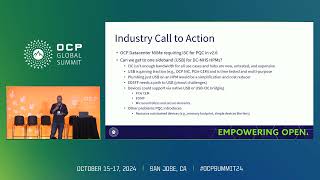
Post-Quantum Cryptography Impact on I2C Communication and Security Protocols
Explore how post-quantum cryptography's larger signatures affect I2C interfaces in server management, and discover potential industry solutions for SPDM implementation challenges.
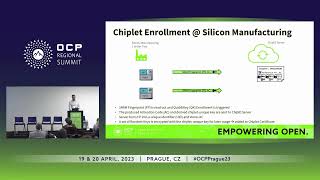
Securing System-in-Packages with Physical Unclonable Functions (PUF) Technology
Discover how Physical Unclonable Functions (PUF) technology enhances security in System-in-Package designs, providing robust protection against hardware-based attacks and counterfeiting.
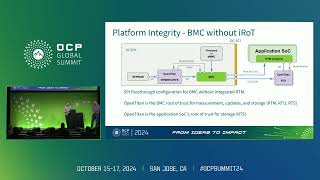
OpenTitan: Open-Source Hardware Root of Trust - Project Update
Discover the latest developments in OpenTitan's open-source hardware root of trust, including its architecture, security features, and applications for firmware protection and secret storage.