Improving the Life-Cycle of Tensor Algorithm Development with ITensors
Explore advanced tensor algorithm development in Julia, focusing on generic programming strategies for efficient computation across CPU, GPU, and QPU architectures using the ITensors framework.
Seamless Transition from Single-core Python to Julia Multi-GPU
Discover how to transform single-core Python code into scalable Julia applications for GPU supercomputers, with focus on automatic verification and parallel computing optimization.
Practice of Building AI Training Clusters Based on Kubernetes and RoCEv2
探讨基于Kubernetes和RoCEv2构建AI训练集群的实践,包括网络集成、资源调度和任务优化等方面的挑战与解决方案,助力提升AI训练效率。
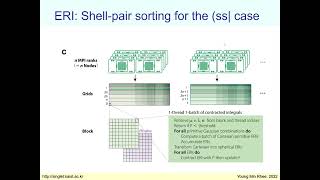
DFT on Expensive GPU-based Supercomputer
Explore advanced density functional theory computations using high-performance GPU supercomputers for cutting-edge quantum chemistry research.
AirLLM: Inferencia de LLM de 70 Billones de Parámetros en GPU de 4GB - Español
Aprende a realizar inferencia con un LLM de 70 billones de parámetros en una GPU doméstica de 4GB usando AirLLM. Explora técnicas avanzadas de machine learning y optimización de recursos.
Acelere su Código Python con Numba y Cupy
Acelera tu código Python utilizando Numba y Cupy: compila y mueve a la GPU para optimizar el rendimiento en machine learning y ciencia de datos.
Rapids Machine Learning Training y Feature Engineering en tu GPU con CuML y CuDF
Acelera el entrenamiento de modelos y la ingeniería de características utilizando GPU con CuML y CuDF para optimizar tus flujos de trabajo de aprendizaje automático.
Creating Intelligent Machines with the Isaac SDK - NVIDIA Webinar
Learn to program, simulate, and deploy robotic applications using NVIDIA's Isaac SDK. Covers codelets, compute-graphs, simulation testing, and Jetson deployment, with hands-on examples and Q&A.
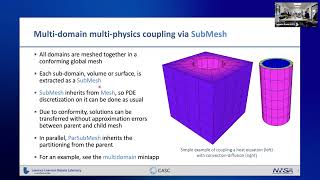
MFEM Workshop 2023 - Recent Developments in Modular Finite Element Methods
Explore recent advancements in MFEM, including GPU optimizations, new mini-apps, and integrations with scientific software libraries for high-order finite element calculations.
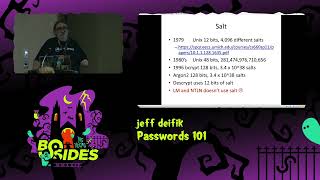
Passwords 101 - History, Cracking Techniques, and Defenses
Explore password hashing history, cracking techniques, and defenses. Learn about tools, wordlists, custom rules, and CPU vs GPU tradeoffs in this comprehensive overview of password security.
Accelerated Audio Computing: From Problem to Solution
Explore accelerated audio computing advancements: technology progress, use cases, SDK vision, and industry standards. Engage in shaping the future of GPU-powered audio processing.
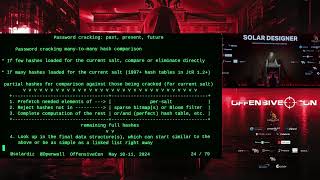
Password Cracking: Past, Present, Future - Keynote
Explore the evolution and future of password cracking techniques with insights from a renowned security expert. Gain valuable knowledge on cybersecurity challenges and solutions.
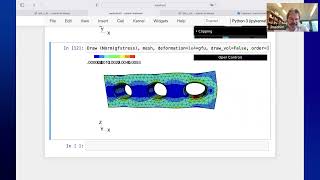
The Netgen/NGSolve Finite Element Software - Overview and Applications
Explore Netgen/NGSolve finite element software: overview, Python scripting, teaching applications, and recent developments in matrix-valued elements, GPU utilization, and time-dependent problems.
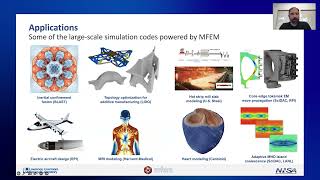
The State of MFEM - Workshop 2022
Explore MFEM's high-order mathematical calculations for scientific simulations, including key capabilities, examples, and future plans. Learn about the project's growth and recent software release.
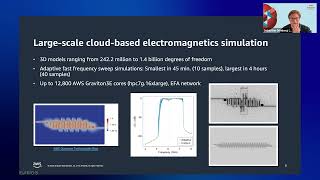
Palace: Parallel Large-scale Computational Electromagnetics - MFEM Workshop 2023
Explore Palace, a parallel finite element code for full-wave electromagnetics simulations, and its capabilities for large-scale 3D modeling in quantum computing hardware design.
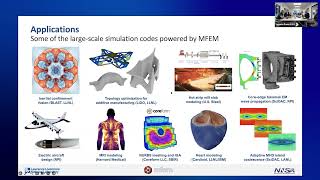
The State of MFEM - Workshop 2023
Explore MFEM's key capabilities, recent developments, and future directions in high-order finite element methods for scientific simulations.
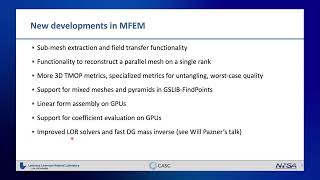
Recent Developments in MFEM - Workshop 2022
Explore recent developments in MFEM, including sub-mesh extraction, GPU-based calculations, and integrations with scientific software libraries for high-order finite element simulations.
Advancing GPU Analytics with RAPIDS Accelerator for Apache Spark and Alluxio
Learn to accelerate GPU analytics using RAPIDS for Apache Spark and Alluxio, enabling faster data access and processing for AI and analytics workloads across any cloud environment.
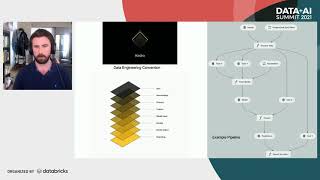
A Collaborative Data Science Development Workflow Using Kedro and MLflow
Explore a collaborative data science workflow using Kedro pipelines, MLflow tracking, and cloud-agnostic GPU containers for efficient model development, training, and production deployment.
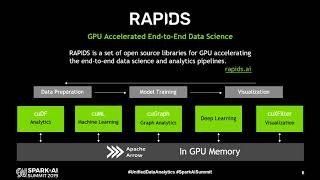
Accelerating Apache Spark with GPUs Using RAPIDS
Explore GPU acceleration for data science with RAPIDS, offering significant performance gains over CPU-only solutions. Learn its functionality, architecture, and integration with Apache Spark for large-scale computation.
Depend Upon Docker for AI
Explore Docker's role in Data Science, Machine Learning, and AI, including GPU processing techniques and Industrial AI demos, presented by experts from Baker Hughes.