Statistics and Attributes of Earthquakes Across Texas
Explore Texas earthquake patterns, causes, and risks across major basins, examining man-made seismicity, injection types, and geological factors influencing unexpected seismic events.
Insights from GRACE Satellites on Global Water Resources
Explore GRACE satellite data's impact on global hydrology, revealing water storage changes, groundwater depletion, and climate-human interactions. Learn how this technology influences water policy worldwide.
Multiscale Characterization of Mudstones - Implications for Geoenergy Systems and Geodisposal
Explore multiscale characterization of mudstones and its impact on geoenergy systems and geodisposal through advanced techniques and collaborative research.
Fundamentals of Basin and Petroleum System Modeling
Explore basin and petroleum system modeling fundamentals, covering key concepts and techniques for effective reservoir analysis and hydrocarbon exploration.
Explainable AI for the Geosciences
Explore machine learning interpretation techniques in geoscience, focusing on climate science applications and their potential for scientific discovery and increased trust in AI outputs.
Modeling Flow and Transport in Fractured Rock Using Machine Learning
Integrating computational physics, machine learning, and graph theory to model flow and transport in fractured rock systems, offering a paradigm shift from high-fidelity models to efficient coarse-scale graphs.
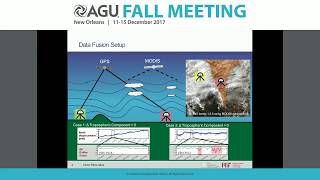
Recent Advances in Deep Learning and Data Analytics in Earth Sciences - 2017
Explore cutting-edge deep learning applications in geosciences, featuring talks from NASA, MIT, and other leading institutions on solving complex Earth and planetary challenges.
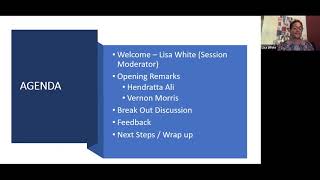
Anti-Racism Efforts in the Geosciences
Explores anti-racism efforts in geosciences, analyzing calls for action and fostering discussions to promote equity and inclusivity in the field. Provides strategies for implementing change.
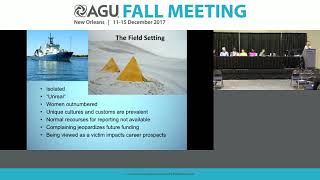
Creating Inclusive and Diverse Field and Lab Environments
Strategies for fostering inclusive and diverse environments in geoscience fieldwork and labs, addressing barriers and promoting equal participation through leadership, training, and policy changes.
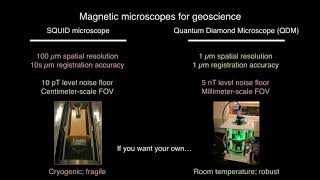
Magnetic Microscopy Talk
Explore magnetic microscopy in geoscience, examining rock magnetization, SQUID and QDM technologies, and their applications in studying chondrites and speleothems.

How I Found a Mythical Boiling River in the Amazon
Geoscientist Andrés Ruzo shares his journey to discover a legendary boiling river in the Amazon, challenging our assumptions about unexplored wonders and the boundaries between myth and scientific reality.
ODINN.jl - Multi-language Geoscientific Machine Learning for Glacier Evolution Modeling
Explore ODINN.jl, a global glacier evolution model using Julia's SciML capabilities for geoscientific machine learning, combining differential equations with Python tools for flexible, multi-language modeling.
The Role of Artificial Intelligence in Geophysics
Explore the impact of AI on geophysics with Newmont's Mikayla Sambrooks. Gain insights into innovative applications and future trends in this cutting-edge field.
Julia Community Reshapes Computation in Geosciences
Explore Julia's impact on geosciences: ecosystem tools, hardware acceleration, and collaborative initiatives revolutionizing Earth observation and software development in the field.
Developing Supercomputing Geoscience Applications Using Julia
Explore modular Julia packages for accelerating geocomputing, enabling high-performance stencil codes that scale from laptops to GPU-accelerated supercomputers for geoscience applications.
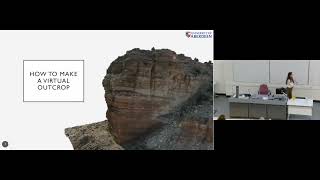
Virtual Outcrops in the Modern Geological Toolkit
Explore virtual outcrops in geology: photogrammetry, drones, and LiDAR for 3D modeling. Learn how these tools enhance fieldwork, mapping, and virtual field trips, revolutionizing geological research and education.
Reimagining Science and Society: Inclusive Excellence in STEM Education
Dr. Hrabowski explores reimagining science and society, emphasizing inclusive excellence, STEM education, and cultivating empowering institutional cultures for academic success and diversity in higher education.
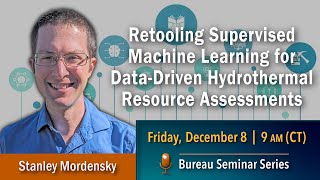
Retooling Supervised Machine Learning for Data-Driven Hydrothermal Resource Assessments
Explore machine learning approaches for unbiased geothermal resource favorability mapping, improving predictive performance and confidence in resource estimates.
Geophysics for Geologists: Incorporating Geophysical Data in Geological Workflows
Explore geophysical techniques for mineral exploration, incorporating open-source data and understanding methods for different commodity types. Enhance geological workflows with cost-effective mapping strategies.
Introducing the Geological Survey of Western Australia
Explore the Geological Survey of Western Australia with Dr Fawna Korhonen. Gain insights into metamorphism, structural evolution, and geodynamic processes in Western Australia's Proterozoic margins.
Экскурсия по лабораториям Института геологии и нефтегазовых технологий КФУ
Исследуйте современные лаборатории Института геологии и нефтегазовых технологий КФУ, оснащенные передовым оборудованием для геологических и нефтегазовых исследований.